Why Award-Winning Architects Sydney Lead the Future of Residential Design

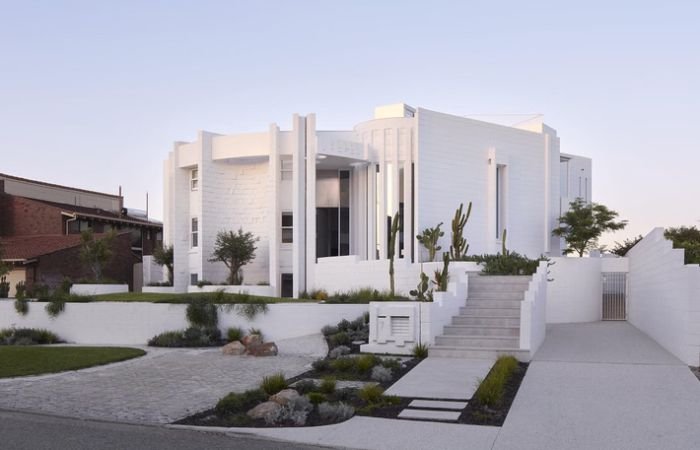
There is a quiet confidence emerging across Sydney’s residential streetscapes, one that goes beyond polished facades and sweeping harbour outlooks. Award-Winning Architects Sydney are reshaping what it means to design a home in one of the world’s most dynamic and geographically complex cities. From steeply sloped blocks in the inner west to coastal retreats on the Northern Beaches, the studios earning national and international recognition are doing so because they understand something fundamental: a home is not merely a shelter. It is a lived-in expression of how a family thinks, moves, rests, and connects with the world outside their door.
This distinction matters enormously in a city like Sydney, where land scarcity, heritage overlays, and dramatic topography make residential architecture genuinely demanding. The firms leading the conversation are not just delivering beautiful imagery for award submissions. They are solving real problems for real clients, and the recognition they receive reflects that.
What Sets Recognised Residential Firms Apart
Not every firm with a swish portfolio earns consistent recognition from bodies like the Australian Institute of Architects. The studios that do tend to share a handful of qualities that go well beyond aesthetic sensibility.
A Commitment to Place and Context
Sydney’s neighbourhoods are extraordinarily varied. The Victorian terraces of Paddington behave differently from the wide suburban blocks of Castle Hill, and both demand something entirely different from a knockdown-rebuild in Manly. Recognised residential architects are fluent in contextual design. They read a site the way a careful reader reads a difficult text: for what is said quietly, not just what is immediately obvious.
This means examining solar orientation, prevailing winds, the movement of shadows across a garden at different times of year, and the way a street presents itself to pedestrians. A home that earns awards in Sydney almost always earns them partly because it belongs precisely where it sits.
Structural Creativity Within Constraint
Sydney’s planning environment is notoriously layered. Heritage conservation areas, floor space ratios, bushfire attack level requirements in fringe suburbs, and stormwater management obligations all impose real constraints on what can be built and how. Rather than treating these as obstacles, the city’s most celebrated residential architects treat constraint as a creative brief.
Some of the most remarkable homes built in Greater Sydney in recent years have emerged from seemingly impossible conditions: a narrow infill lot in Surry Hills, a heritage-listed semi in Glebe requiring a sensitive rear extension, a hillside block in Castlecrag with a twelve-metre fall across its width. The ability to work imaginatively within strict parameters is not just a professional skill. It is, for many clients, the primary reason to engage a recognised firm rather than a drafting service or building designer.
Sustainability as a Core Design Driver, Not an Optional Add-On
One of the clearest shifts visible in recent award cycles from the Australian Institute of Architects and the World Architecture Festival is the rising weight given to environmental performance. Passive design principles, once considered a specialist interest, have moved firmly into mainstream residential practice among Sydney’s leading studios.
Properly oriented living spaces that minimise heating and cooling loads, cross-ventilation strategies that reduce mechanical air conditioning reliance, rainwater harvesting systems integrated into the architecture rather than bolted on as afterthoughts, and the considered use of thermally massive materials like rammed earth and concrete in appropriate climatic zones: these are no longer optional extras in the work of Sydney’s most awarded firms. They are baseline expectations.
This shift reflects broader community values. Sydney households are increasingly energy-conscious, motivated both by rising electricity costs and by a genuine concern for long-term environmental impact. An architecturally designed home built to passive house standards or awarded a high NatHERS rating is not just ethically sound. It is also financially prudent over a twenty or thirty-year ownership horizon, and that argument resonates powerfully with clients making significant capital investments.
The Client Relationship at the Centre of Everything
A common misconception about high-end residential architecture is that the architect’s vision supersedes the client’s needs. The most awarded residential practices in Sydney disprove this thoroughly. The studios earning consistent recognition tend to invest heavily in the early discovery and briefing phase of a project, asking questions that clients themselves may not have thought to ask.
How does the household actually move through a home on a typical Tuesday morning? Where do school bags land when children come home? Does the primary carer need visual connection from the kitchen to the garden? Is there a grandparent who will be living in the house in ten years, and what does that mean for threshold heights, grab rail provisions, and bedroom access?
This kind of granular thinking about daily life is what separates a genuinely well-designed home from one that merely photographs well. It is also what generates the word-of-mouth referrals that sustain successful architectural practices in Sydney’s competitive market. Clients who have lived in a home that was designed around their actual lives become the most effective advocates a studio can have. Learn more: https://www.popovbass.com.au/contact/
Frequently Asked Questions About Residential Architecture in Sydney
As the conversation around residential design matures in Australia, a consistent set of questions arises from homeowners considering engaging an architect for the first time. Addressing these honestly is central to helping prospective clients make informed decisions.
Q. How do I know if an architect in Sydney has genuine award recognition?
A: The Australian Institute of Architects maintains publicly accessible records of its NSW Architecture Awards, which are updated annually and searchable by firm and project category. Checking these records directly, rather than relying solely on a studio’s own marketing materials, gives prospective clients an independent verification of a firm’s recognised work.
Q. Does hiring an award-winning architect cost significantly more than a standard design service?
A: Architectural fees in Sydney vary widely depending on project complexity, site conditions, and the scope of services required, but award recognition does not automatically translate to prohibitive cost. Many celebrated residential studios work across a broad range of budgets and are transparent about their fee structures from the initial consultation. The value calculation should consider the long-term performance, liveability, and resale premium that a well-designed home typically delivers over its lifetime.
Q. What should I bring to my first meeting with a residential architect?
A: Arrive with as much contextual information as you can gather: site dimensions and orientation, any existing planning certificates or heritage listings, a realistic budget range, and a clear sense of how your household actually lives rather than how you imagine you might live. Photographs of homes or spaces you respond to emotionally are genuinely useful, not because an architect will replicate them, but because they open a conversation about the qualities and experiences you are drawn to.
The Long Arc of Residential Excellence in Sydney
Sydney has a rich tradition of residential architecture that stretches back through the work of figures like Harry Seidler, Glenn Murcutt, and Jorn Utzon’s less visible domestic projects. The current generation of recognised residential architects is not rejecting that tradition. It is extending and reinterpreting it for a city that looks and feels very different from the one those earlier figures worked in.
Population density has increased. Climate pressures are more urgent. The relationship between indoor and outdoor space has evolved, particularly following the period in the early 2020s when Australians spent significantly more time at home and re-evaluated what they needed from their domestic environments. The firms earning recognition today are the ones that have absorbed these shifts and responded to them with intelligence and rigour.
What unites the best residential work coming out of Sydney’s architectural community is a refusal to treat a home as a product to be assembled from standard components. Every awarded project represents a specific response to a specific site, a specific client, and a specific moment in time. That particularity is both the discipline’s defining challenge and its greatest gift to the people who commission it.
A City That Builds With Intention
Sydney’s residential architecture scene is not merely thriving aesthetically. It is evolving responsibly, with a growing awareness of the city’s obligations to its future residents, its natural environment, and the communities that give its neighbourhoods their character. The firms receiving recognition from the profession’s most rigorous assessment panels are the ones demonstrating that thoughtful, site-specific, client-centred residential design is not a luxury reserved for the few.
It is, increasingly, the standard that discerning homeowners across Greater Sydney are beginning to expect, and the benchmark that the city’s best architectural minds are working every day to raise higher.