


MEP Estimating: Reducing Project Cost Uncertainty
Mechanical, electrical, and plumbing systems are the most costly and intricate parts of any building. This is the point where cost estimates make mistakes. Wiring, ductwork, pipes, and equipment must...

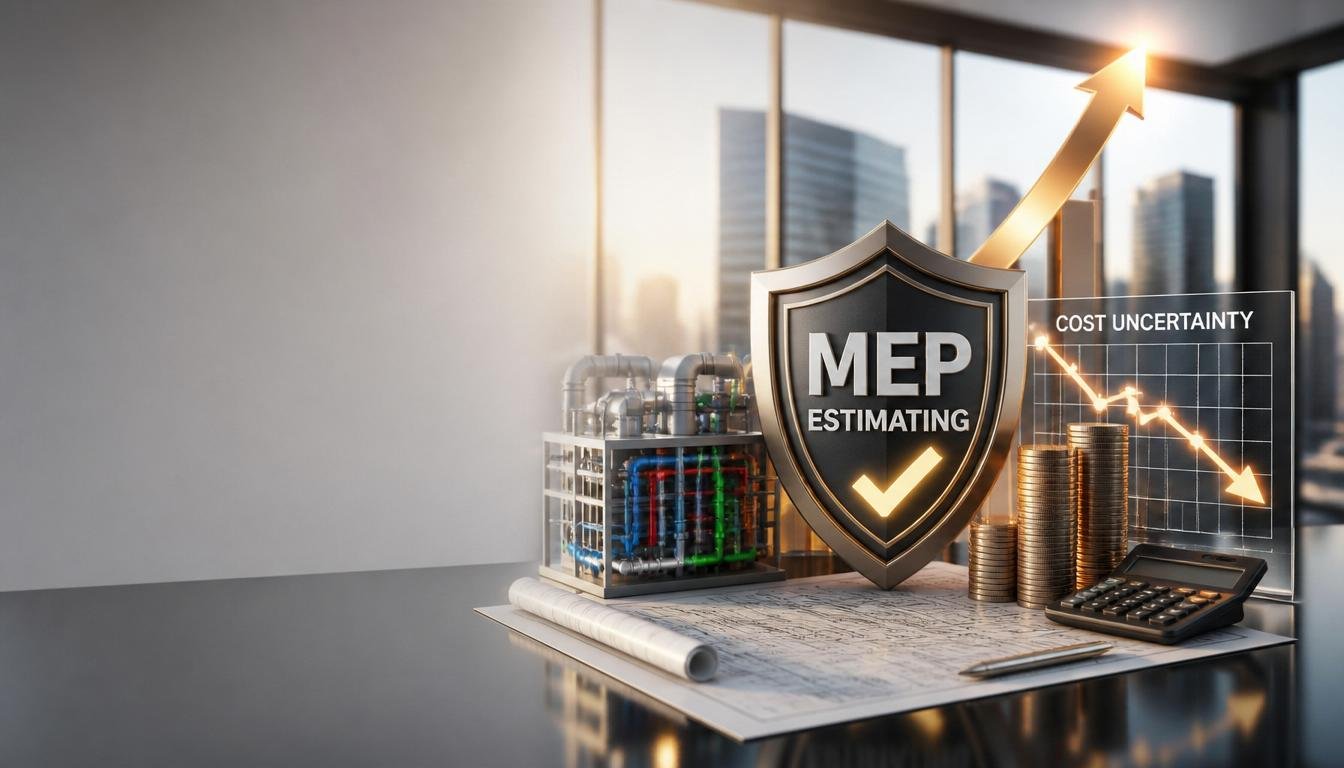
Mechanical, electrical, and plumbing systems are the most costly and intricate parts of any building. This is the point where cost estimates make mistakes. Wiring, ductwork, pipes, and equipment must be carefully planned. A hasty or incomplete estimate can throw off the entire budget of the project. Therefore, MEP estimating has become the most important phase in planning a construction project.
Why MEP Estimating Is So Hard to Get Right
MEP systems are more difficult to estimate than most other parts of a building. The following are the main reasons behind their complexity:
- They involve three different trades working together; each needs different materials, labor rates, and installation requirements
- Prices of equipment and materials change regularly, particularly for specialized components
- Code requirements vary by location and project type, which affects both materials and labor
- These systems usually run through congested spaces, which can slow down installation and increase labor time
Therefore, MEP Estimating Services require experience with these systems, not just general construction knowledge.
What a Strong MEP Cost Analysis Includes
A detailed MEP Cost Analysis goes far beyond just a single number. It usually analyzes the project system-wise and deals with the following:
- Piping, Wiring, Fixtures, and ductwork takeoff quantities and specifications
- Machinery expenses like HVAC systems, plumbing, and electrical panels
- Labor hours specific to every trade, depending on the complexity of the system
- Costs related to mechanical work, electrical work, and plumbing
This detail gives a contractor a real number to bid with, instead of a rough estimate based on previous projects.
How MEP Estimating Supports Better Cost Estimation
Project Cost Estimation relies greatly on getting MEP numbers right. MEP systems often constitute a major share of the entire construction costs. When MEP estimating is done well, it helps in the following ways:
- It gives an accurate total cost before construction starts
- It reduces the chances of change orders during construction
- It helps contractors compare bids, since everyone is working from the same level of detail
- It supports more accurate scheduling, since labor requirements are clearer from the start
Why MEP Estimating Is Key to Cost Control
Construction Cost Control becomes much more complicated when MEP numbers are wrong, since these systems are costly to fix after installation.
The following are a few ways MEP estimating services support better cost control:
- Detecting coordination errors between trades before they cause delays on-site
- Avoiding material shortages
- Reducing the chance of underbidding labor for complex installations
- Giving project managers a clear budget to track actual spending
Choosing the Right MEP Estimating Partner
Not every estimator contains required experience to accurately handle MEP systems.
When selecting an estimator, have some points in mind, such as:
- Do they have an understanding of mechanical, electrical, and plumbing systems?
- Do they think about the new pricing of materials and labour, and not the old averages?
- Can they show a detailed, itemized breakdown, not just a single total?
Universe Estimating is the best in delivering MEP estimating services that hold up through the entire project, not just at the bidding stage. That level of accuracy gives contractors a number they can trust from day one.
Conclusion
MEP systems are too complex and too expensive to estimate carelessly. A detailed, precise MEP estimate removes cost uncertainty, boosts better cost estimation, and gives contractors real control over their budget. Projects that invest in accuracy tend to face fewer shocks, fewer conflicts, and a much smoother path from bid to finished building.

No Comment! Be the first one.