





Why Global Cooperation Is the Key to Lasting World Peace
The world faces challenges that no country can solve alone. Wars, climate disasters, food shortages, cyberattacks, and economic uncertainty now affect millions of people across continents. These...

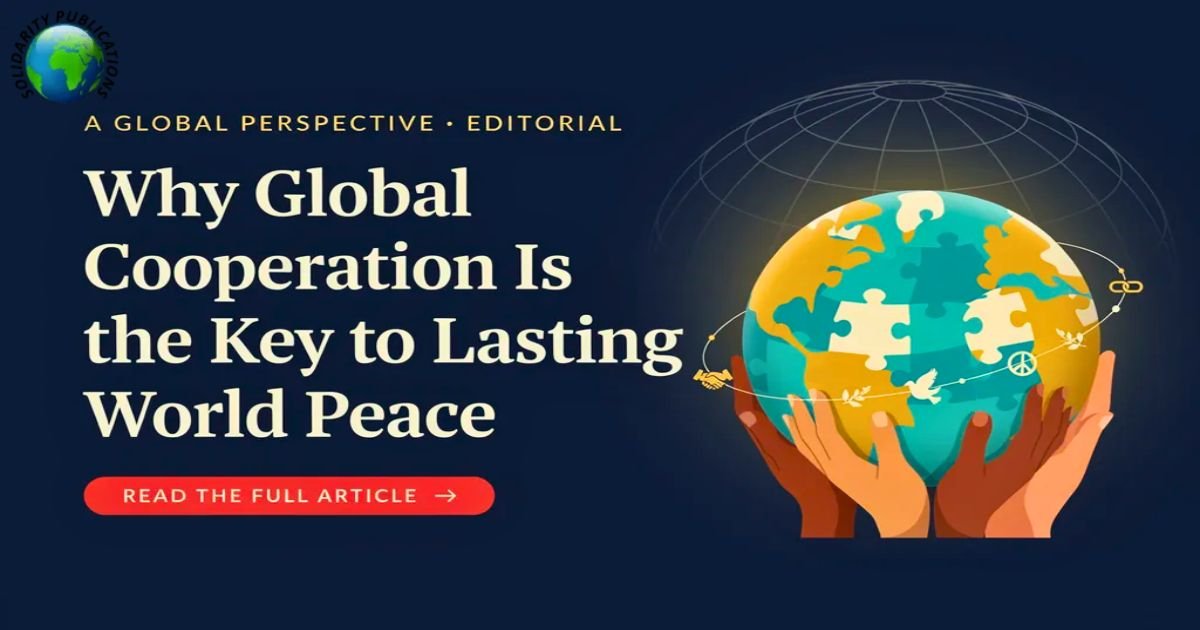
Table Of Content
- Why Global Cooperation Matters More Than Ever
- How Diplomacy Strengthens Global Peace
- Why Climate Change Demands Global Cooperation
- Climate Security and Future Stability
- How Economic Cooperation Builds Lasting Peace
- Why Food Security Is Essential for Global Stability
- Hunger, Conflict, and Peacebuilding
- What Global Conflicts Teach About International Cooperation
- The Role of Global Institutions in Building Peace
- A Realistic Path to Peace Through Global Cooperation
- Conclusion
- Frequently Asked Questions
The world faces challenges that no country can solve alone. Wars, climate disasters, food shortages, cyberattacks, and economic uncertainty now affect millions of people across continents. These issues spread quickly because today’s economies and societies are deeply connected. This growing reality makes Global cooperation more important than ever.
Countries that choose dialogue over confrontation create stronger partnerships and reduce unnecessary conflict. As global risks continue to grow, many people ask whether cooperation still works. The answer is yes. Lasting peace depends on trust, shared responsibility, and practical solutions that benefit everyone. This is why Global Cooperation Is the Key to Lasting World Peace remains one of the most important discussions today.
| Global Challenge | Why Cooperation Matters |
| climate change | Protects natural resources and communities |
| global conflicts | Encourages peaceful solutions |
| food security | Reduces hunger and instability |
| AI and Cyber Warfare | Improves digital protection |
| Economic crises | Supports recovery and resilience |
Why Global Cooperation Matters More Than Ever
The modern world is connected through trade, technology, transportation, and communication. A crisis in one country can quickly affect businesses, food supplies, and financial markets around the world. Because of this connection, global cooperation has become essential for protecting both people and economies. Working together allows countries to respond faster during emergencies while strengthening global stability.
Furthermore, cooperation creates opportunities that conflict never can. Countries exchange technology, scientific research, and humanitarian support through stronger partnerships. These efforts improve international peace and security while reducing the risk of future disputes. As discussed in Why Global Cooperation Matters in a World of Rising Global Tensions, collaboration builds stronger foundations for lasting peace.
How Diplomacy Strengthens Global Peace
Diplomacy remains one of the world’s most effective tools for preventing conflict. Open communication allows governments to resolve disagreements before violence begins. Successful negotiations reduce misunderstandings and encourage peaceful compromise. Strong international diplomacy also helps countries cooperate during humanitarian emergencies and regional disputes.
History provides many successful examples of diplomatic progress. Agreements reached through dialogue have prevented larger conflicts while improving international relationships. As explained in Can Diplomacy Prevent Future Wars? peaceful negotiation continues to protect global trade, strengthen trust, and support long-term conflict prevention instead of military escalation.
Why Climate Change Demands Global Cooperation
Climate change affects every nation regardless of geography or wealth. Rising temperatures, severe droughts, stronger storms, and unpredictable rainfall threaten agriculture, water supplies, and public health. These environmental pressures also increase migration and economic instability, making climate one of today’s most serious security challenges.
No country can solve climate problems independently. Governments must cooperate by sharing technology, investing in renewable energy, and supporting sustainable development. Strong climate security policies reduce environmental risks while protecting future generations. As explored in Climate Change as a Threat Multiplier, environmental challenges often increase political tension and social instability when countries fail to cooperate.
Climate Security and Future Stability
Extreme weather damages infrastructure, destroys crops, and weakens local economies. Communities recovering from repeated disasters require international assistance and long-term investment. Better environmental cooperation strengthens resilience while reducing future humanitarian crises.
How Economic Cooperation Builds Lasting Peace
Economic prosperity often encourages peaceful relationships between nations. Strong economic cooperation increases trade, creates jobs, and improves investment opportunities across borders. Countries that depend on each other economically have greater incentives to solve disagreements through dialogue instead of confrontation.
Recent disruptions showed how vulnerable the global economy has become. Inflation, supply chain problems, and energy shortages affected millions of people worldwide. As discussed in Can Economic Cooperation Prevent Future Global Conflicts? stronger economic partnerships improve economic resilience while supporting sustainable growth and reducing financial uncertainty.
Why Food Security Is Essential for Global Stability
Food is one of the strongest foundations of peace. Without reliable access to food, communities face rising poverty, social unrest, and political instability. Growing food security challenges have become more serious because climate change, conflicts, and economic pressures continue to affect farming and global trade. These problems reach far beyond national borders.
Therefore, countries must strengthen global partnerships to protect agriculture and improve peacebuilding efforts. Investing in modern farming, better storage systems, and stronger trade networks helps reduce hunger while improving long-term stability. As explored in Why Food Security Is Becoming a Global Peace Issue, secure food systems support healthier societies and stronger economies.
Hunger, Conflict, and Peacebuilding
Food shortages often increase migration and social tension. Communities facing hunger become more vulnerable to conflict and economic hardship. However, governments that invest in agriculture and humanitarian support reduce these risks while creating more peaceful and resilient societies.
What Global Conflicts Teach About International Cooperation
Recent global conflicts show that wars rarely remain within one region. The Russia-Ukraine war affected grain exports, fuel prices, and international trade across several continents. Likewise, rising geopolitical tensions continue to influence global markets, investment, and energy supplies. These examples prove that local disputes can quickly become worldwide challenges.
At the same time, diplomacy remains an essential solution. Countries that maintain communication channels often reduce misunderstandings before they become larger crises. As explained in Can Diplomacy Prevent Future Wars? peaceful dialogue protects lives, strengthens international relationships, and encourages global conflict resolution. The broader trends discussed in Top 10 Geopolitical Conflicts Increasing Global Tensions in 2026 also highlight why cooperation is more valuable than confrontation.
The Role of Global Institutions in Building Peace
Strong international institutions help countries manage shared problems more effectively. The United Nations (UN) promotes peacekeeping, humanitarian assistance, and diplomatic dialogue. Organizations such as the World Bank, International Monetary Fund (IMF), and World Trade Organization (WTO) also support economic recovery, development, and international trade during periods of uncertainty.
Moreover, these organizations encourage multilateral cooperation by bringing nations together to solve common challenges. Their work becomes especially important during humanitarian crises, natural disasters, and financial emergencies. Although no institution is perfect, coordinated action creates better outcomes than isolated national responses.
Why Multilateral Cooperation Matters
Today’s global challenges require collective leadership. Countries achieve stronger results when they share knowledge, resources, and technical expertise. This collaborative approach builds trust while improving preparedness for future emergencies.
A Realistic Path to Peace Through Global Cooperation
Lasting peace does not happen by chance. It grows through cooperation, mutual respect, and consistent dialogue. Nations that invest in international cooperation, education, economic development, and diplomacy create stronger foundations for future prosperity. These efforts also reduce fear and encourage lasting partnerships.
The vision presented in A Realistic Path to Peace reminds us that sustainable peace requires action from governments, businesses, and citizens alike. Whether addressing AI and Cyber Warfare, environmental risks, or economic uncertainty, cooperation remains the most practical solution. Building trust today creates opportunities for future world peace tomorrow.
Conclusion
The answer to Why Global Cooperation Is the Key to Lasting World Peace becomes clearer every year. Modern challenges such as climate change, global conflicts, cyber threats, food insecurity, and economic instability affect every nation regardless of size or geography. These problems require shared solutions rather than isolated actions.
Stronger international cooperation, effective diplomacy, and responsible leadership help reduce conflict while improving global prosperity. Countries that invest in dialogue instead of division create safer communities and stronger economies. Although the future will bring new challenges, cooperation remains humanity’s greatest strength for building a peaceful and secure world.
Frequently Asked Questions
Q: 1 Why is global cooperation important for world peace?
Ans: Global cooperation helps countries solve shared challenges through dialogue, economic partnerships, and joint action instead of conflict.
Q: 2 How does climate change affect global peace?
Ans: Climate change increases food shortages, migration, and resource competition, making international cooperation essential for long-term stability.
Q: 3 Can economic cooperation reduce global conflicts?
Ans: Yes. Strong trade relationships and economic partnerships encourage peaceful dialogue and reduce the likelihood of prolonged disputes.
Q: 4 What role does the United Nations play in global peace?
Ans: The United Nations (UN) supports peacekeeping, humanitarian aid, diplomacy, and international cooperation to help resolve conflicts.
Q: 5 Why is food security linked to peace?
Ans: Reliable food supplies reduce poverty, social unrest, and instability while strengthening communities and supporting sustainable development.



No Comment! Be the first one.