





Best Tech Gadgets of 2026: Ultimate Buyer’s Guide
Introduction Shopping for Tech Gadgets in 2026 feels a bit like walking into a candy store where every shelf promises to change your life. Chargers claim to be faster, speakers claim to sound richer,...

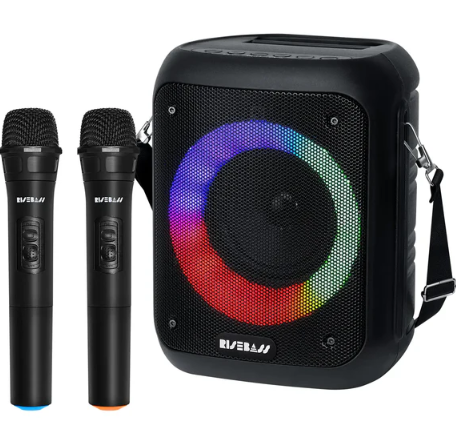
Table Of Content
- Introduction
- Wireless Chargers Worth Keeping on Your Desk
- Noise-Canceling Headphones for Real Life
- SSD Upgrades That Actually Feel Like a New Computer
- Mechanical Keyboards That Change How Typing Feels
- Smartwatches That Do More Than Tell Time
- Ultra-Wide Monitors for Work and Play
- Bluetooth Speakers for Every Room
- Smart Gadgets for Everyday Convenience
- How to Actually Choose the Right Gadget
- FAQs
- Wrapping It Up
Introduction
Shopping for Tech Gadgets in 2026 feels a bit like walking into a candy store where every shelf promises to change your life. Chargers claim to be faster, speakers claim to sound richer, and watches claim to know your body better than you do.
Some of that is marketing fluff, sure, but a lot of it is genuinely useful if you know what to look for. This guide walks through the categories worth your money right now, why they matter, and how to pick smart instead of picking fast.
Wireless Chargers Worth Keeping on Your Desk
A good charger doesn’t sound exciting until the day your cable finally gives out mid-call. That’s usually when people start paying attention to Qi2 wireless charging standards and why magnetic alignment actually matters. The newer chargers snap your phone into place instead of making you guess the sweet spot, and charging speeds have quietly crept up without needing a firmware update or a new phone.
If you’ve ever left your phone on a charging pad overnight only to find it barely topped up, you already know why this matters. A solid wireless charger should hit near-full in a couple of hours, work through most phone cases, and not turn into a space heater. Look for ones with built-in temperature control — it’s the difference between a gadget that lasts two years and one that dies in six months.
Noise-Canceling Headphones for Real Life
Headphones have stopped being just a way to block out noise. They’re now a way to reclaim a little bit of peace during a commute, a loud office, or a house full of kids. The best noise-canceling models use adaptive active noise cancellation that adjusts in real time to your surroundings rather than applying one static filter regardless of where you are.
What separates a decent pair from a great one isn’t just the noise cancellation — it’s how natural voices sound during calls, how the earcups feel after three hours, and whether the battery actually lasts as long as advertised. Cyber City Store carries a solid pick in this category if you want something tested and reasonably priced rather than a flagship you’re paying extra for just because of the logo.
SSD Upgrades That Actually Feel Like a New Computer
Nobody gets excited about a hard drive, but almost everyone gets excited about a computer that suddenly boots in ten seconds instead of two minutes. That’s the entire pitch for an SSD upgrade, and it’s one of the few upgrades where the difference is obvious the moment you turn the machine on.
Swapping a spinning hard drive for a solid-state drive doesn’t just speed up boot times — it speeds up literally everything. Apps open faster, files copy quicker, and even multitasking feels smoother because the drive isn’t the bottleneck anymore. If your laptop or desktop still runs on an old mechanical drive, this is probably the single cheapest performance boost you can buy this year, cheaper than a new processor and way cheaper than a whole new machine.
Mechanical Keyboards That Change How Typing Feels
There’s a reason people get oddly passionate about mechanical keyboards. Once you type on one with proper tactile switches, going back to a flat membrane keyboard feels like typing on a piece of cardboard. Each keypress registers with a distinct click or bump, which sounds like a small thing until you realize how much it reduces typos and finger fatigue over a long workday.
RGB lighting gets a lot of the attention in marketing photos, but the switch type is what actually matters day to day. Clicky switches suit people who like audible feedback, linear switches suit gamers who want speed without the noise, and tactile switches sit somewhere in between. If you spend more than a couple of hours a day typing, this isn’t a luxury purchase — it’s closer to buying a good chair or a good mattress.
Smartwatches That Do More Than Tell Time
Smartwatches used to be a notification screen strapped to your wrist. Now they track sleep stages, blood oxygen, heart rate variability, and workouts with enough accuracy that doctors are starting to take the data seriously. The appeal isn’t the watch face — it’s the quiet nudge to stand up, breathe, or check in on your body before something small becomes something worse.
The trick with a smartwatch is figuring out which features you’ll actually use. Some people want full GPS tracking for runs; others just want something that survives a shower and buzzes when a text comes in. Battery life varies wildly between models too, so it’s worth checking real-world reviews rather than the manufacturer’s best-case estimate, which almost never matches daily use.
Ultra-Wide Monitors for Work and Play
An ultra-wide monitor changes your setup in a way that’s hard to explain until you’ve used one. Instead of stacking two monitors with a visible bezel splitting your view, you get one continuous screen that fits spreadsheets side by side, or wraps around you during a game in a way a standard 16:9 panel never could.
Refresh rate matters here too — a 144Hz panel feels dramatically smoother than a 60Hz one, especially for anything fast-moving on screen. If you’re doing creative work, color accuracy should be the priority instead. Either way, once you make the switch to ultra-wide, going back to a smaller screen tends to feel cramped, almost like moving from a house back into an apartment.
Bluetooth Speakers for Every Room
A Bluetooth speaker is one of those gadgets that quietly earns its keep. It follows you from the kitchen to the backyard to the bathroom, and a decent one survives spills, drops, and the occasional trip through the rain without complaint. Battery life has improved a lot too — some models now run for over twenty hours on a single charge, which means it can handle an entire day outdoors without needing to sit near an outlet.
Sound quality is still the main differentiator. Cheaper speakers tend to distort at higher volumes, especially with bass-heavy tracks, while better-built ones stay clear even when pushed. If portability and durability matter more to you than audiophile-level sound, this category has more good options than almost any other on this list.
Smart Gadgets for Everyday Convenience
Beyond the big categories, there’s a growing lineup of smaller smart devices that make daily routines easier without demanding much attention. Think self-cleaning brushes, compact massagers, and kids’ writing tablets that replace a stack of paper. None of these are flashy, but they solve small annoyances well, and that’s often more valuable than another feature-packed flagship device.
These smaller gadgets also tend to be more affordable entry points if you’re just starting to build a smart home or want to test a category before committing to a bigger purchase. They’re the kind of thing you buy almost on impulse and then wonder how you lived without.
How to Actually Choose the Right Gadget
With so many options, it helps to ask a few practical questions before buying anything. Will you use this daily or just occasionally? Does it need to survive travel, drops, or water exposure? And is the price justified by features you’ll genuinely use, or just by a longer spec sheet? A gadget that fits your actual habits will always outperform one that just looks impressive in a review.
It also pays to read a handful of real user reviews rather than relying only on the product description. Battery life claims, in particular, are almost always optimistic. Checking a few independent reviews from sites like Wirecutter or RTINGS before buying can save you from a return process later.
FAQs
What’s the most useful tech gadget to buy first in 2026?
A wireless charger or a good pair of headphones usually gives the most day-to-day value for the price, since both get used constantly without much upkeep.
Are ultra-wide monitors worth it for gaming?
Yes, especially for immersive or open-world games, though it’s worth checking that your graphics card can comfortably run the higher resolution.
Do SSDs really make that much of a difference?
Absolutely — it’s one of the few upgrades where you can feel the improvement within the first few minutes of use.
How long should a good smartwatch battery last?
Anywhere from two days to two weeks depending on the model and how many sensors are active, so check real usage reviews rather than marketing numbers.
Is it better to buy tech gadgets from a specialized store?
It can be, especially when the store curates products and offers support after the sale rather than just listing everything available.
Wrapping It Up
Buying tech in 2026 doesn’t have to mean chasing every new release. The gadgets that actually earn a spot in your daily life are the ones that solve a real problem — a charger that stops the anxiety of a dying phone, headphones that make a loud commute bearable, or an SSD that turns a slow laptop back into something usable.
Start with what annoys you most in your current setup, then build outward from there. That’s a far better strategy than buying whatever’s trending this week and hoping it sticks.



No Comment! Be the first one.