





Northwest Naturals Cat Food Benefits & Review
Northwest Naturals cat food appeals to owners who want raw nutrition without preparing meat, organs, supplements, and bone at home. Its Cat Nibbles come in small freeze-dried pieces, while Protein...

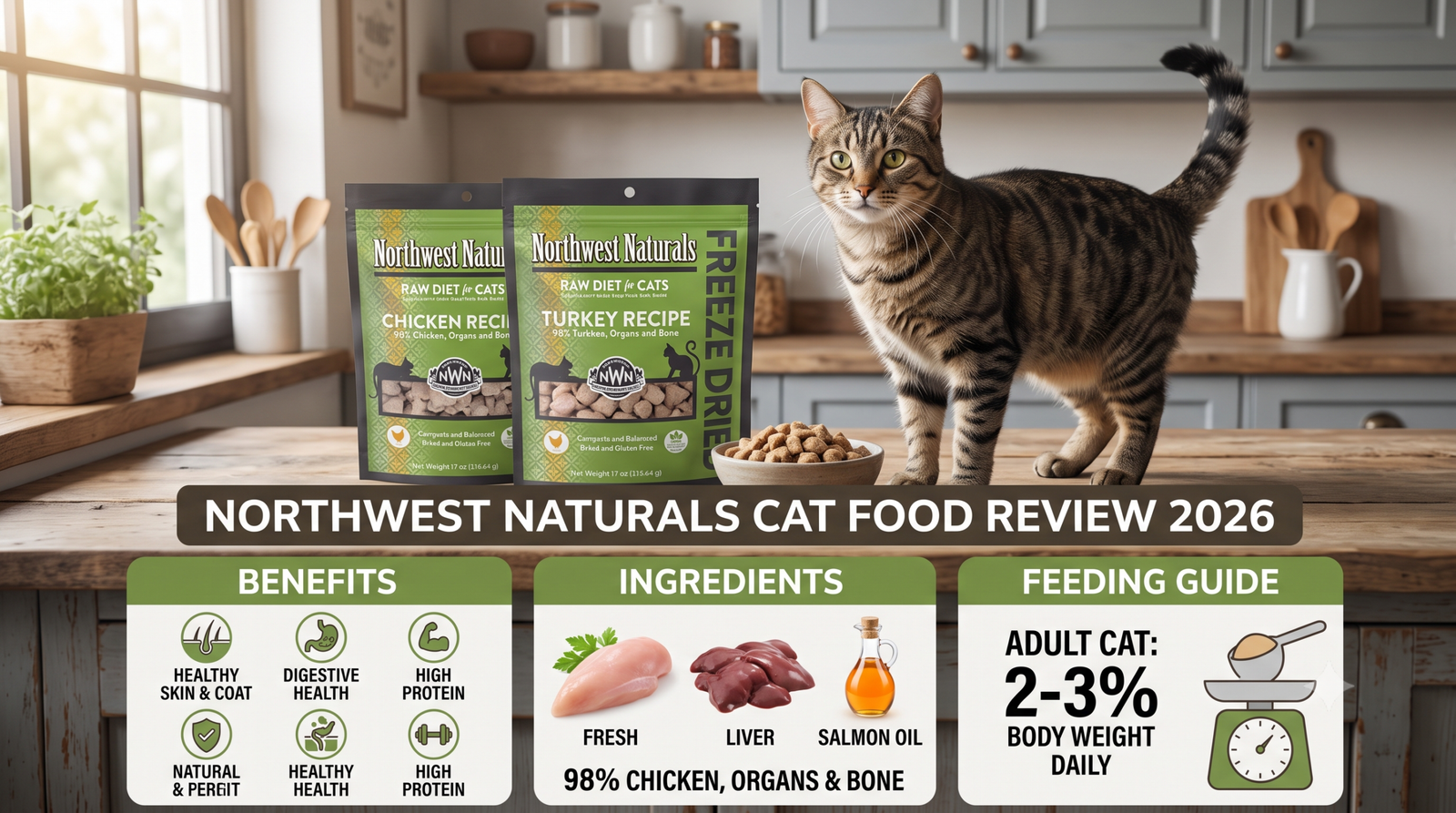
Table Of Content
- What Is Northwest Naturals Cat Food?
- Northwest Naturals Cat Food Formula Comparison
- Northwest Naturals Chicken Recipe Ingredients
- Is Northwest Naturals Cat Food Complete and Balanced?
- Potential Benefits
- Multiple Protein Choices
- Named Meat, Organ, and Bone Sources
- Frozen and Shelf-Stable Options
- Small Pieces for Cats
- Drawbacks to Consider
- Some Recipes Are Extremely High in Fat
- Freeze-Dried Food Contains Little Moisture
- The Cost Can Be High
- Raw-Food Safety and Recall History
- How to Feed Northwest Naturals Cat Food
- Choose the Exact Recipe First
- Calculate a Starting Portion
- Rehydrate Freeze-Dried Nibbles
- Transition Gradually
- Measure Results, Not Marketing Claims
- Who May Benefit From Northwest Naturals?
- Is Northwest Naturals Cat Food Worth Buying?
- Frequently Asked Questions
- Is Northwest Naturals cat food suitable for kittens?
- Should Northwest Naturals freeze-dried cat food be rehydrated?
- Is Northwest Naturals a limited-ingredient food?
- Has Northwest Naturals cat food been recalled?
- Can Northwest Naturals be used only as a topper?
Northwest Naturals cat food appeals to owners who want raw nutrition without preparing meat, organs, supplements, and bone at home. Its Cat Nibbles come in small freeze-dried pieces, while Protein Boost recipes are sold frozen. Both formats focus heavily on animal ingredients.
That sounds promising, but raw food requires a closer look. Recipe nutrition varies widely, feeding costs can rise quickly, and recent H5N1 concerns have changed how cat owners should think about uncooked poultry products.
At a Glance: Northwest Naturals cat food offers frozen and freeze-dried raw recipes made with named meats, organs, ground bone, and added nutrients. Several formulas meet AAFCO profiles for all life stages. The foods provide varied protein choices and convenient portions, but raw-food safety, recipe-specific fat levels, hydration, and cost require careful consideration.
What Is Northwest Naturals Cat Food?
Northwest Naturals produces raw frozen and freeze-dried foods for cats and dogs. Its feline range includes bite-sized Cat Nibbles and frozen Protein Boost meals. The company says these formulas use meat, organs, ground bone, and whole-food supplements.
Freeze-dried Cat Nibbles are sold in lightweight, shelf-stable bags. They can be served dry or softened with warm water. Frozen Protein Boost recipes must remain frozen, then be thawed according to the package directions.
The brand offers several animal-protein choices, including:
- Chicken
- Turkey
- Duck
- Rabbit
- Whitefish
- Beef and trout
Not every format or recipe is stocked by every retailer. Package sizes and availability can also change.
The company sells Northwest Naturals dog food under the same brand, but cat and dog formulas are not interchangeable. Cats have specific nutritional requirements, including a dietary need for taurine, so always choose a product labeled as complete cat food.
Northwest Naturals Cat Food Formula Comparison
The nutritional profile changes considerably between recipes. That matters more than choosing the flavor your cat appears to like.
| Freeze-dried recipe | Protein minimum | Fat minimum | Fiber maximum | Moisture maximum | Best suited to |
| Chicken | 45% | 15% | 5% | 5% | Cats needing a moderate-fat poultry recipe |
| Duck | 35% | 30% | 5% | 5% | Active cats that tolerate a richer meal |
| Whitefish | 50% | 9% | 5% | 5% | Owners seeking the lowest-fat option shown |
| Beef and Trout | 33% | 45% | 7% | 5% | Cats needing very calorie-dense food under suitable guidance |
These figures come from current Northwest Naturals recipe pages and apply to the freeze-dried versions. Formulas and label values may change, so confirm the bag before purchasing.
The table shows why brand-level descriptions can mislead. Whitefish lists 9% minimum fat, while Beef and Trout lists 45%. Those are not minor differences.
A cat with excess weight or a condition affected by dietary fat may need a very different recipe from a young, highly active cat. Do not assume every Northwest Naturals formula will suit the same animal.
Northwest Naturals Chicken Recipe Ingredients
The freeze-dried Chicken Recipe currently lists chicken, chicken necks, chicken hearts, chicken liver, egg, gelatin, water, dulse powder, dried kelp, ground flaxseed, organic psyllium husk powder, salmon oil, inulin, potassium chloride, sodium chloride, taurine, vitamins, minerals, and mixed tocopherols.
The opening ingredients are clearly named animal foods. Chicken necks provide meat and ground bone, while hearts and liver supply protein and naturally occurring vitamins and minerals.
The added taurine is important because cats cannot make enough of this amino acid on their own. A taurine deficiency can harm the heart, vision, reproduction, and other body functions.
The formula also includes several non-meat ingredients. Psyllium husk and inulin can supply fermentable or stool-supporting fiber. Flaxseed, kelp, dulse, vitamins, and minerals help build the intended nutrient profile.
Does a long meat-first ingredient list prove that this is the best food for your cat? No.
WSAVA advises owners to look beyond marketing and ask who formulated the food, what qualifications that person has, how the company tests ingredients and finished products, and whether it conducts nutrition research. The nutritional adequacy statement and calorie content also matter more than attractive package claims.
Is Northwest Naturals Cat Food Complete and Balanced?
The official Rabbit and Beef and Trout pages state that the recipes are formulated to meet AAFCO Cat Food Nutrient Profiles for all life stages. The Chicken product is also marketed for cats and kittens.
An all-life-stages statement means a food is formulated for the more demanding growth and reproduction profile, not just adult maintenance. That does not mean one serving amount works for kittens, adult cats, pregnant cats, and seniors.
Check the exact statement on your chosen bag. Some products sold under the brand may be treats, toppers, or supplemental foods rather than complete meals.
Expert tip: Never judge completeness from the words “raw,” “natural,” or “protein boost.” Find the AAFCO adequacy statement. If the label says the food is for intermittent or supplemental feeding only, it should not replace a complete daily diet unless your veterinarian has designed the plan.
Potential Benefits
Multiple Protein Choices
The range gives owners more choices than a single chicken-based product line. Rabbit, duck, fish, turkey, and beef combinations may help when a cat dislikes common flavors.
However, changing to another store-bought protein is not the same as conducting a controlled allergy trial. Cats with suspected food reactions often need a veterinarian-selected novel-protein or hydrolyzed diet with strict avoidance of other foods.
Named Meat, Organ, and Bone Sources
The Chicken Recipe identifies the animal sources rather than relying on unclear terms. Hearts, liver, necks, meat, and ground bone form the base of the formula.
That transparency makes it easier to screen for known ingredients your cat cannot tolerate.
Frozen and Shelf-Stable Options
Frozen meals supply moisture in their original form, while freeze-dried nibbles are easier to store, measure, and take while traveling. The freeze-dried products can be served dry or rehydrated.
Small Pieces for Cats
Cat Nibbles are smaller than many freeze-dried dog nuggets. The brand’s feeding information estimates approximately 14 to 18 nibbles per ounce, although the exact count can vary.
The small size also lets owners crumble a measured amount over another complete cat food.
Drawbacks to Consider
Some Recipes Are Extremely High in Fat
Beef and Trout lists 45% minimum fat in its freeze-dried form. Duck lists 30%. By contrast, Whitefish lists 9%.
A rich recipe may work for one healthy cat but cause unwanted weight gain or digestive trouble in another. Cats with pancreatitis, obesity, abnormal blood lipids, or another medical condition need individual veterinary advice.
Freeze-Dried Food Contains Little Moisture
The freeze-dried recipes in the comparison table contain no more than 5% moisture. Cats eating them dry must obtain water separately.
Northwest Naturals recommends adding warm water and allowing the nibbles to rehydrate before serving. Rehydration can also soften the texture and increase the food’s aroma.
Do not rely on freeze-dried food alone to treat urinary or kidney disease. Cats with those conditions may need a veterinarian-formulated diet with controlled mineral, phosphorus, protein, calorie, or moisture levels.
The Cost Can Be High
An 11-ounce Chicken Recipe bag was listed at $30.99 when checked. One independent review estimated that a moderately active 10-pound cat might eat around 1.3 ounces of the freeze-dried food daily based on the brand’s calculator.
At those figures, one bag would last about eight or nine days and cost roughly $3.66 per day. That is around $110 for a 30-day month before tax, delivery, or price changes.
This is only a practical estimate. Your cat’s actual portion will depend on the selected recipe, calories, weight, body condition, age, activity, and whether the food is fed alone or as a topper.
Raw-Food Safety and Recall History
Raw frozen and freeze-dried foods have not undergone cooking or canning that reliably inactivates pathogens. Freeze-drying removes water, but it should not be treated as a sterilization step.
The FDA found that commercially available raw pet foods were more likely than other tested food types to contain disease-causing bacteria such as Salmonella or Listeria.
H5N1 adds another concern for raw poultry-based foods. The FDA states that cats can develop severe or fatal illness after eating contaminated uncooked poultry, meat, eggs, or unpasteurized dairy products that have not received a virus-inactivating processing step.
In December 2024, the Oregon Department of Agriculture reported that a specific two-pound lot of Northwest Naturals frozen Feline Turkey Recipe tested positive for H5N1. Officials said genetic sequencing matched the virus in the food to the virus found in an indoor cat that became ill and died. The affected best-by codes were May 21, 2026 B10 and June 23, 2026 B1.
Northwest Naturals later stated that it ended the voluntary recall after a subsequent FDA audit. A pet-food industry report said that audit found no evidence of H5N1 contamination in the limited production run it reviewed.
These later developments do not change the general FDA warning about uncooked pet food. Buyers should check current recall records, package codes, and public-health guidance rather than assuming that every bag has the same risk.
How to Feed Northwest Naturals Cat Food
Choose the Exact Recipe First
Start by reviewing the recipe’s calories, fat content, protein sources, AAFCO statement, and feeding chart. Do not use the feeding amount from Chicken for Beef and Trout because their nutrient and energy profiles may differ.
Calculate a Starting Portion
Northwest Naturals says its feeding guidelines are approximate because pets have different metabolic needs. Its general raw-feeding guidance suggests feeding adult cats a daily amount equal to approximately 2% to 3% of body weight, divided into two meals. Use the package chart or brand calculator for the selected format rather than applying that percentage blindly.
Kittens and pregnant or nursing cats may need three or four meals daily and substantially different calorie amounts.
Rehydrate Freeze-Dried Nibbles
Place the measured food in a clean bowl, add warm water, allow it to absorb the liquid, and then serve. The company does not require owners to cook the food.
Prepare only the amount your cat will eat promptly. Refrigerate any permitted leftovers according to the package directions and discard food that has remained at room temperature too long.
Transition Gradually
Mix a small amount of Northwest Naturals with the current food. Increase the new food slowly while reducing the old diet. Retailer directions recommend a gradual transition rather than an immediate replacement.
A seven-to-ten-day transition works for many cats, but sensitive cats may need longer. Watch for vomiting, diarrhea, constipation, refusal to eat, itching, or rapid weight changes.
Cats should not go for extended periods without eating. Contact a veterinarian promptly when a cat refuses meals, especially if the cat is overweight, ill, very young, or elderly.
Measure Results, Not Marketing Claims
Weigh your cat every two to four weeks after switching. Check stool quality, appetite, coat condition, energy, vomiting frequency, and water intake.
For example, suppose a 10-pound indoor cat begins gaining weight after three weeks on the Duck Recipe. The answer may not be to reject the whole brand. The 30% minimum fat formula could simply be too calorie-dense for that cat’s activity level. A smaller portion or a different complete recipe may be more suitable, provided the nutritional needs are still met.
Who May Benefit From Northwest Naturals?
Northwest Naturals cat food may suit:
- Healthy cats whose owners specifically choose raw feeding
- Cats that prefer meat-rich aromas and soft rehydrated pieces
- Owners seeking rabbit, duck, fish, or mixed-protein choices
- Households able to follow strict food-hygiene practices
- Cats that need an all-life-stages food confirmed on the package
- Owners using a measured amount as a topper
Another diet may be safer or more practical for:
- Cats needing a prescription kidney, urinary, digestive, diabetic, or weight-control diet
- Cats with medical reasons to limit fat
- Households with young children, pregnant people, older adults, or immunocompromised individuals
- Owners unable to store or handle raw food safely
- Cats requiring a strict elimination diet
- Households seeking a lower monthly food cost
Is Northwest Naturals Cat Food Worth Buying?
Northwest Naturals can be a reasonable choice for an owner who understands raw-food risks, selects a recipe based on nutrition rather than flavor, and can manage the ongoing expense. Its named meats, organs, bone, varied proteins, and complete-diet options are meaningful strengths.
Do not choose a formula until you compare its guaranteed analysis with your cat’s current health needs. Pay close attention to fat, calories, life-stage labeling, and raw-food handling.
Your next step is simple: photograph the exact package label, calculate a full month’s cost, and ask your veterinarian whether that specific recipe fits your cat. Then begin with one small bag, not a bulk order.
Frequently Asked Questions
Is Northwest Naturals cat food suitable for kittens?
Several Northwest Naturals recipes are labeled for all life stages, which includes kitten growth. Confirm the AAFCO statement on the exact package and use a kitten-appropriate feeding amount.
Should Northwest Naturals freeze-dried cat food be rehydrated?
The nibbles can be served dry or rehydrated, but the company’s feeding directions recommend adding warm water and allowing the food to soften. Rehydration is especially useful for cats that consume little water.
Is Northwest Naturals a limited-ingredient food?
Some recipes focus on one main animal species, while others combine proteins, such as Beef and Trout. Added egg, fish oil, supplements, or other ingredients may also matter for sensitive cats, so read the complete label.
Has Northwest Naturals cat food been recalled?
A limited lot of frozen Feline Turkey Recipe was voluntarily recalled in December 2024 following an H5N1 investigation. The company later announced the recall had ended after an FDA audit. Buyers should still check current government recall records and lot codes.
Can Northwest Naturals be used only as a topper?
Complete and balanced recipes can be fed as full meals, treats, or measured toppers. When using the food as a topper, reduce the base meal to prevent excess calorie intake.
Read More: Dr Marty Cat Food Review: Is This Premium Formula the Right Choice for Your Cat?
Read More: Leather Chew Toys for Dogs: Benefits, Safety Tips, and Buying Guide



No Comment! Be the first one.