





Improve Indoor Comfort with Next Generation Temperature Management Systems
Indoor comfort has become an essential part of modern living and working environments. Whether in homes, offices, hospitals, hotels, or commercial spaces, maintaining the right indoor temperature...

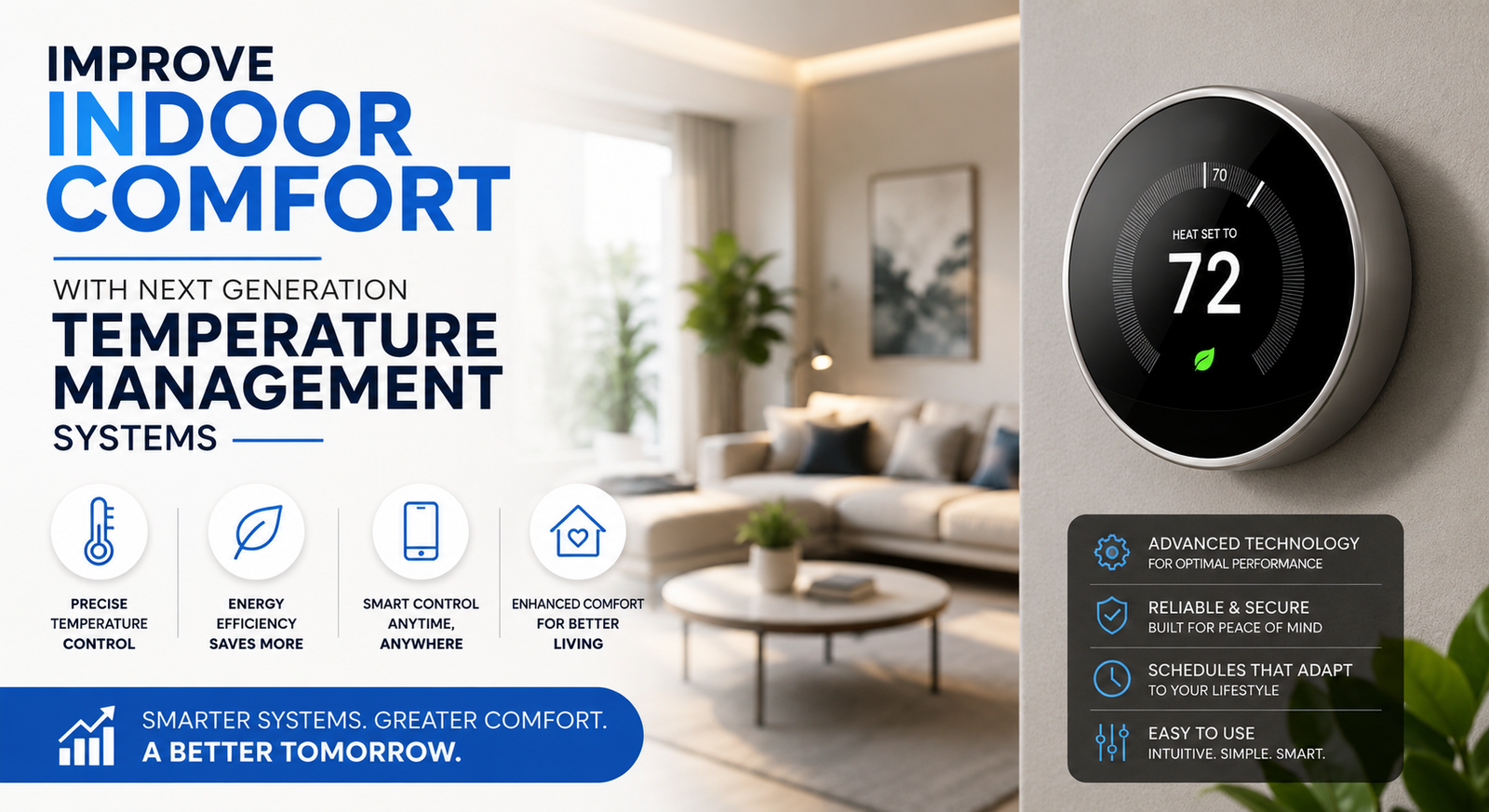
Table Of Content
- Understanding Next Generation Temperature Management Systems
- Importance of Indoor Comfort
- Features of Advanced Temperature Management Systems
- Smart Temperature Control
- Energy Efficiency
- Improved Air Quality
- Remote Access and Automation
- Benefits for Residential Spaces
- Enhanced Living Comfort
- Reduced Energy Costs
- Quiet Operation
- Eco Friendly Performance
- Advantages for Commercial and Industrial Applications
- Increased Workplace Productivity
- Better Customer Experience
- Lower Operational Expenses
- Centralized Building Management
- Role of Artificial Intelligence in Climate Control
- Sustainability and Environmental Impact
- Choosing the Right Temperature Management System
- Future of Indoor Temperature Management
- Conclusion
Indoor comfort has become an essential part of modern living and working environments. Whether in homes, offices, hospitals, hotels, or commercial spaces, maintaining the right indoor temperature directly affects health, productivity, and overall well-being. Traditional heating and cooling systems are no longer sufficient to meet the growing demand for energy efficiency, environmental sustainability, and personalized comfort. This is where next generation temperature management systems are transforming the way indoor spaces are controlled and maintained.
Advanced temperature management technologies combine smart automation, energy-efficient components, and intelligent climate control solutions to deliver superior indoor comfort. These systems not only regulate temperature but also optimize air quality, humidity levels, and energy consumption. As industries and homeowners increasingly prioritize comfort and sustainability, next generation temperature management systems are becoming a valuable investment.
NOTE :- Smart home and office upgrades had become easier with Google Nest Thermostat Supplier In UAE services offering advanced temperature management solutions. Innovative thermostat technology had delivered energy efficiency and seamless control for modern spaces. Connect with AL Rayan Services for trusted products, professional assistance, and customized climate control solutions across the UAE.
Understanding Next Generation Temperature Management Systems
Next generation temperature management systems refer to advanced heating, ventilation, air conditioning, and refrigeration technologies designed to improve indoor climate control. Unlike traditional systems that operate with fixed settings, modern systems use sensors, automation, artificial intelligence, and smart connectivity to deliver precise temperature regulation.
These systems continuously monitor indoor conditions and make automatic adjustments to maintain optimal comfort levels. They can be integrated with smart home technologies, mobile applications, and building management systems, allowing users to control indoor temperatures remotely and efficiently.
The primary objective of these advanced systems is to create a balanced indoor environment while minimizing energy consumption and operational costs.
Importance of Indoor Comfort
Indoor comfort significantly impacts human health and performance. Poor temperature control can lead to discomfort, fatigue, reduced concentration, and health issues. Excessive heat or cold affects sleep quality, workplace productivity, and customer satisfaction in commercial spaces.
Modern temperature management systems help maintain stable indoor conditions that support physical comfort and mental well-being. In workplaces, comfortable environments improve employee efficiency and reduce stress levels. In residential settings, optimized indoor temperatures create healthier and more relaxing living spaces.
Healthcare facilities also benefit greatly from advanced climate control systems, as maintaining proper temperature and humidity levels is critical for patient care and infection control.
Features of Advanced Temperature Management Systems
Smart Temperature Control
One of the most important features of next generation systems is smart temperature control. Intelligent thermostats and automated sensors monitor indoor conditions in real time and make adjustments based on occupancy, weather changes, and user preferences.
This technology ensures consistent comfort without requiring constant manual intervention. Smart systems can also learn user habits and automatically optimize temperature settings throughout the day.
Energy Efficiency
Energy efficiency is a major advantage of modern temperature management solutions. Traditional HVAC systems often waste energy due to inefficient operation and outdated technology. Advanced systems use inverter technology, variable speed compressors, and energy-saving algorithms to reduce power consumption.
These systems operate only when necessary and adjust cooling or heating output according to demand. As a result, users can significantly lower their electricity bills while reducing their environmental impact.
Improved Air Quality
Indoor air quality plays a vital role in maintaining a healthy environment. Many next generation systems include advanced air filtration and purification technologies that remove dust, allergens, bacteria, and pollutants from indoor air.
Some systems also regulate humidity levels, preventing excessive dryness or moisture buildup. Balanced humidity improves comfort and reduces the risk of mold growth and respiratory problems.
Remote Access and Automation
Modern temperature management systems can be connected to smartphones and smart devices, allowing users to control indoor settings remotely. This feature provides convenience and flexibility, especially for busy homeowners and facility managers.
Users can adjust temperature settings before arriving home, monitor energy usage, and receive maintenance alerts through dedicated mobile applications. Automation features also help improve operational efficiency in commercial buildings.
Benefits for Residential Spaces
Enhanced Living Comfort
Homeowners can enjoy personalized comfort with precise temperature control in different rooms or zones. Advanced systems eliminate uneven cooling and heating issues, creating a more comfortable indoor environment throughout the year.
Reduced Energy Costs
Energy-efficient systems help households save money by optimizing energy consumption. Smart scheduling and occupancy detection prevent unnecessary operation, reducing monthly utility expenses.
Quiet Operation
Many next generation systems are designed for quieter performance compared to traditional HVAC units. Reduced noise levels contribute to a more peaceful and relaxing home environment.
Eco Friendly Performance
Modern temperature management systems support sustainability by reducing greenhouse gas emissions and energy waste. Many systems use environmentally friendly refrigerants and energy-efficient components to minimize environmental impact.
Advantages for Commercial and Industrial Applications
Increased Workplace Productivity
Comfortable indoor temperatures positively influence employee concentration, morale, and productivity. Businesses that invest in advanced climate control systems create healthier and more efficient work environments.
Better Customer Experience
Hotels, shopping malls, restaurants, and entertainment venues rely heavily on indoor comfort to enhance customer satisfaction. Proper temperature management encourages customers to stay longer and enjoy their experience.
Lower Operational Expenses
Commercial facilities consume large amounts of energy for heating and cooling. Advanced systems reduce energy waste and improve operational efficiency, helping businesses lower long-term operating costs.
Centralized Building Management
Large commercial buildings benefit from centralized climate control systems that allow facility managers to monitor and control multiple zones from a single platform. This improves maintenance planning and system performance.
Role of Artificial Intelligence in Climate Control
Artificial intelligence is playing a growing role in temperature management technology. AI-powered systems analyze usage patterns, weather forecasts, and occupancy data to optimize indoor conditions automatically.
These intelligent systems can predict cooling and heating requirements, detect inefficiencies, and recommend maintenance actions before major issues occur. Predictive maintenance reduces downtime and extends equipment lifespan.
AI integration also improves energy optimization by continuously adjusting system performance based on real-time environmental conditions.
Sustainability and Environmental Impact
Sustainability has become a major focus in modern building design and facility management. Next generation temperature management systems contribute to environmental conservation by reducing energy consumption and carbon emissions.
Energy-efficient technologies help organizations meet environmental regulations and green building standards. Many businesses are adopting smart climate control systems as part of their sustainability initiatives and corporate social responsibility goals.
Renewable energy integration is another growing trend. Some advanced systems can work alongside solar power and other renewable energy sources to further improve energy efficiency.
Choosing the Right Temperature Management System
Selecting the right system depends on several factors, including building size, usage requirements, climate conditions, and budget. It is important to evaluate system efficiency ratings, smart features, maintenance requirements, and long-term operating costs.
Professional installation and regular maintenance are essential for maximizing system performance and reliability. Working with experienced HVAC professionals ensures that the system is properly designed and optimized for the specific application.
Businesses and homeowners should also consider scalability and future technology integration when investing in modern climate control solutions.
Future of Indoor Temperature Management
The future of indoor comfort technology is driven by automation, connectivity, and sustainability. Innovations such as IoT-enabled devices, AI-driven climate optimization, and renewable energy integration will continue to reshape the industry.
Future systems are expected to become even more intelligent, offering predictive comfort adjustments, advanced air purification, and fully automated energy management. As technology evolves, indoor environments will become healthier, more efficient, and more personalized than ever before.
Conclusion
Next generation temperature management systems are revolutionizing indoor comfort by combining smart technology, energy efficiency, and advanced climate control capabilities. These systems provide significant benefits for residential, commercial, and industrial environments by improving comfort, reducing energy costs, and supporting sustainability goals.
As demand for healthier and more efficient indoor spaces continues to grow, investing in advanced temperature management solutions has become increasingly important. Businesses and homeowners that adopt modern climate control technologies can enjoy long-term comfort, operational savings, and improved environmental performance.
For More Insightful Articles Related To This Topic, Feel Free To Visit: https://ecomotion.ae/



No Comment! Be the first one.