





Common Mistakes to Avoid When Buying Electrical Switchgear Equipment
Electrical switchgear equipment plays a critical role in maintaining the safety, reliability, and efficiency of electrical systems in residential, commercial, and industrial environments. It is...

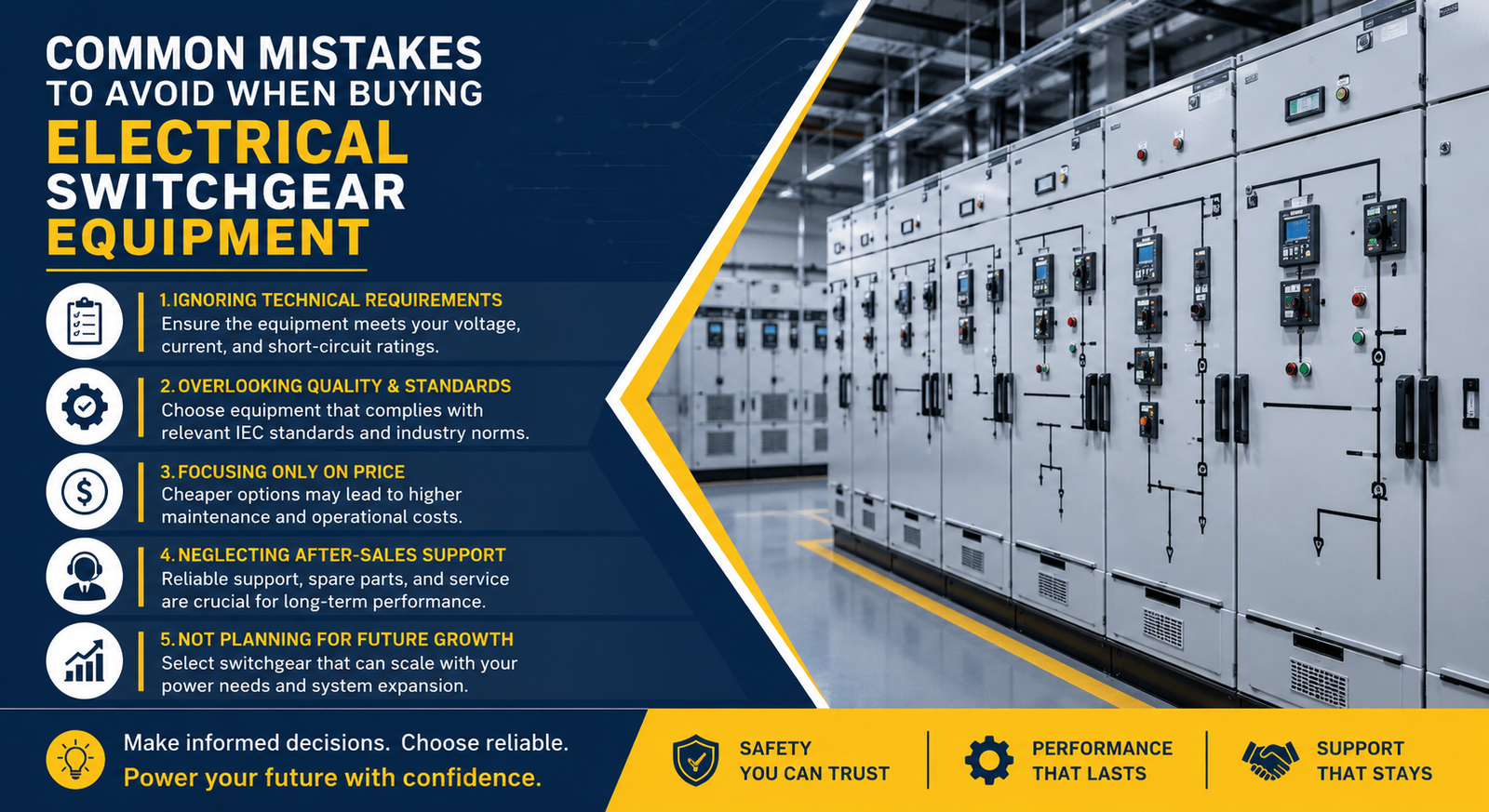
Table Of Content
- Ignoring the Actual Power Requirements
- Focusing Only on Price
- Overlooking Safety Standards and Certifications
- Choosing the Wrong Type of Switchgear
- Neglecting Future Expansion Needs
- Ignoring Environmental Conditions
- Failing to Evaluate Maintenance Requirements
- Not Verifying Manufacturer Reputation
- Ignoring Energy Efficiency
- Lack of Proper Technical Consultation
- Ignoring Installation Quality
- Overlooking Warranty and After Sales Support
- Conclusion
Electrical switchgear equipment plays a critical role in maintaining the safety, reliability, and efficiency of electrical systems in residential, commercial, and industrial environments. It is responsible for controlling, protecting, and isolating electrical equipment during normal operation and fault conditions. Since switchgear is a long-term investment, selecting the right equipment is essential for ensuring uninterrupted power distribution and minimizing operational risks.
However, many businesses and facility owners make avoidable mistakes while purchasing electrical switchgear equipment. These mistakes can lead to equipment failure, safety hazards, increased maintenance costs, and reduced system efficiency. Understanding these common errors can help buyers make informed decisions and choose equipment that meets both current and future requirements.
NOTE :- Industries and businesses had preferred Electrical Switchgear Suppiler in UAE for advanced switchgear equipment designed to meet modern electrical demands. Reliable electrical solutions had improved safety standards and system reliability across multiple sectors. Clients had partnered with Al Arz Electrical Ware Trading for superior products, competitive service, and trusted electrical supply solutions in the UAE market.
Ignoring the Actual Power Requirements
One of the most common mistakes buyers make is failing to accurately assess their power requirements before purchasing switchgear equipment. Many organizations either underestimate or overestimate their electrical load demands. Undersized switchgear may lead to overloads and frequent system failures, while oversized equipment can result in unnecessary expenses.
Before making a purchase, it is important to conduct a detailed load analysis and evaluate the current and future power demands of the facility. Considering future expansion plans is equally important, as upgrading switchgear later can be expensive and disruptive.
Focusing Only on Price
Price is an important factor in any purchase decision, but choosing switchgear equipment solely based on the lowest price can be a costly mistake. Cheap equipment may lack quality components, advanced safety features, or proper certifications. Low-quality switchgear can result in frequent breakdowns, high maintenance costs, and reduced operational efficiency.
Instead of focusing only on upfront costs, buyers should consider the overall value of the equipment. Factors such as durability, performance, energy efficiency, maintenance requirements, and manufacturer support should be evaluated carefully. Investing in high-quality switchgear often leads to better long-term savings and improved system reliability.
Overlooking Safety Standards and Certifications
Electrical switchgear directly impacts workplace safety. Purchasing equipment that does not comply with recognized industry standards can expose facilities to serious electrical hazards. Some buyers fail to verify whether the switchgear meets local and international safety regulations.
It is essential to ensure that the equipment complies with standards such as IEC, ANSI, or other applicable certifications depending on the region and industry. Certified equipment undergoes rigorous testing to ensure safe operation under various conditions. Ignoring safety compliance can lead to accidents, legal liabilities, and operational downtime.
Choosing the Wrong Type of Switchgear
Different applications require different types of switchgear. One common mistake is selecting equipment without understanding the operational environment and application requirements. For example, low-voltage switchgear is suitable for residential and small commercial applications, while medium-voltage and high-voltage switchgear are required for industrial and utility applications.
Buyers should carefully evaluate the voltage level, installation environment, load type, and operational conditions before selecting the equipment. Consulting experienced electrical engineers or suppliers can help ensure the correct type of switchgear is chosen for the intended application.
Neglecting Future Expansion Needs
Many buyers focus only on their current electrical needs and ignore future expansion possibilities. As businesses grow, their power requirements often increase. If the installed switchgear does not have sufficient capacity for future upgrades, the entire system may need replacement earlier than expected.
Planning for future scalability is essential when purchasing switchgear equipment. Choosing modular or expandable systems allows organizations to accommodate future growth without major infrastructure changes. This approach saves both time and money in the long run.
Ignoring Environmental Conditions
Environmental factors significantly influence the performance and lifespan of electrical switchgear. Some buyers fail to consider the installation environment while selecting equipment. Conditions such as humidity, dust, temperature fluctuations, corrosive chemicals, and outdoor exposure can affect switchgear reliability.
For harsh environments, specialized switchgear with appropriate protection ratings should be selected. Outdoor installations may require weatherproof enclosures, while industrial facilities may need dust-resistant or corrosion-resistant designs. Proper environmental compatibility helps prevent premature equipment failure and ensures safe operation.
Failing to Evaluate Maintenance Requirements
Switchgear equipment requires regular inspection and maintenance to ensure optimal performance. Some buyers overlook maintenance considerations and choose systems that are difficult or expensive to maintain. Complex maintenance procedures can increase downtime and operational costs.
Before purchasing switchgear, it is important to evaluate the maintenance requirements, availability of spare parts, and accessibility of components. Equipment with user-friendly maintenance features and strong after-sales support can significantly reduce long-term operational challenges.
Not Verifying Manufacturer Reputation
The reputation and reliability of the manufacturer play a major role in the quality of switchgear equipment. Some buyers purchase products from unknown or unreliable suppliers without checking their market reputation, customer reviews, or industry experience.
Choosing a trusted manufacturer ensures better product quality, technical support, warranty coverage, and compliance with industry standards. Reputable manufacturers also provide better documentation, installation guidance, and maintenance assistance, which contribute to the overall reliability of the electrical system.
Ignoring Energy Efficiency
Energy efficiency has become an important consideration in modern electrical systems. Some buyers fail to evaluate the energy performance of switchgear equipment, resulting in higher energy consumption and operating costs.
Modern switchgear systems are designed with advanced technologies that improve energy efficiency and reduce power losses. Investing in energy-efficient equipment can help businesses lower electricity costs and support sustainability goals. Evaluating energy ratings and efficiency features before purchasing can provide significant long-term benefits.
Lack of Proper Technical Consultation
Purchasing electrical switchgear without professional guidance is another major mistake. Electrical systems can be highly complex, and improper equipment selection may lead to compatibility issues or operational failures.
Consulting experienced electrical engineers, consultants, or trusted suppliers helps buyers understand technical specifications, installation requirements, and system compatibility. Professional advice ensures that the selected switchgear meets operational needs while maintaining safety and efficiency standards.
Ignoring Installation Quality
Even the best switchgear equipment can fail if it is not installed correctly. Some buyers focus only on the equipment itself and overlook the importance of professional installation. Improper installation can result in loose connections, overheating, electrical faults, and safety risks.
It is important to hire qualified and experienced professionals for switchgear installation. Proper installation practices, testing, and commissioning ensure reliable operation and minimize future technical issues.
Overlooking Warranty and After Sales Support
Warranty coverage and after-sales support are critical factors when purchasing switchgear equipment. Some buyers ignore these aspects and later face difficulties obtaining technical assistance or replacement parts.
Reliable manufacturers and suppliers typically offer comprehensive warranties and responsive customer support services. Strong after-sales support helps resolve technical issues quickly and ensures uninterrupted operations. Buyers should carefully review warranty terms, service availability, and technical support options before finalizing a purchase.
Conclusion
Buying electrical switchgear equipment is a significant investment that directly affects the safety, efficiency, and reliability of electrical systems. Avoiding common mistakes such as focusing only on price, ignoring safety standards, neglecting future expansion, and overlooking maintenance requirements can help buyers make smarter purchasing decisions.
A well-planned approach that includes proper load analysis, environmental assessment, technical consultation, and evaluation of manufacturer reputation ensures that the selected switchgear equipment delivers long-term performance and operational reliability. By prioritizing quality, safety, and future scalability, businesses can protect their electrical infrastructure and reduce the risk of costly failures and downtime.
For More Insightful Articles Related To This Topic, Feel Free To Visit: https://ecomotion.ae/


No Comment! Be the first one.