





How Private Medical Insurance Protects Your Finances in Emergencies?
Almost no one talks about the second-worst part of a medical emergency. The first worst part is obviously the health issue itself. The second worst part is the bill that arrives three days later, and...

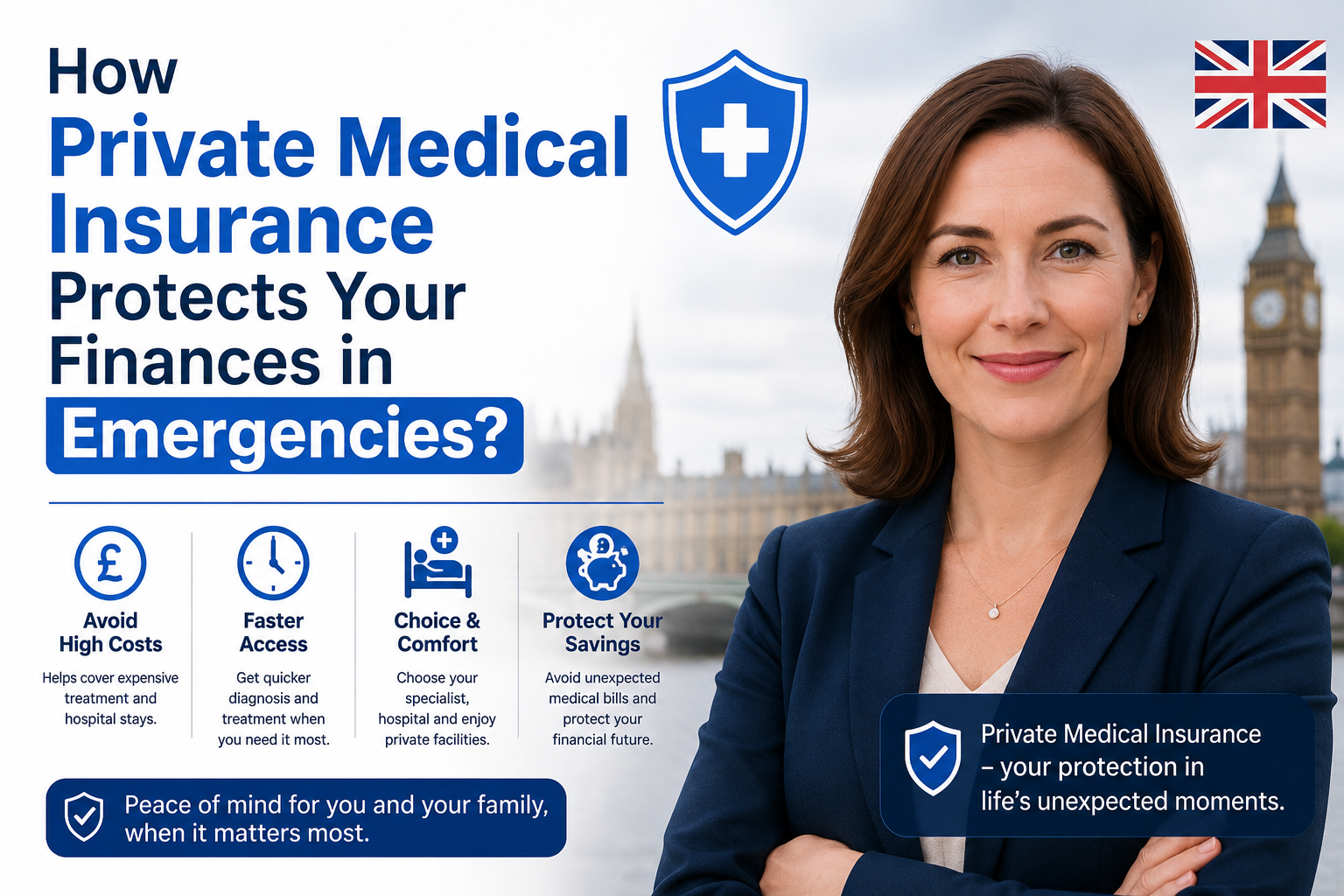
Table Of Content
- What Private Medical Insurance Actually Does For Your Finances?
- The Financial Impact No One Talks About
- Side By Side Real World Cost Comparison
- What Actually Happens When You Have No Cover?
- Immediate Short-Term Pressure
- Long-Term Debt Impact
- Features That Actually Matter In A Real Emergency
- Cashless Settlement
- 24/7 Emergency Claims Line
- No Pre-Approval for Emergencies
- When You Will Still Have To Pay Money
- Key Features To Look For When Choosing
- Conclusion
Almost no one talks about the second-worst part of a medical emergency. The first worst part is obviously the health issue itself. The second worst part is the bill that arrives three days later, and the absolute panic of working out how you will pay it. Even if you use the NHS, there are dozens of situations where you will end up facing high, unexpected private medical costs.
Private medical insurance is not just about faster treatment. For most people, it is first and foremost a financial protection product. It stops one unexpected health issue from destroying your finances for the next three years.
What Private Medical Insurance Actually Does For Your Finances?
Most people think private medical insurance exists to let you skip the NHS queue. That is a nice side benefit, but it is not the main point. The actual main purpose is to move a high, unpredictable and potentially ruinous cost off of your balance sheet and onto the insurer.
Without insurance, a medical emergency becomes your problem immediately. You have to find the full amount up front, right now, with insurance; that entire problem belongs to someone else. You do not have to negotiate, you do not have to borrow money, you do not have to drain your savings.
| Expense | Covered by most standard policies |
| Emergency admission and hospital stay | Yes |
| Consultant and specialist fees | Yes |
| Diagnostic scans and tests | Yes |
| Emergency surgery | Yes |
| Outpatient medication | Usually partially |
| Pre-existing conditions | Rarely |
| GP appointments | Optional extra |
The Financial Impact No One Talks About
This is the part that almost every comparison website completely leaves out. The biggest financial risk of a medical emergency is not the bill itself. It is all of the secondary damage that comes after it.
Most people who get hit with an unexpected £8000 medical bill do not have £8000 sitting in savings. The vast majority will end up borrowing the money. At this point, most will end up looking for loans with no guarantor and bad credit to cover the cost. That one emergency bill will then end up costing them twice as much in interest over the next three years.
This is the actual hidden financial protection that private medical insurance provides. It stops one bad week from turning into three years of bad debt.
Side By Side Real World Cost Comparison
This is a real-world comparison of what actually happens when you have an emergency that requires private treatment.
| Outcome | No Insurance | With Standard Insurance |
| Total cost of treatment | £7200 | £250 excess |
| Deadline to pay hospital | 7 days | Directly settled by insurer |
| Long term total cost | £11900 if financed | £250 |
| Impact on credit score | Significant | None |
What Actually Happens When You Have No Cover?
Most people only ever consider the upfront cost of the hospital bill. There are three layers of financial damage that almost no one talks about, and all three are far worse than the original bill itself.
Immediate Short-Term Pressure
Almost all private hospitals will require full or partial payment before you receive any non-life-threatening treatment. You will not get time to arrange finance or save up. You will be given 7 days to pay, or the treatment will be cancelled.
Long-Term Debt Impact
Three out of four people who need to borrow for emergency medical costs will take out high-interest credit to cover the bill. For the average £7000 emergency bill, this means you will end up paying back almost £14000 over the next five years.
Without insurance, almost 70% of people in this situation will end up taking out installment loans for bad credit from direct lenders to cover the bill. Over the full term of the loan, they will end up paying almost twice the original cost of the treatment.
Features That Actually Matter In A Real Emergency
Almost every comparison website will tell you to compare the premium and the annual limit. These are the only things that will make any difference when you actually need to use the policy.
Cashless Settlement
This is the single most important feature by a very wide margin. A policy with cashless settlement means the insurer will pay the hospital directly. A policy without this means you have to pay the full amount up front and then claim it back later, which can take up to three months.
24/7 Emergency Claims Line
Almost half of all budget policies only have a claims line open between 9 am and 5 pm Monday to Friday. If you need to be admitted on a Saturday night, you will have to wait until Monday morning to get approval for treatment.
No Pre-Approval for Emergencies
Good policies will waive the requirement for pre-approval for any genuine emergency. Bad policies will reject your entire claim if you did not call them and get written permission before you received treatment.
When You Will Still Have To Pay Money
Even with a good policy, you will still have some costs to pay in most emergencies. No policy covers absolutely everything, and you should go into this with clear expectations.
- You will almost always have to pay an excess per claim. This is usually between £100 and £250.
- Some policies will have co-payments for certain types of treatment.
- You will usually have to pay extra for single rooms or premium hospital sites.
- Any treatment related to a pre-existing condition will almost always be excluded.
Key Features To Look For When Choosing
Not all policies offer the same level of financial protection. These are the features that actually matter in a real emergency.
- Cashless settlement directly with hospitals. This means you never have to pay anything up front.
- No co-payments for emergency treatment.
- Per claim excess rather than per treatment excess.
- 24/7 emergency claims line open all hours every day of the week.
You can ignore almost every other advertised feature. None of them will matter at 2 am on a Sunday when you need to get admitted to the hospital.
Conclusion
Private medical insurance is first and foremost a financial product. The faster treatment is a nice bonus, but the real value is the protection it gives to the rest of your life. One single medical emergency can very easily wipe out years of savings or trap you in a cycle of expensive debt.
It will not protect you from every single possible cost. It will, however, stop one bad week from completely derailing your finances for the next three years. For most people, that is the entire point of the product, and the part that almost no one ever talks about.

No Comment! Be the first one.