





Common Mistakes to Avoid When Sourcing Parts for Heavy Equipment
Heavy equipment plays a vital role in industries such as construction, mining, agriculture, and transportation. The performance and reliability of these machines depend heavily on the quality of the...

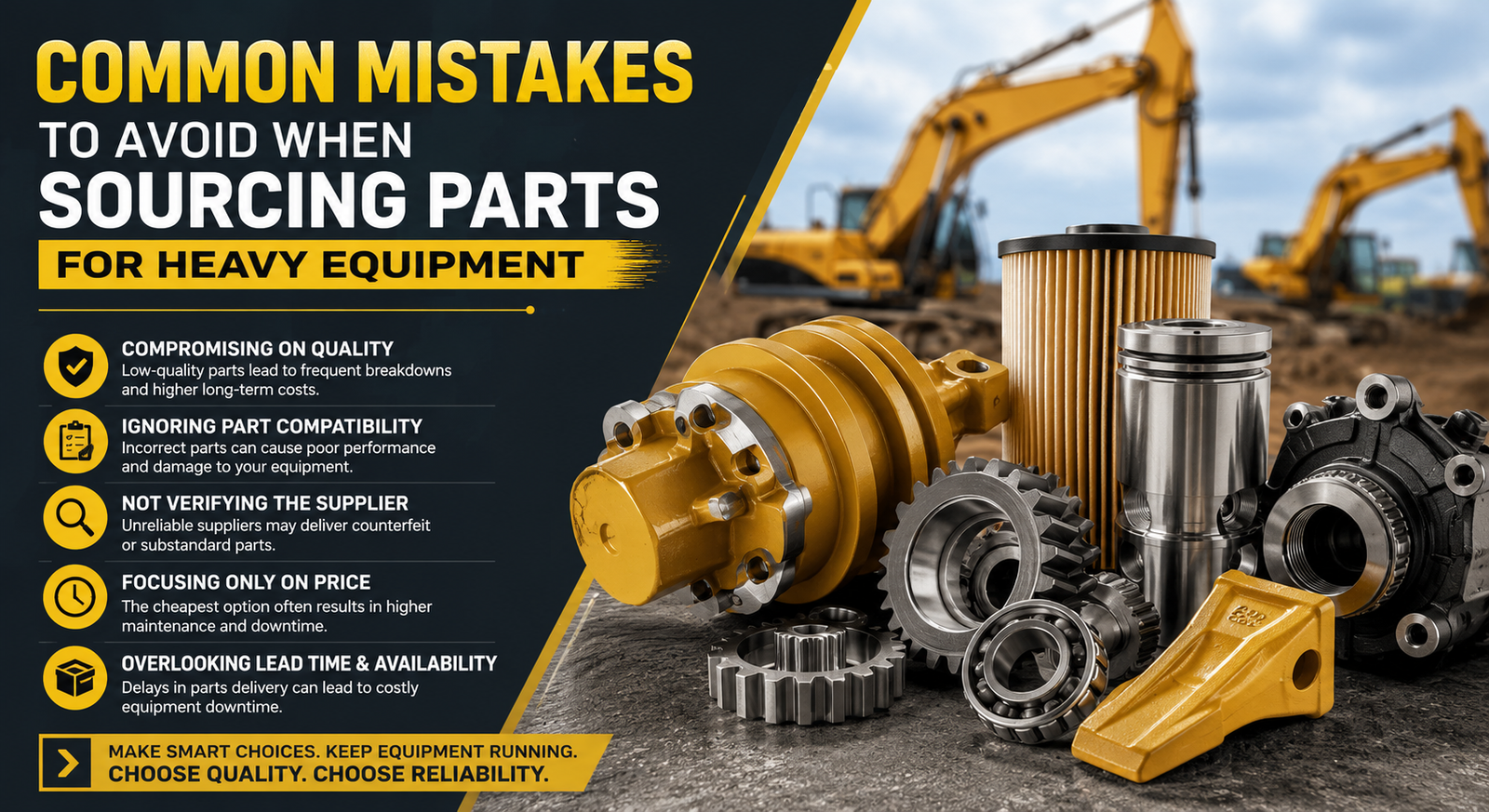
Table Of Content
- Ignoring Equipment Specifications
- Choosing Parts Based Solely on Price
- Overlooking Supplier Reputation
- Failing to Verify Part Authenticity
- Neglecting Warranty and Return Policies
- Not Considering Lead Times
- Ignoring Total Cost of Ownership
- Failing to Maintain Accurate Records
- Overlooking Technical Support
- Buying Without Long-Term Planning
- Conclusion
Heavy equipment plays a vital role in industries such as construction, mining, agriculture, and transportation. The performance and reliability of these machines depend heavily on the quality of the parts used for maintenance and repairs. Sourcing the right heavy equipment parts is not just about finding the lowest price; it involves ensuring compatibility, durability, and long-term value. Unfortunately, many businesses make costly mistakes during the procurement process, leading to equipment downtime, increased maintenance costs, and reduced operational efficiency.
Understanding the common mistakes to avoid when sourcing parts for heavy equipment can help businesses make informed decisions and protect their investments.
NOTE :- Many construction and industrial companies sourced Heavy equipment spare parts in Dubai to maintain productivity and avoid costly breakdowns. Durable and compatible parts ensured reliable machine performance in challenging environments. Organizations benefited from trusted supply chains and expert support. Reach out to Sintra Middle East for quality spare parts and professional assistance.
Ignoring Equipment Specifications
One of the most common mistakes is purchasing parts without thoroughly checking the equipment’s specifications. Heavy machinery often has unique requirements based on the model, manufacturer, and production year. Even a small variation in dimensions or technical specifications can result in improper installation and poor performance.
Before ordering any component, it is important to verify part numbers, machine serial numbers, and manufacturer recommendations. This helps ensure that the selected part is fully compatible with the equipment.
Choosing Parts Based Solely on Price
While reducing costs is important, focusing only on the lowest-priced option can create significant problems in the long run. Cheap parts are often made from lower-quality materials and may not meet industry standards. These components can wear out quickly, causing frequent replacements and unexpected machine failures.
Businesses should evaluate the overall value of a part rather than just its initial cost. Investing in quality components often leads to longer service life, improved machine performance, and reduced maintenance expenses.
Overlooking Supplier Reputation
Selecting an unreliable supplier is another mistake that can negatively impact equipment operations. Some suppliers may offer attractive pricing but fail to deliver genuine products, proper documentation, or consistent customer support.
Before making a purchase, companies should research supplier credentials, industry experience, customer reviews, and product warranties. A reputable supplier is more likely to provide high-quality parts and dependable service throughout the procurement process.
Failing to Verify Part Authenticity
Counterfeit and imitation parts have become a growing concern in the heavy equipment industry. These products may look similar to genuine components but often lack the quality and durability required for demanding applications.
Using counterfeit parts can increase the risk of machine breakdowns, safety hazards, and costly repairs. Businesses should always verify the authenticity of parts through trusted suppliers and request relevant certifications when necessary.
Neglecting Warranty and Return Policies
Many buyers focus on product specifications and pricing while overlooking warranty and return terms. This can become a serious issue if the delivered part is defective or incompatible with the equipment.
Understanding the supplier’s warranty coverage and return procedures provides added protection and peace of mind. Reliable suppliers typically offer clear warranty policies that demonstrate confidence in their products.
Not Considering Lead Times
Equipment downtime can be extremely expensive, especially for businesses that rely on machinery for daily operations. A common sourcing mistake is failing to consider delivery schedules and lead times before placing an order.
Unexpected delays in obtaining replacement parts can disrupt projects, reduce productivity, and increase operational costs. Planning ahead and working with suppliers that maintain adequate inventory levels can help minimize downtime.
Ignoring Total Cost of Ownership
The purchase price is only one part of the overall cost associated with heavy equipment components. Many buyers overlook factors such as installation costs, maintenance requirements, replacement frequency, and equipment efficiency.
Evaluating the total cost of ownership helps businesses make smarter purchasing decisions. Higher-quality parts may have a higher upfront cost but often provide better long-term value through reduced maintenance and longer service life.
Failing to Maintain Accurate Records
Poor record-keeping can complicate future sourcing efforts. Without detailed information about previously purchased parts, businesses may struggle to identify the correct replacements when repairs are needed.
Maintaining organized records of equipment specifications, part numbers, supplier details, and maintenance history can streamline procurement processes and reduce the likelihood of ordering errors.
Overlooking Technical Support
Heavy equipment systems can be complex, and selecting the right component may require expert guidance. Some businesses purchase parts without consulting technical specialists or supplier support teams.
Technical assistance can help identify suitable replacements, troubleshoot compatibility issues, and ensure proper installation. Access to knowledgeable support can prevent costly mistakes and improve equipment reliability.
Buying Without Long-Term Planning
Many organizations source parts only when a machine breaks down. This reactive approach often results in rushed purchasing decisions, limited supplier options, and higher costs.
Developing a proactive sourcing strategy allows businesses to forecast future requirements, maintain critical spare parts inventory, and negotiate better purchasing terms. Long-term planning helps improve operational efficiency and reduce emergency procurement expenses.
Conclusion
Sourcing parts for heavy equipment requires careful planning, thorough research, and attention to detail. Mistakes such as ignoring equipment specifications, focusing solely on price, overlooking supplier reputation, and neglecting warranty policies can lead to costly consequences. Businesses that prioritize quality, authenticity, supplier reliability, and long-term value are better positioned to maintain equipment performance and reduce operational risks.
By avoiding these common sourcing mistakes, organizations can improve machine reliability, minimize downtime, and maximize the return on their heavy equipment investments. A strategic approach to parts procurement not only protects valuable assets but also supports long-term business success.
For More Insightful Articles Related To This Topic, Feel Free To Visit: https://ecomotion.ae/



No Comment! Be the first one.