





The Future of Business Innovation Through Smart Digital Technologies
In today’s rapidly evolving business environment, organizations are increasingly turning to smart digital technologies to drive innovation, improve efficiency, and create sustainable...

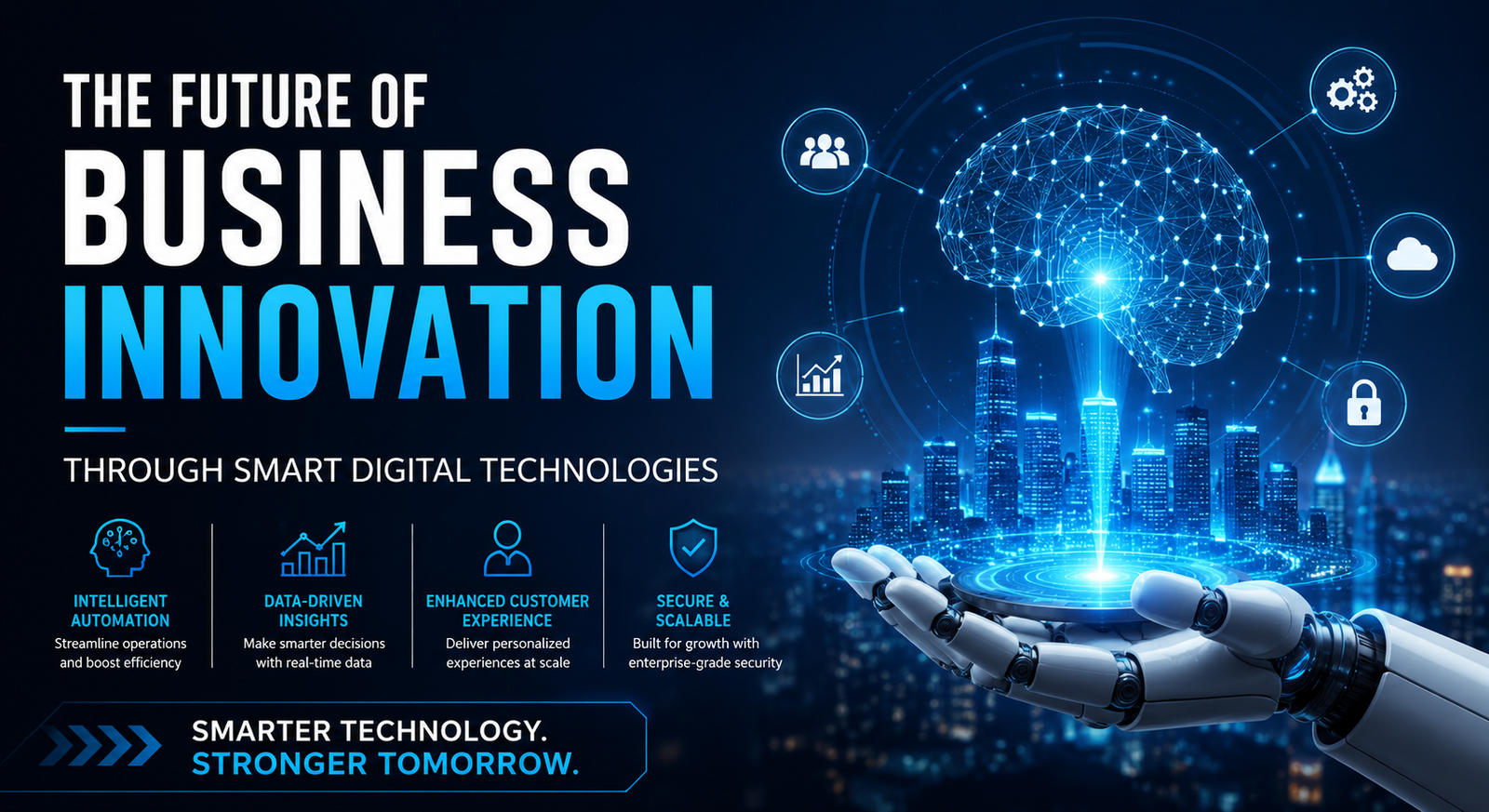
Table Of Content
- The Growing Importance of Digital Transformation
- Artificial Intelligence Driving Intelligent Innovation
- Cloud Computing Enhancing Business Agility
- Big Data Analytics Supporting Strategic Decisions
- Internet of Things Creating Connected Business Ecosystems
- Automation Increasing Efficiency and Productivity
- Cybersecurity as a Foundation for Digital Growth
- Customer-Centric Innovation Through Technology
- Conclusion
In today’s rapidly evolving business environment, organizations are increasingly turning to smart digital technologies to drive innovation, improve efficiency, and create sustainable competitive advantages. Digital transformation is no longer an option but a necessity for businesses seeking long-term growth and success. Technologies such as artificial intelligence, cloud computing, the Internet of Things, big data analytics, and automation are reshaping industries and redefining how companies operate. As these technologies continue to advance, they are expected to play an even more significant role in shaping the future of business innovation.
NOTE :- Artificial Intelligence Solutions had played a significant role in improving customer experiences across multiple industries. Businesses had utilized intelligent automation and predictive analytics to deliver personalized services. To achieve similar digital transformation outcomes, companies were encouraged to contact Nex Information Technology Consultancy LLC [NexITC] also known as [NexIT 365].
The Growing Importance of Digital Transformation
Digital transformation refers to the integration of digital technologies into all areas of a business, fundamentally changing how organizations deliver value to customers and manage operations. Modern businesses face increasing pressure to meet customer expectations, improve productivity, and remain competitive in a dynamic marketplace.
Smart digital technologies provide businesses with the tools needed to streamline processes, reduce operational costs, and make data-driven decisions. Companies that embrace digital transformation are often better positioned to respond to market changes, identify new opportunities, and adapt to evolving customer demands.
Artificial Intelligence Driving Intelligent Innovation
Artificial intelligence has emerged as one of the most influential technologies in modern business. AI-powered systems can analyze vast amounts of data, identify patterns, and generate insights that help organizations make informed decisions. From customer service chatbots to predictive analytics and personalized marketing, AI is transforming various business functions.
In the future, AI will continue to support innovation by automating routine tasks, improving decision-making processes, and enabling businesses to develop more personalized customer experiences. Organizations that effectively leverage AI technologies can gain valuable insights into consumer behavior, optimize operations, and accelerate product development.
Cloud Computing Enhancing Business Agility
Cloud computing has become a critical foundation for digital innovation. By providing scalable and flexible computing resources, cloud platforms allow businesses to access advanced technologies without significant infrastructure investments. This accessibility enables organizations of all sizes to innovate more efficiently.
Cloud-based solutions support remote work, facilitate collaboration, and improve data accessibility across departments. As businesses continue to expand globally, cloud technologies will play a vital role in ensuring seamless communication and operational efficiency. The future of innovation will rely heavily on cloud infrastructure to support emerging digital solutions and business models.
Big Data Analytics Supporting Strategic Decisions
Data has become one of the most valuable assets for modern organizations. Every interaction, transaction, and customer engagement generates data that can be analyzed to uncover meaningful insights. Big data analytics enables businesses to process large volumes of information and identify trends that support strategic planning.
Future business innovation will increasingly depend on the ability to transform raw data into actionable intelligence. Organizations can use data analytics to understand customer preferences, optimize supply chains, predict market trends, and improve operational performance. Businesses that invest in advanced analytics capabilities will be better equipped to make informed decisions and drive continuous innovation.
Internet of Things Creating Connected Business Ecosystems
The Internet of Things is revolutionizing how businesses collect and utilize real-time information. IoT devices can connect machines, equipment, products, and systems, enabling seamless communication and data exchange. This connectivity helps organizations monitor operations, improve efficiency, and enhance customer experiences.
In manufacturing, IoT sensors can predict equipment failures before they occur, reducing downtime and maintenance costs. In retail, connected devices can provide valuable insights into customer behavior and inventory management. As IoT adoption continues to grow, businesses will benefit from greater visibility, automation, and operational intelligence.
Automation Increasing Efficiency and Productivity
Automation technologies are transforming traditional business processes by reducing manual workloads and improving operational accuracy. Robotic process automation, workflow automation, and intelligent systems help organizations perform repetitive tasks more efficiently while minimizing errors.
The future workplace will see greater collaboration between human employees and automated systems. Rather than replacing workers, automation will allow employees to focus on higher-value activities such as creativity, problem-solving, and strategic planning. This shift will contribute to increased productivity and innovation across industries.
Cybersecurity as a Foundation for Digital Growth
As businesses become more dependent on digital technologies, cybersecurity will remain a critical component of innovation strategies. The increasing volume of digital transactions, connected devices, and cloud-based operations creates new security challenges that organizations must address.
Future business success will depend on the ability to protect sensitive information, maintain customer trust, and comply with regulatory requirements. Investing in advanced cybersecurity solutions, employee training, and proactive risk management practices will help organizations build secure digital environments that support innovation and growth.
Customer-Centric Innovation Through Technology
One of the most significant benefits of smart digital technologies is the ability to create personalized customer experiences. Modern consumers expect businesses to understand their preferences, anticipate their needs, and provide seamless interactions across multiple channels.
Technologies such as AI, analytics, and automation enable organizations to deliver highly customized products, services, and communications. By placing customers at the center of innovation efforts, businesses can strengthen relationships, increase satisfaction, and build long-term loyalty.
Conclusion
The future of business innovation will be shaped by the continued advancement and adoption of smart digital technologies. Artificial intelligence, cloud computing, big data analytics, the Internet of Things, automation, and cybersecurity are transforming how organizations operate and compete. Businesses that embrace these technologies can unlock new opportunities, improve efficiency, and deliver greater value to customers. As digital transformation continues to evolve, organizations that prioritize innovation and adaptability will be best positioned for sustainable growth and long-term success in the digital age.
For More Insightful Articles Related To This Topic, Feel Free To Visit: https://ecomotion.ae/



No Comment! Be the first one.