




Event Management in Saudi Arabia: The Industry Powering Vision 2030
Introduction: A Kingdom That Knows How to Celebrate If you have ever attended a grand product launch in Riyadh, a national festival in Jeddah, or a corporate summit in the futuristic city of NEOM,...

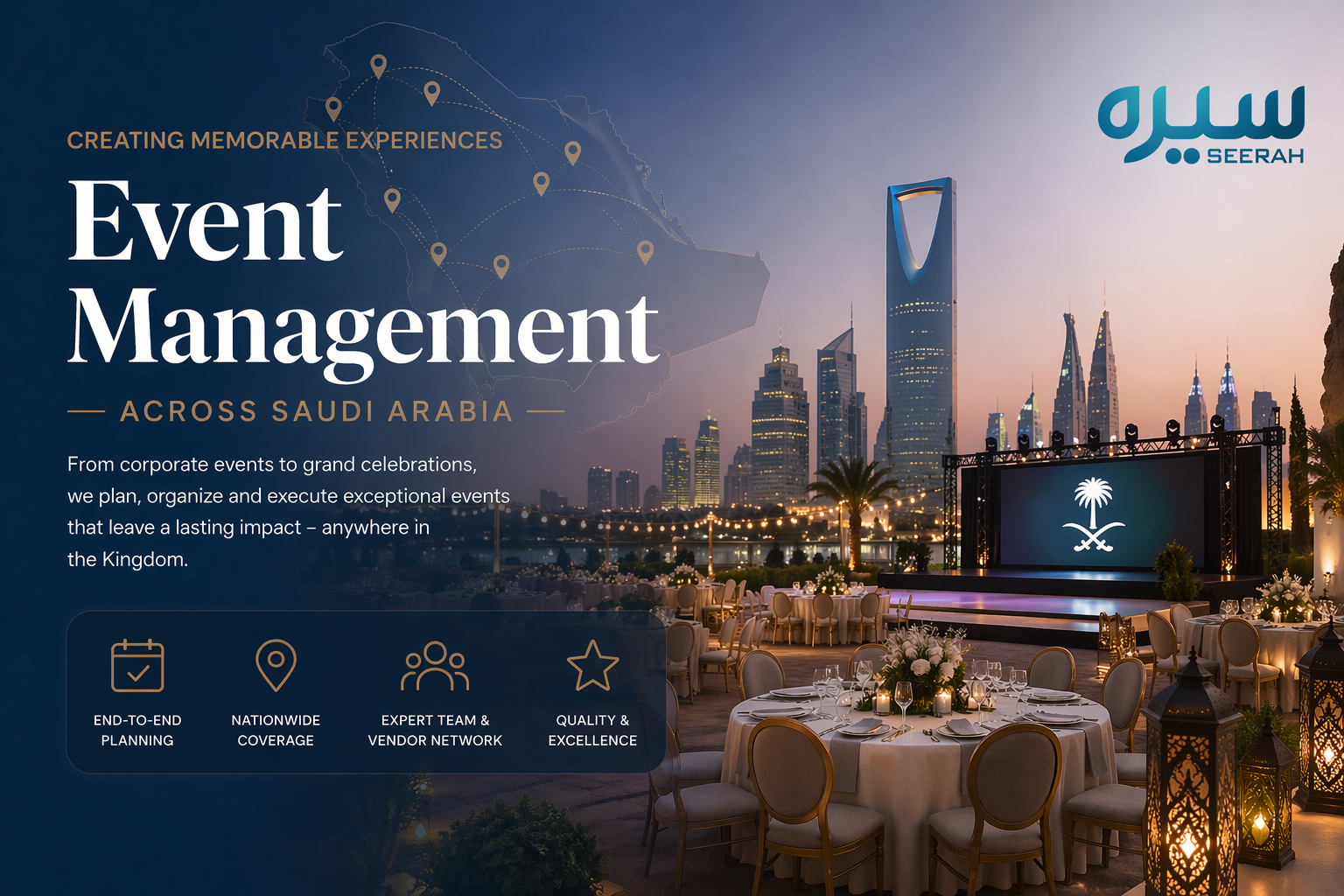
Table Of Content
- Introduction: A Kingdom That Knows How to Celebrate
- What Event Management Actually Means Today
- The Scale of Saudi Arabia’s Events Industry
- Why Vision 2030 Is a Game-Changer for Event Professionals
- Key Sectors Driving Event Management Demand
- The Human Side of Event Management
- Looking Ahead: Where the Industry Is Going
- Conclusion
Introduction: A Kingdom That Knows How to Celebrate
If you have ever attended a grand product launch in Riyadh, a national festival in Jeddah, or a corporate summit in the futuristic city of NEOM, you already know one thing for certain: Saudi Arabia does not do things halfway. Event Management in the Kingdom are experiences — carefully layered, deeply meaningful, and increasingly world-class. And behind every one of those moments stands an industry that is quietly becoming one of the most exciting in the entire region.
Event management in Saudi Arabia is no longer just about booking halls and arranging chairs. It has transformed into a sophisticated, multi-billion-riyal profession that sits right at the intersection of culture, commerce, technology, and national pride. As Vision 2030 reshapes the Kingdom’s economy and social landscape, the events sector is riding that wave with remarkable energy and ambition.
What Event Management Actually Means Today
At its core, event management is the process of planning, organizing, coordinating, and executing gatherings — whether those are intimate private dinners, large-scale public festivals, corporate conferences, or international sporting spectacles. But in Saudi Arabia, the definition has expanded considerably. Today, event managers are storytellers, brand architects, hospitality engineers, and cultural ambassadors all at once.
The job begins long before the first guest arrives. A skilled event management team in Saudi Arabia will spend months working on concept development, venue scouting, vendor negotiations, logistics planning, safety compliance, catering arrangements, entertainment sourcing, and media coordination. On the day itself, they are the invisible force ensuring everything flows seamlessly, adapting to last-minute changes with calm professionalism. After the event ends, they analyze feedback, measure outcomes, and begin planning the next one.
What makes this especially interesting in the Saudi context is the cultural layer that professional event managers must navigate. From respecting prayer times and gender-appropriate arrangements to aligning themes with Islamic values and national identity, managing events in the Kingdom requires sensitivity, local knowledge, and genuine understanding of Saudi society.
The Scale of Saudi Arabia’s Events Industry
The numbers are striking. Saudi Arabia’s events and entertainment sector has grown at a pace that has surprised even optimistic forecasters. The General Entertainment Authority, established in 2016, has approved thousands of events across the country, generating billions in revenue and creating tens of thousands of jobs. Cities like Riyadh, Jeddah, Dammam, and Al-Ula have all invested heavily in venues, infrastructure, and event-hosting capabilities.
Riyadh Season, the flagship entertainment festival launched in 2019, became a defining moment for the industry. Spanning several months and drawing millions of visitors, it showcased what Saudi event management could achieve when ambition met proper planning. International concerts, theatre productions, sporting competitions, immersive experiences, culinary festivals, and family entertainment zones all ran simultaneously — a logistical marvel that required hundreds of professional event managers working in close coordination.
The Formula E races in Diriyah, the Dakar Rally through the Saudi desert, the MDLBeast Soundstorm music festival, and the Saudi Cup horse racing event at King Abdulaziz Racecourse have all placed Saudi Arabia on the global events map. Each of these required event management expertise of the highest order, and many involved partnerships between Saudi companies and international specialists.
Why Vision 2030 Is a Game-Changer for Event Professionals
Saudi Vision 2030 identified entertainment, tourism, and culture as key pillars of economic diversification. Before this shift, public entertainment was extremely limited in the Kingdom. There were no cinemas, mixed-gender concerts were rare, and large-scale public gatherings were mostly confined to religious events and government ceremonies. The transformation since then has been nothing short of revolutionary.
For event management professionals, this created an opportunity of historic proportions. A market of over 35 million people — with a young, digitally connected, experience-hungry population — suddenly had access to a rapidly expanding events calendar. Companies that had been operating quietly suddenly found themselves overwhelmed with demand. New agencies emerged. International event firms entered joint ventures with local partners. Universities began offering event management courses. A whole ecosystem began to take shape.
The government’s investment in mega-projects also directly fuelled events growth. NEOM, the Red Sea Project, Diriyah Gate, and Qiddiya — all of these include dedicated venues and entertainment districts that will require professional event management for decades to come. The infrastructure is being built specifically to host world-class events, which means the demand for skilled professionals will only increase.
Key Sectors Driving Event Management Demand
Corporate events represent one of the largest segments of the Saudi event management market. With the Kingdom positioning itself as a regional business hub, conferences, product launches, investor summits, and employee engagement events are in constant demand. Companies across oil and gas, finance, technology, healthcare, and retail all rely on event managers to represent their brands and communicate their messages effectively.
Government and national events form another powerful segment. National Day celebrations, Saudi Vision 2030 milestone events, ministerial conferences, and diplomatic gatherings require meticulous planning and flawless execution. These events carry significant reputational stakes, and the professionals who handle them must operate at the highest standards of precision and protocol.
Social and cultural events — weddings, family celebrations, Eid festivals, and cultural exhibitions — continue to be a core part of Saudi life. While traditionally managed within families or by local community organizers, there is a growing trend toward professional event management even for private occasions, particularly among urban, higher-income Saudis who want their celebrations to reflect global standards.
Sports events have emerged as one of the most exciting frontiers. Saudi Arabia’s investment in golf, boxing, football, and motorsport has been remarkable. The PIF’s sports investments have brought world-class athletes and global audiences to the Kingdom, and every tournament, match, or race requires extensive event management infrastructure.
The Human Side of Event Management
Behind the glamour of large-scale events is a profession built on human connection, creativity, and an extraordinary capacity for stress. Event managers in Saudi Arabia will tell you that the most challenging part of the job is not logistics — it is people. Coordinating between clients who have big visions and limited timelines, vendors who operate on their own schedules, government authorities with specific requirements, and guests with diverse expectations is genuinely hard work.
The best event managers in the Kingdom combine technical competence with emotional intelligence. They know how to calm a nervous bride on her wedding morning, manage a CEO whose keynote slides just crashed, handle a catering delay without the guests ever noticing, and pivot an outdoor stage setup when the weather turns unexpectedly. These are not skills you learn purely from textbooks — they come from experience, mentorship, and a genuine passion for creating meaningful moments.
Looking Ahead: Where the Industry Is Going
The future of event management in Saudi Arabia looks genuinely exciting. Technology is playing an increasingly important role — from AI-powered event planning tools and virtual reality site surveys to RFID wristbands, live event apps, and data analytics that measure attendee engagement in real time. Sustainability is also becoming a serious consideration, with clients increasingly asking event managers to minimize waste, reduce carbon footprints, and use locally sourced materials.
Saudi talent is rising to meet the challenge. A new generation of young Saudi event professionals — many of them women who have entered the field since restrictions on mixed workplaces eased — are bringing fresh ideas, digital fluency, and deep cultural insight to the industry. The combination of local knowledge and international training is producing a cohort of event managers who are genuinely world-class.
The Kingdom is not just hosting events anymore. It is shaping how events are conceived, delivered, and remembered. And the professionals managing those events are at the heart of one of the most exciting economic transformations any country has undertaken in modern times.
Makkah to Jeddah Airport Transfers
Conclusion
Event management in Saudi Arabia has arrived at a defining moment. What began as a niche service industry has evolved into a critical engine of the national economy, a vehicle for cultural expression, and a platform for positioning the Kingdom on the world stage. For those working in it, it is more than a career — it is a front-row seat to a remarkable national transformation. And for the millions of Saudis and international visitors who attend these events, it is simply magic — though they may not always see the extraordinary amount of work that goes into making that magic happen.



No Comment! Be the first one.