Feeding aquarium fish may seem like a simple task, but it plays a major role in fish health, growth, water quality, and overall aquarium maintenance. One of the most common questions among fish owners is whether they should continue feeding fish manually or invest in an automatic feeding system.
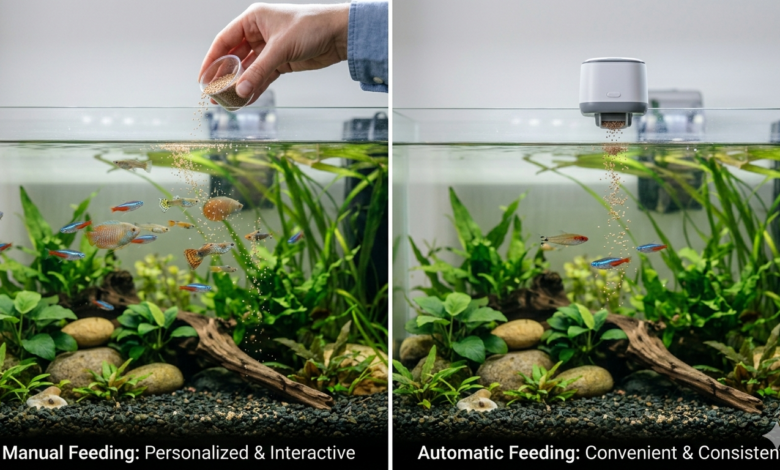
Modern aquarium technology has introduced a variety of feeding devices, making it easier than ever to maintain consistent feeding schedules. A quality fish tank feeder can automatically dispense food at specific times, helping aquarium owners avoid missed meals and overfeeding. However, many hobbyists still prefer manual feeding because it allows direct interaction with their fish and better monitoring of feeding behavior.
Both methods have advantages and disadvantages. The best option often depends on your schedule, aquarium setup, and the type of fish you keep. In this guide, we’ll compare automatic feeding and manual feeding to help you determine which approach is best for your aquarium.
Why Proper Feeding Matters
Fish depend entirely on their owners for nutrition. Providing the right amount of food at the right time helps support:
- Healthy growth
- Strong immune systems
- Better coloration
- Increased activity
- Improved breeding success
Whether you use an Aquarium Fish feeder or feed manually, consistency is one of the most important factors in maintaining fish health.
What Is an Automatic Fish Tank Feeder?
An automatic fish tank feeder is a device that dispenses food into the aquarium on a programmed schedule.
Most feeders allow users to:
- Set feeding times
- Control portion sizes
- Schedule multiple feedings daily.
- Reduce feeding errors
These devices are especially useful for busy aquarium owners or those who travel frequently.
Benefits of Using an Automatic Fish Tank Feeder
Automatic feeding systems offer several advantages.
Consistent Feeding Schedule
Fish thrive on routine. An automatic fish food feeder ensures meals are delivered at the same time every day.
Benefits Include:
- Reduced stress
- Better digestion
- More predictable feeding habits
Consistency helps fish establish healthy daily routines.
Convenient for Busy Owners
Many people have work schedules that make regular feeding difficult.
A fish tank food feeder eliminates the need to be physically present during feeding times.
This makes aquarium care much easier for:
- Office workers
- Frequent travelers
- Students
- Busy families
Helps Prevent Missed Feedings
Occasional missed meals may not harm healthy adult fish, but regular missed feedings can affect growth and health.
A programmed Aquarium Fish feeder helps ensure fish receive food consistently.
Better Portion Control
Overfeeding is one of the most common mistakes in aquariums.
Automatic feeders can help dispense measured portions, reducing excess food and water pollution.
Drawbacks of Automatic Fish Tank Feeders
Although automatic feeders are useful, they are not perfect.
Equipment Malfunctions
Like any device, an automatic fish tank feeder can occasionally malfunction.
Potential problems include:
- Battery failure
- Jammed food compartments
- Incorrect programming
Regular monitoring is still necessary.
Less Observation of Fish
One downside of automated feeding is reduced daily interaction with fish.
Manual feeding allows owners to observe:
- Fish behavior
- Appetite changes
- Signs of illness
- Aggressive behavior
These observations can help detect health problems early.
Food Compatibility Limitations
Some automatic feeders work best with pellets or flakes but may not handle frozen or live foods effectively.
Certain fish species require more specialized diets that may not be suitable for every fish food feeder.
Benefits of Manual Feeding
Manual feeding remains popular among aquarium hobbyists for several reasons.
Better Monitoring of Fish Health
Feeding time provides an excellent opportunity to check on fish.
During Feeding, You Can Observe:
- Appetite levels
- Swimming behavior
- Physical appearance
- Signs of stress
This daily interaction helps owners identify problems quickly.
Greater Feeding Flexibility
Manual feeding allows adjustments based on fish needs.
For example:
- Growing fish may need extra food.
- Sick fish may require special diets.
- Breeding fish may need increased nutrition.
Manual feeding provides more flexibility than many automated systems.
Supports Bonding and Enjoyment
Many aquarium owners simply enjoy feeding their fish.
Watching fish actively respond during feeding can be one of the most rewarding parts of fish keeping.
Drawbacks of Manual Feeding
Manual feeding also has some disadvantages.
Inconsistent Feeding Schedules
Busy schedules may lead to irregular feeding times.
Fish often benefit from consistent routines, which can be difficult to maintain manually.
Higher Risk of Overfeeding
Many owners accidentally overfeed their pets.
Overfeeding can cause:
- Poor water quality
- Increased waste
- Algae growth
- Health problems
A properly programmed fish tank food feeder can help reduce this risk.
Difficult During Travel
Owners who travel frequently must arrange for someone else to feed their fish.
An automatic Aquarium Fish feeder can simplify this challenge.
Which Feeding Method Is Better for Different Fish?
Different fish species may benefit from different feeding approaches.
Community Fish
Community fish usually adapt well to automatic feeders.
Examples include:
- Tetras
- Guppies
- Mollies
- Platies
A reliable fish tank feeder can maintain consistent feeding schedules for these species.
Goldfish
Goldfish often benefit from controlled feeding because they are prone to overeating.
Automatic feeders can help manage portion sizes effectively.
Bettas
Betta fish can use automatic feeders, but portion sizes should be monitored carefully.
Some owners prefer manual feeding to better control diet quality.
Combining Automatic and Manual Feeding
Many aquarium owners use both methods.
Example Approach:
- Automatic feeder for daily routine
- Manual feeding for supplemental foods
- Manual observation sessions
This hybrid method offers convenience while maintaining regular fish monitoring.
Tips for Choosing a Fish Tank Feeder
If you decide to use an automatic feeder, consider the following features.
Adjustable Portions
Choose a fish food feeder that allows precise portion control.
Reliable Timer Settings
Flexible scheduling options help match feeding routines to fish needs.
Food Compatibility
Ensure the feeder works with your preferred food type.
Easy Maintenance
Simple cleaning and refilling make long-term use easier.
How Feeding Affects Water Quality
Regardless of feeding method, proper feeding habits help maintain cleaner water.
Good Feeding Practices Include:
- Avoid overfeeding
- Remove uneaten food
- Feed appropriate portions
- Monitor fish behavior
Whether using a fish tank food feeder or feeding manually, responsible feeding supports healthier aquariums.
Final Thoughts
Both automatic feeding and manual feeding can be effective ways to care for aquarium fish. A quality fish tank feeder provides convenience, consistency, and portion control, making it ideal for busy owners and travelers. On the other hand, manual feeding offers greater flexibility and allows daily observation of fish health and behavior.
For many aquarium hobbyists, the best solution is a combination of both methods. Using an Aquarium Fish feeder for routine feeding while occasionally feeding manually provides the benefits of automation without losing personal interaction with your fish.
Ultimately, the right choice depends on your lifestyle, aquarium setup, and your fish’s specific needs.
FAQs
1. Is a fish tank feeder better than manual feeding?
A fish tank feeder offers consistency and convenience, while manual feeding provides better observation and flexibility.
2. Can an Aquarium Fish feeder prevent overfeeding?
Yes, many automatic feeders allow portion control, helping reduce overfeeding and water pollution.
3. What type of food works best with a fish food feeder?
Most automatic feeders work best with pellets and flakes designed for aquarium fish.
4. Can I use a fish tank food feeder while traveling?
Yes, automatic feeders are excellent solutions for maintaining feeding schedules during vacations or business trips.
5. Should I still check my fish if I use an automatic feeder?
Absolutely. Even when using an automatic Aquarium Fish feeder, regular observation is important for monitoring fish health and aquarium conditions.