In industries where cleanliness and product integrity are non-negotiable, sanitary butterfly valves play a crucial role in maintaining safe and efficient operations. These valves are widely used in food and beverage processing, dairy production, pharmaceuticals, biotechnology, and cosmetics manufacturing because they help regulate flow while meeting strict hygiene requirements.
As global health and safety standards continue to evolve, businesses are investing more in sanitary equipment to prevent contamination and ensure product quality. According to the World Health Organization (WHO), unsafe food affects approximately 600 million people worldwide each year, emphasizing the importance of maintaining hygienic production systems throughout the manufacturing process.
This article explores ten leading sanitary butterfly valve solutions and explains why they remain a preferred choice for hygienic processing industries.
Understanding the Importance of Sanitary Butterfly Valves
Sanitary butterfly valves are designed to control the flow of liquids and semi-liquid products while minimizing contamination risks. Unlike conventional industrial valves, these specialized valves feature smooth internal surfaces, corrosion-resistant materials, and easy-to-clean designs that support strict sanitation requirements.
The increasing popularity of sanitary butterfly valves can be attributed to several key advantages:
- Excellent hygiene performance
- Easy cleaning and maintenance
- Reliable flow control
- Long operational lifespan
- Corrosion resistance
- Compliance with industry regulations
These benefits make sanitary butterfly valves an essential component in facilities where product safety and quality are top priorities.
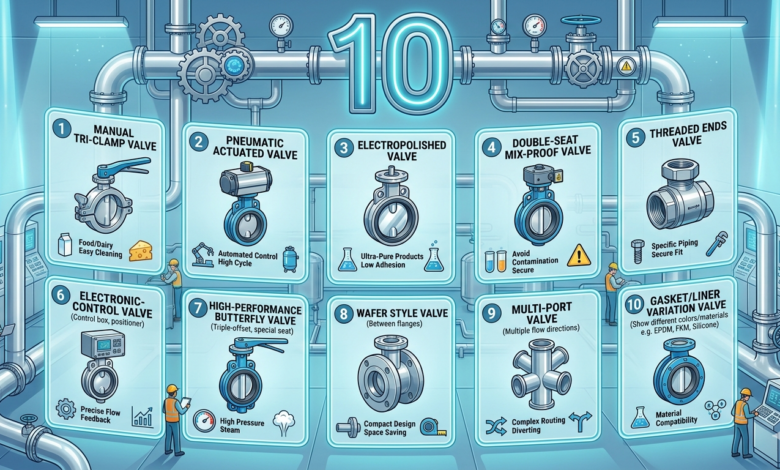
Top 10 Sanitary Butterfly Valves for Hygienic Processing Industries
1. Manual Sanitary Butterfly Valves
Manual butterfly valves provide simple and dependable flow control for processing systems. Their straightforward design makes them a popular option for many hygienic applications.
2. Pneumatic Sanitary Butterfly Valves
Pneumatic actuators use compressed air to automate valve operation. These systems improve efficiency and reduce manual intervention in production environments.
3. Electric Actuated Butterfly Valves
Electric actuators offer precise control and seamless integration with automated production systems. They are commonly used in modern manufacturing facilities.
4. Tri-Clamp Butterfly Valves
Tri-clamp designs allow for quick installation and removal, making maintenance and cleaning easier while supporting hygienic operations.
5. Stainless Steel Butterfly Valves
Stainless steel construction provides exceptional corrosion resistance and durability, making these valves suitable for demanding processing environments.
6. Pharmaceutical-Grade Butterfly Valves
Designed specifically for pharmaceutical applications, these valves meet stringent industry standards and help maintain product purity.
7. Food-Grade Butterfly Valves
Food processing facilities rely on food-grade valves to ensure safe product handling while complying with regulatory requirements.
8. Multi-Position Handle Butterfly Valves
These valves provide greater flexibility by allowing operators to adjust flow rates according to process requirements.
9. High-Purity Butterfly Valves
High-purity designs are commonly used in biotechnology and pharmaceutical industries where contamination control is critical.
10. Custom Engineered Butterfly Valves
Custom solutions are designed to address unique production challenges and optimize operational performance.
Key Benefits of Using Sanitary Butterfly Valves
Improved Hygiene and Product Safety
One of the primary advantages of sanitary valve systems is their ability to support contamination-free production. Smooth internal surfaces reduce the risk of bacterial growth and product residue accumulation.
Enhanced Cleaning Efficiency
Many sanitary valve designs support Clean-in-Place (CIP) and Sterilize-in-Place (SIP) procedures, helping facilities maintain cleanliness without disassembling equipment.
Reliable Flow Control
Consistent flow regulation helps improve product quality and production efficiency while minimizing waste.
Reduced Maintenance Costs
High-quality sanitary valves are built for durability, reducing the frequency of repairs and replacements. This helps lower maintenance expenses over time.
Compliance with Industry Standards
Many hygienic industries must comply with FDA, 3-A Sanitary Standards, and other regulatory requirements. Proper valve selection supports compliance and simplifies inspections.
Factors to Consider When Choosing Sanitary Butterfly Valves
Material Quality
Stainless steel remains one of the most popular materials due to its corrosion resistance, durability, and hygienic properties.
Pressure and Temperature Requirements
Every processing system operates under different conditions. Selecting a valve capable of handling the required pressure and temperature range is essential.
Cleaning Requirements
Facilities should prioritize valve designs that support efficient sanitation procedures and minimize downtime.
Automation Needs
As industrial automation becomes more common, many facilities are adopting pneumatic and electric valve systems to improve operational efficiency.
Industry Trends Driving Demand for Hygienic Valve Solutions
The global food processing and pharmaceutical industries continue to experience significant growth. Industry reports suggest that increasing consumer awareness regarding food safety and product quality is encouraging manufacturers to invest in advanced hygienic equipment.
Automation is also transforming processing facilities worldwide. Modern sanitary butterfly valves are increasingly equipped with smart control capabilities that support monitoring, predictive maintenance, and process optimization.
Additionally, stricter regulatory requirements are driving demand for equipment that helps maintain consistent hygiene standards throughout production operations.
Real-World Applications of Sanitary Butterfly Valves
Sanitary butterfly valves are commonly found in:
- Dairy processing plants
- Beverage production facilities
- Pharmaceutical manufacturing plants
- Biotechnology laboratories
- Cosmetic manufacturing operations
- Food processing facilities
Their versatility and reliability make them suitable for a wide variety of hygienic applications.
Conclusion
Selecting the right sanitary butterfly valves is critical for maintaining product quality, operational efficiency, and regulatory compliance in hygienic processing industries. From manual and pneumatic designs to advanced automated solutions, these valves offer numerous benefits that support modern manufacturing requirements.
By investing in high-quality sanitary butterfly valves, organizations can reduce contamination risks, improve cleaning efficiency, and enhance overall production performance. As hygiene standards continue to evolve and automation becomes more widespread, sanitary butterfly valves will remain an essential component of safe and efficient processing systems.
Businesses that prioritize reliable and hygienic flow control solutions today will be better positioned to meet future industry demands and maintain a competitive advantage.