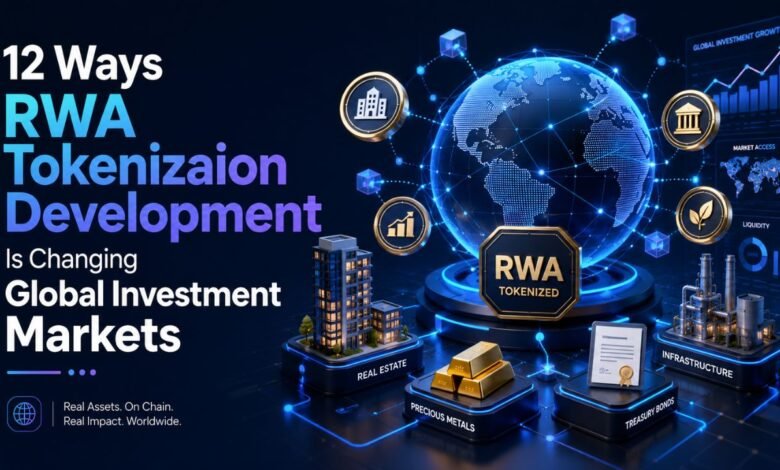
12 Ways RWA Tokenizaion Development Is Changing Global Investment Markets

Global investment markets are witnessing a significant shift as blockchain technology moves beyond cryptocurrencies and enters the world of tangible assets. Investors who once faced barriers such as high capital requirements, limited liquidity, geographical restrictions, and lengthy settlement processes are now gaining access to new opportunities through asset tokenization.
The concept of converting ownership rights of real-world assets into digital tokens has attracted attention from financial institutions, property developers, fund managers, and technology firms. From commercial real estate and commodities to private equity and fine art, tokenized assets are becoming part of modern investment strategies.
As interest in digital assets continues to grow, RWA Tokenization is creating a new framework for asset ownership, trading, and capital formation. Businesses offering Real World Asset Tokenization Services are helping investors participate in markets that were previously difficult to access while bringing efficiency to asset management and distribution.
This article examines twelve major ways RWA Tokenizaion development is influencing global investment markets and changing how investors interact with traditional assets.
1. Fractional Ownership Is Expanding Investor Participation
Historically, many valuable assets required substantial capital investments. Commercial properties, infrastructure projects, luxury assets, and private funds often remained accessible only to institutional investors and wealthy individuals.
With tokenization, ownership can be divided into thousands or even millions of digital units. Investors can purchase smaller portions of an asset instead of acquiring the entire asset.
For example, a $20 million commercial property can be divided into digital tokens representing ownership interests. Investors can participate with a much lower investment amount, creating broader market participation.
This approach allows individuals from different regions and financial backgrounds to gain exposure to asset classes that were once beyond reach.
2. Improved Liquidity for Traditionally Illiquid Assets
Many real-world assets are difficult to buy or sell quickly. Real estate, private equity holdings, infrastructure projects, and collectibles often require extensive paperwork and long transaction periods.
RWA tokenization development introduces digital marketplaces where tokenized ownership interests can be traded more efficiently.
Instead of waiting months to exit an investment, token holders may gain opportunities to transfer ownership through regulated digital platforms. This creates a more active secondary market and increases asset mobility.
Liquidity has long been a challenge for alternative investments, and tokenization presents a different approach to addressing this issue.
3. Cross-Border Investment Is Becoming More Accessible
Global investment opportunities often involve regulatory complexity, currency conversion concerns, and geographical limitations.
Tokenized assets can be offered to investors across multiple jurisdictions, subject to applicable regulations. Digital ownership records simplify participation in international investment opportunities.
An investor in Asia may gain exposure to European commercial property, while an investor in North America may participate in infrastructure projects located elsewhere.
This broader accessibility is encouraging the growth of international investment ecosystems supported by RWA Tokenization Services.
4. Faster Settlement Processes
Traditional financial transactions frequently involve intermediaries, paperwork, compliance reviews, and settlement periods that may take several days.
Blockchain-based asset ownership records can significantly reduce administrative delays.
Smart contract mechanisms can execute predefined conditions automatically once requirements are satisfied. This reduces processing time and minimizes dependence on multiple intermediaries.
As financial markets continue seeking operational improvements, faster settlement processes are becoming an attractive benefit associated with Real World Asset Tokenization.
5. Increased Capital Formation Opportunities
Businesses often face challenges when raising funds through traditional financing methods.
Tokenized assets provide an alternative route for attracting investors. Companies can digitize ownership interests in various asset classes and present them to a wider audience.
Real estate developers, infrastructure firms, renewable energy projects, and private enterprises can potentially access broader pools of capital through token offerings.
As a result, RWA Tokenizaion development is becoming a consideration for organizations seeking different fundraising approaches while maintaining investor engagement.
6. Enhanced Asset Diversification
Investment diversification remains a common strategy for managing risk.
However, access to diverse asset classes has historically been restricted by high entry costs and limited market availability.
Tokenization allows investors to spread capital across multiple asset categories, including:
- Commercial real estate
- Residential properties
- Precious metals
- Private equity
- Renewable energy assets
- Agricultural assets
- Fine art collections
This broader access allows investors to create more varied portfolios without committing large amounts of capital to individual investments.
7. Digital Asset Markets Are Attracting Institutional Interest
Large financial institutions are increasingly evaluating tokenized asset models.
Banks, investment firms, asset managers, and financial technology companies are examining how blockchain infrastructure can support asset issuance and ownership management.
Several pilot projects and institutional initiatives have demonstrated growing interest in tokenized securities and real-world assets.
As institutional participation increases, demand for professional RWA tokenization development services continues to grow.
Organizations seeking market entry often collaborate with a specialized RWA tokenization development company to establish compliant frameworks and operational structures.
8. Greater Efficiency in Asset Management
Managing traditional assets often requires multiple databases, manual record keeping, and administrative oversight.
Tokenized asset systems maintain ownership records on distributed ledgers, reducing duplication and administrative complexity.
Asset managers can monitor ownership distribution, dividend allocations, investor participation, and transfer activities through integrated digital systems.
This operational efficiency contributes to lower management costs and improved visibility across asset portfolios.
As adoption expands, RWA token development solutions are becoming part of broader asset management strategies.
9. Alternative Assets Are Reaching Wider Audiences
Alternative investments have traditionally remained limited to institutional investors and private wealth networks.
Tokenization introduces new opportunities for broader participation in sectors such as:
- Infrastructure projects
- Carbon credit markets
- Art collections
- Precious metals
- Intellectual property rights
- Renewable energy investments
Through fractional ownership structures, these asset classes can be presented to larger investor communities.
The growth of Real World Asset Tokenization Services is helping bridge the gap between alternative investments and retail participation.
10. Increased Market Transparency Through Blockchain Records
Investment markets depend heavily on reliable ownership records and transaction histories.
Blockchain technology maintains immutable transaction records that can be independently verified.
This provides a permanent record of ownership transfers, asset issuance, and investment activities.
Investors, auditors, and regulators can access transaction histories more efficiently than with many traditional record-keeping methods.
This feature has contributed to growing interest in tokenized asset ecosystems across multiple industries.
11. New Revenue Models for Asset Owners
Asset owners are finding new ways to generate value from existing holdings.
Real estate developers, infrastructure operators, and private fund managers can divide ownership into digital units and offer participation opportunities to investors.
Instead of relying exclusively on conventional financing methods, asset owners gain additional channels for capital acquisition.
This development has encouraged many organizations to evaluate partnerships with an experienced RWA Tokenization Company capable of designing and managing tokenization initiatives.
The result is a broader range of financing options and investment structures across global markets.
12. Financial Innovation Is Creating New Investment Products
The financial industry continues introducing products that combine traditional assets with blockchain infrastructure.
Examples include:
- Tokenized real estate funds
- Digital bond offerings
- Commodity-backed tokens
- Infrastructure investment tokens
- Revenue-sharing asset tokens
- Tokenized private equity products
These products create additional opportunities for investors seeking diversified portfolios and alternative market exposure.
As blockchain adoption expands, financial institutions are likely to continue experimenting with new tokenized investment structures.
The growing demand for rwa tokenization platform development reflects this shift toward digital asset-based financial products.
Challenges That Still Require Attention
Despite growing adoption, several challenges remain.
Regulatory frameworks continue evolving across different countries. Compliance requirements vary significantly between jurisdictions, creating complexity for issuers and investors.
Technology integration can also present operational hurdles. Organizations must establish secure systems for custody, compliance, identity verification, and investor onboarding.
Investor education remains another important factor. Many participants are still learning how tokenized ownership structures operate and how blockchain technology supports investment activities.
Addressing these challenges will play an important role in determining the long-term growth of the tokenized asset sector.
The Future of RWA Tokenization in Global Markets
Industry analysts increasingly view tokenized real-world assets as an important segment of digital finance. Financial institutions, governments, technology providers, and asset owners are investing resources into developing supporting infrastructure.
As regulations mature and market participants gain experience, tokenized assets may become a more common component of investment portfolios worldwide.
The combination of fractional ownership, global accessibility, digital record keeping, and improved liquidity continues attracting interest from both retail and institutional investors.
RWA Tokenization is no longer limited to experimental projects. It is becoming part of broader discussions about how investment markets may operate in the coming years.
Conclusion
The growth of tokenized real-world assets is introducing new possibilities for investors, businesses, and financial institutions. Fractional ownership, increased liquidity, international participation, faster transactions, diversified investment options, and broader access to alternative assets are contributing to the expansion of this market segment.
Organizations seeking to enter this sector often require technical expertise, compliance planning, smart contract development, token issuance frameworks, and digital asset infrastructure. This is where professional Real World Asset Tokenization Services become valuable.
Blockchain App Factory provides Real World Asset Tokenization Services that support businesses looking to digitize asset ownership and participate in emerging tokenized investment markets. From asset tokenization strategy and blockchain integration to platform deployment and investor management systems, the company assists organizations in developing secure and compliant tokenization ecosystems.
As global financial markets continue adopting digital asset models, businesses working with an experienced RWA tokenization development company can position themselves to participate in one of the most discussed developments in modern investment infrastructure.