Why Do Some Ceiling Fans Feel Weak Even After Professional Installation in Nashville Homes?

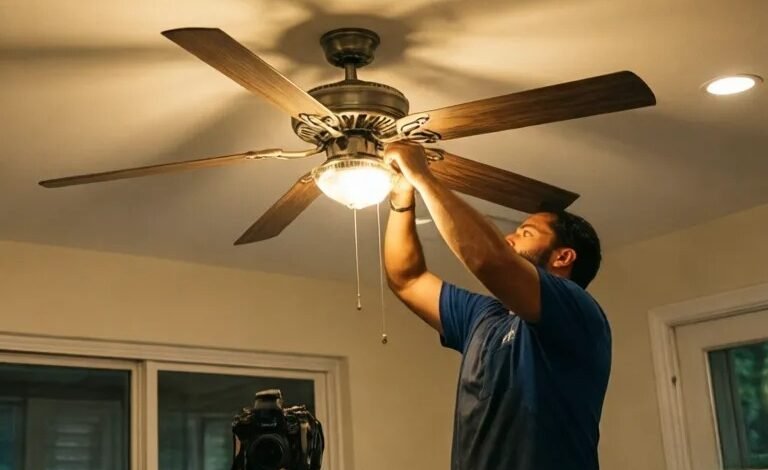
Many homeowners in Nashville get a ceiling fan installed expecting instant comfort strong airflow, better cooling, and noticeable improvement in room temperature. But sometimes, even after a proper Ceiling Fan Installation Nashville service, the fan still feels weak or underperforming.
It runs fine, the blades spin, and everything seems normal but the airflow just doesn’t feel strong enough. This leaves homeowners confused and wondering what went wrong.
So why does a ceiling fan feel weak even when it is installed correctly?
The answer is usually not one single issue. It’s a combination of room conditions, fan selection, and airflow limitations.
Not Every Room Supports Strong Airflow
One of the most overlooked reasons is the room itself. A ceiling fan does not create cooling from nothing—it moves existing air. If a room has poor airflow conditions, even the best fan will feel weak.
Common room-related issues include:
- Poor ventilation
- Closed or sealed windows
- Limited air entry points
- Blocked vents
- Tight or enclosed layouts
If air cannot move freely in and out of the room, the fan’s performance feels limited.
Fan Size and Room Size Must Match
A very common issue in many Nashville homes is incorrect fan sizing.
If the fan is:
- Too small for the room → airflow feels weak
- Too large for a small room → air feels uneven or uncomfortable
Each room requires a specific fan size to perform effectively. Even a perfectly installed fan will struggle if it doesn’t match the space properly.
This is something professional Ceiling Fan Installation Nashville technicians usually consider before installation.
Ceiling Height Changes Airflow Strength
Ceiling height plays a major role in how strong the airflow feels.
In high-ceiling rooms:
- Air gets dispersed before reaching occupants
- Cooling effect feels weaker at ground level
In low-ceiling rooms:
- Airflow may feel too direct or limited in range
If the fan is not adjusted for height properly, performance can feel reduced even when everything is technically working fine.
Blade Pitch and Design Affect Air Movement
Not all ceiling fans move air the same way. The blade design, angle, and material all impact performance.
Fans with:
- Low blade pitch → weaker airflow
- Lightweight blades → less air push
- Poor aerodynamic design → uneven circulation
Even modern-looking fans can sometimes have weaker airflow if they are designed more for style than performance.
Speed Settings Are Often Misunderstood
Another reason fans feel weak is incorrect speed usage.
Some homeowners:
- Keep the fan on low speed expecting strong cooling
- Avoid higher speeds due to noise concerns
- Use the same setting all year round
If the fan is not adjusted according to room temperature and usage, airflow may feel insufficient.
Dirty Blades Reduce Airflow Over Time
Even a newly installed fan can become less effective if dust starts collecting on the blades.
Dust causes:
- Extra weight imbalance
- Reduced blade efficiency
- Disrupted airflow direction
- Weaker air push
This buildup happens slowly, so homeowners often don’t notice the gradual performance drop.
Electrical Supply Issues Can Reduce Performance
Sometimes the fan itself is fine, but the electrical supply affects its speed and performance.
Issues like:
- Voltage fluctuations
- Weak wiring connections
- Faulty speed regulators
- Aging switches
can all cause the fan to run slower than normal, making it feel weak even though it is technically functioning.
Furniture and Layout Can Block Airflow
Room setup also plays a hidden role in ceiling fan performance.
Large objects such as:
- Tall wardrobes
- Heavy curtains
- Shelving units
- Large sofas placed directly under airflow
can interrupt air circulation and reduce the cooling effect.
Even if the fan is strong, blocked airflow makes it feel weaker.
Wrong Installation Position Reduces Efficiency
Even when installation is professional, placement still matters.
If the fan is:
- Too close to a wall
- Not centered in the room
- Positioned near obstructions
- Installed too high or too low
air distribution becomes uneven, making the fan feel less powerful.
Proper Ceiling Fan Installation Nashville planning includes choosing the best possible position for airflow coverage.
Humidity Levels Affect Comfort Perception
Nashville’s humidity can also affect how strong a fan feels.
Even with good airflow:
- High humidity makes air feel heavier
- Cooling effect feels less noticeable
- Room may still feel sticky or warm
The fan is working—but the environment reduces the perceived effect.
Why Some Homes Need More Than One Fan
In larger or open spaces, a single fan may not be enough.
Large rooms often have:
- Airflow dead zones
- Uneven cooling areas
- Distance-related airflow loss
In such cases, adding more fans or combining airflow solutions improves overall comfort.
Final Thoughts
A ceiling fan that feels weak is not always a sign of poor installation or a defective product. In most cases, the issue comes from room design, fan size, airflow blockages, or environmental conditions.
Even a professionally installed system through Ceiling Fan Installation Nashville services can feel underwhelming if these factors are not considered.
In the end, ceiling fan performance is not just about installation it’s about how well the entire room supports airflow. For more info like this stay connected with Ecomotion.