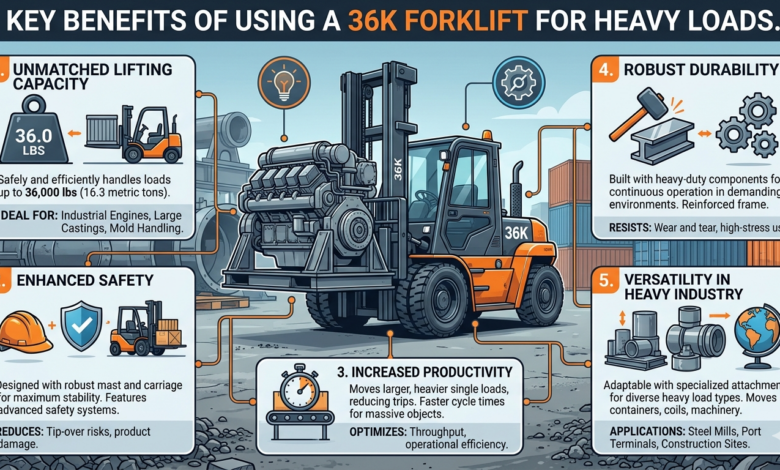
Handling extremely heavy materials requires equipment that delivers both power and reliability. Industries such as steel manufacturing, shipping, construction, lumber processing, and heavy equipment production often deal with loads that exceed the capabilities of standard forklifts. In these demanding environments, a 36k forklift provides the lifting strength needed to move large and heavy materials safely and efficiently.
Choosing the right forklift capacity can significantly impact productivity, workplace safety, and operational costs. For businesses that regularly handle oversized loads, investing in a high-capacity forklift can offer substantial long-term benefits.
Understanding What a 36K Forklift Can Do
A 36k forklift is designed to lift and transport loads weighing up to 36,000 pounds under proper operating conditions. These machines are significantly larger than traditional warehouse forklifts and are built specifically for industrial applications where heavy lifting is a daily requirement.
Common materials handled by these forklifts include:
- Steel coils
- Industrial machinery
- Large construction materials
- Shipping containers
- Lumber bundles
- Manufacturing equipment
Their high lifting capacity allows businesses to manage heavy loads with greater efficiency while reducing the need for multiple handling operations.
Increased Productivity Through Higher Capacity
One of the biggest advantages of using a 36k forklift is the ability to move larger loads in fewer trips.
Reduced Material Handling Time
When operators can transport heavier materials in a single lift, workflows become more efficient.
This helps businesses:
- Complete projects faster
- Reduce equipment usage time
- Improve operational efficiency
- Increase daily output
Industry studies indicate that optimized material handling systems can improve productivity by more than 20%, making equipment selection a key factor in operational success.
Fewer Equipment Movements
Reducing the number of trips required to move materials helps minimize labor demands and equipment wear.
This creates a more efficient work environment and allows employees to focus on other important tasks.
Improved Efficiency for Large-Scale Operations
Many industries require continuous movement of oversized materials throughout the workday.
Ideal for Heavy Industries
A 36k forklift is commonly used in:
- Steel fabrication facilities
- Ports and shipping terminals
- Lumber yards
- Manufacturing plants
- Construction projects
These industries often handle materials that would be impossible to move safely with smaller forklifts.
Streamlined Workflows
By matching forklift capacity to actual operational needs, businesses can eliminate unnecessary delays and improve workflow efficiency.
Large-capacity forklifts help maintain smooth operations even during periods of high demand.
Enhanced Workplace Safety
Safety is one of the most important considerations when handling heavy loads.
According to the Occupational Safety and Health Administration (OSHA), improper equipment selection is a contributing factor in many forklift-related incidents. Using equipment with sufficient lifting capacity helps reduce these risks.
Better Load Stability
A properly sized 36k forklift provides greater stability when transporting heavy materials.
Benefits include:
- Improved load control
- Reduced tipping risks
- Better weight distribution
- Increased operator confidence
When equipment is matched to the task, operators can perform their work more safely and efficiently.
Advanced Safety Features
Modern heavy-capacity forklifts often include:
- Stability control systems
- Load monitoring technology
- Rear-view cameras
- Warning alarms
- Enhanced braking systems
These technologies help improve workplace safety while supporting compliance with industry standards.
Greater Versatility Across Applications
Heavy-duty forklifts are designed to handle a wide variety of materials and work environments.
Indoor and Outdoor Performance
Depending on the model, a 36k forklift can operate in:
- Manufacturing facilities
- Industrial warehouses
- Outdoor storage yards
- Construction sites
- Shipping terminals
This versatility allows businesses to use the same equipment across multiple applications.
Compatibility With Specialized Attachments
Many heavy-capacity forklifts support attachments such as:
- Coil handlers
- Fork positioners
- Lumber forks
- Container handling attachments
These options expand equipment functionality and improve handling efficiency for specialized materials.
Reduced Labor Requirements
Moving heavy materials manually or with smaller equipment often requires additional personnel and equipment resources.
Fewer Operators Needed
Because a 36k forklift can handle larger loads independently, businesses often reduce the need for multiple machines or additional workers during lifting operations.
This helps:
- Lower labor costs
- Improve operational efficiency
- Simplify material handling processes
Faster Project Completion
Construction projects, manufacturing operations, and shipping activities benefit from faster material movement and reduced handling times.
Greater lifting capacity allows teams to complete work more efficiently and meet project deadlines more consistently.
Long-Term Cost Savings
Although high-capacity forklifts require a larger initial investment, they often provide significant long-term value.
Lower Equipment Utilization
When fewer trips are needed to move materials, businesses may experience:
- Reduced fuel consumption
- Lower equipment wear
- Less maintenance demand
- Improved fleet efficiency
These benefits contribute to lower overall operating costs.
Extended Equipment Lifespan
Using a forklift that is properly sized for the workload helps prevent overloading and excessive strain on equipment components.
This can extend service life and reduce the frequency of costly repairs.
Supporting Growing Business Needs
As businesses expand, material handling demands often increase as well.
A 36k forklift provides the capacity needed to support larger projects, heavier inventory, and expanding operational requirements.
Companies planning future growth often benefit from investing in equipment that can handle both current and anticipated workloads.
Having sufficient lifting capacity available can help eliminate future equipment limitations and support long-term business development.
Maintenance Considerations
Like any industrial equipment, heavy-capacity forklifts require routine maintenance to maintain performance and reliability.
Important maintenance tasks include:
- Hydraulic system inspections
- Tire evaluations
- Brake testing
- Mast inspections
- Engine servicing
- Safety system checks
Research shows that preventive maintenance programs can reduce equipment failures by up to 40%, helping businesses minimize downtime and maximize productivity.
Regular maintenance ensures a 36k forklift continues operating safely and efficiently throughout its service life.
Final Thoughts
A 36k forklift is a powerful solution for businesses that regularly handle oversized and heavy materials. Its ability to lift substantial loads safely and efficiently makes it an essential asset in industries such as manufacturing, steel processing, construction, shipping, and lumber handling.
From increased productivity and improved workplace safety to greater operational efficiency and long-term cost savings, the benefits of using a high-capacity forklift are significant. By selecting the right equipment and maintaining it properly, businesses can improve performance, support growth, and ensure reliable material handling for years to come.