





How Replenishment Planning Aligns Inventory with Customer Demand
One of the biggest challenges in retail, ecommerce, and supply chain management is maintaining the right inventory levels at the right time. Businesses must ensure products are available when...

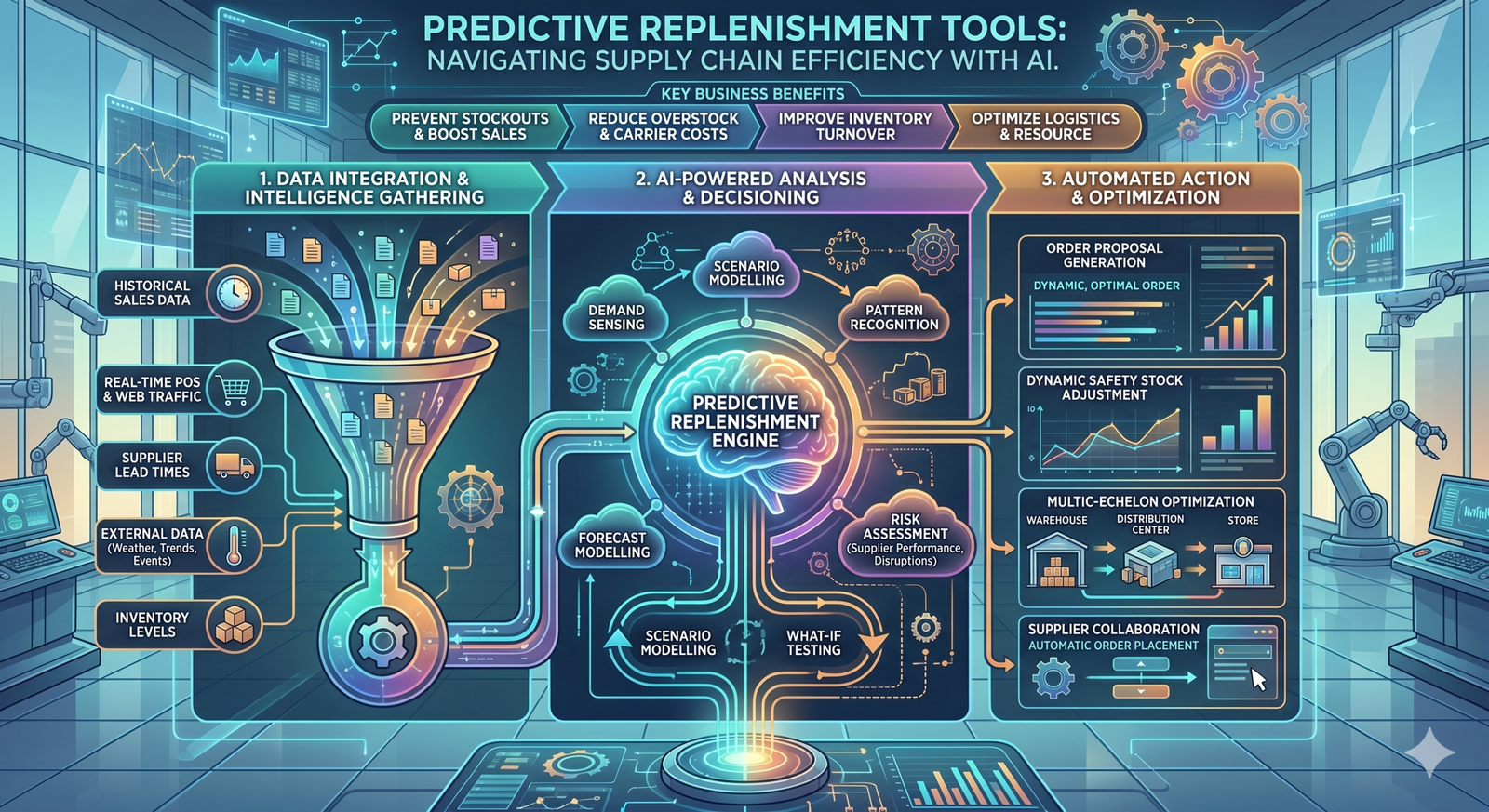
Table Of Content
- What Is Replenishment Planning?
- Why Inventory Alignment Matters
- The Challenge of Matching Inventory to Demand
- The Cost of Inventory Misalignment
- Stockouts and Lost Revenue
- Excess Inventory
- Operational Inefficiencies
- How Replenishment Planning Aligns Inventory with Demand
- Forecasting Future Customer Demand
- Leveraging Demand Signals
- Determining Optimal Inventory Levels
- Supporting Inventory Optimization
- Managing Demand Variability
- AI and Modern Replenishment Planning
- Predictive Replenishment Tools
- Real-Time Inventory Visibility
- Supporting Omnichannel Retail
- The Role of Supplier Collaboration
- Benefits of Effective Replenishment Planning
- Improved Product Availability
- Reduced Stockouts
- Better Inventory Optimization
- Lower Inventory Costs
- Higher Customer Satisfaction
- Improved Working Capital Efficiency
- Common Challenges Businesses Face
- Forecasting Errors
- Demand Volatility
- Data Silos
- Supply Chain Disruptions
- Best Practices for Aligning Inventory with Demand
- Use Advanced Demand Forecasting
- Leverage Real-Time Demand Signals
- Implement Predictive Replenishment Tools
- Strengthen Supplier Collaboration
- Continuously Monitor Inventory Performance
- Align Inventory Strategies with Business Goals
- Key Metrics to Track
- The Future of Replenishment Planning
- Conclusion
One of the biggest challenges in retail, ecommerce, and supply chain management is maintaining the right inventory levels at the right time. Businesses must ensure products are available when customers want them without carrying excessive stock that increases costs and ties up working capital. Striking this balance is becoming increasingly difficult as customer expectations rise, demand patterns become less predictable, and supply chains grow more complex.
Modern consumers expect products to be available across multiple channels, including physical stores, ecommerce websites, mobile applications, and marketplaces. At the same time, businesses face challenges such as seasonal fluctuations, promotional spikes, changing customer preferences, and supply chain disruptions. In this environment, inventory decisions can have a direct impact on customer satisfaction, revenue growth, and profitability.
This is why replenishment planning has become a critical function within modern supply chains. Effective replenishment planning helps businesses align inventory levels with actual customer demand, ensuring products are available where and when they are needed. By combining forecasting, inventory optimization, demand signals, and advanced analytics, organizations can improve service levels while reducing inventory-related costs.
As competition intensifies and customer expectations continue to evolve, replenishment planning is becoming one of the most important tools for balancing availability and efficiency.
What Is Replenishment Planning?
Replenishment planning is the process of determining when inventory should be reordered, how much inventory is needed, and where stock should be allocated within the supply chain.
The objective is to maintain appropriate inventory levels while minimizing:
- Stockouts
- Excess inventory
- Carrying costs
- Lost sales opportunities
Replenishment planning supports inventory flow across:
- Distribution centers
- Retail stores
- Ecommerce fulfillment centers
- Warehouses
- Supplier Collaboration
Effective planning ensures inventory remains aligned with customer demand.
Why Inventory Alignment Matters
Inventory alignment refers to maintaining inventory levels that accurately reflect customer purchasing behavior.
When inventory aligns with demand:
- Customers find products in stock
- Service levels improve
- Revenue opportunities increase
- Inventory costs decrease
When alignment is poor, businesses may experience:
- Stockouts
- Excess inventory
- Lost sales
- Reduced profitability
- Lower customer satisfaction
Inventory alignment is essential for both operational efficiency and customer experience.
The Challenge of Matching Inventory to Demand
Customer demand is rarely static.
Demand patterns can change due to:
- Seasonality
- Promotions
- Product launches
- Economic conditions
- Competitive activity
- Consumer trends
At the same time, supply chains often operate with lead times, capacity constraints, and logistical complexities.
This makes inventory planning a continuous balancing exercise.
Without effective replenishment planning, businesses struggle to keep inventory aligned with demand.
The Cost of Inventory Misalignment
Stockouts and Lost Revenue
When inventory levels fall below customer demand:
- Sales opportunities are lost
- Customers become frustrated
- Brand loyalty may decline
Stockouts often have long-term consequences beyond immediate revenue loss.
Excess Inventory
Overestimating demand can result in:
- Higher carrying costs
- Increased storage expenses
- Working capital inefficiencies
- Markdown risk
Excess inventory reduces overall supply chain efficiency.
Operational Inefficiencies
Inventory imbalances often create:
- Emergency replenishment orders
- Expedited shipping costs
- Distribution disruptions
- Resource allocation challenges
These issues increase operating costs and reduce agility.
How Replenishment Planning Aligns Inventory with Demand
Forecasting Future Customer Demand
Demand forecasting is the foundation of replenishment planning.
Forecasting helps businesses estimate future inventory requirements based on:
- Historical sales data
- Seasonal patterns
- Promotional calendars
- Market trends
- Customer behavior
Accurate forecasts improve inventory alignment and reduce uncertainty.
Leveraging Demand Signals
Modern replenishment planning increasingly relies on demand signals beyond historical sales data.
Examples include:
- Product searches
- Website traffic
- Cart additions
- Product page views
- Loyalty activity
These signals often provide early indicators of changing customer demand.
Using demand signals helps businesses respond more proactively.
Determining Optimal Inventory Levels
Once demand forecasts are established, replenishment planning helps determine:
- Reorder points
- Safety stock requirements
- Inventory allocation levels
- Replenishment frequency
The goal is to maintain sufficient inventory without creating excess stock.
Inventory optimization plays a critical role in this process.
Supporting Inventory Optimization
Inventory optimization focuses on balancing product availability with financial efficiency.
Replenishment planning supports inventory optimization by helping businesses:
- Reduce stockouts
- Lower carrying costs
- Improve inventory turnover
- Allocate inventory strategically
Optimized inventory levels improve both service performance and profitability.
Managing Demand Variability
Demand fluctuations are common in retail and ecommerce environments.
Examples include:
- Seasonal demand peaks
- Promotional events
- Weather-driven purchasing patterns
- Market disruptions
Replenishment planning helps businesses prepare for these changes by adjusting inventory strategies proactively.
This improves responsiveness and resilience.
AI and Modern Replenishment Planning
Artificial intelligence is transforming inventory management and replenishment planning.
AI-powered systems can analyze:
- Historical sales patterns
- Demand signals
- Inventory levels
- Supply chain conditions
- External market influences
Machine learning models identify trends that traditional forecasting methods may overlook.
This improves inventory alignment and forecast accuracy.
Predictive Replenishment Tools
Predictive replenishment tools use advanced analytics to anticipate future inventory needs.
These systems help businesses:
- Forecast demand more accurately
- Identify inventory risks earlier
- Improve replenishment timing
- Optimize inventory allocation
Predictive replenishment improves decision-making across the supply chain.
Real-Time Inventory Visibility
Visibility is essential for aligning inventory with demand.
Businesses need access to information about:
- Current stock levels
- Inventory movement
- Supplier performance
- Demand trends
Real-time visibility enables faster and more informed replenishment decisions.
This improves inventory responsiveness.
Supporting Omnichannel Retail
Modern customers expect seamless shopping experiences across channels, including:
- Physical stores
- Ecommerce websites
- Mobile applications
- Marketplaces
Inventory alignment becomes more complex in omnichannel environments.
Replenishment planning helps ensure inventory is positioned where customer demand is highest.
This improves fulfillment performance and customer satisfaction.
The Role of Supplier Collaboration
Supplier collaboration plays an important role in effective replenishment planning.
Sharing information such as:
- Demand forecasts
- Inventory requirements
- Replenishment schedules
helps suppliers align production and delivery activities with customer demand.
This improves supply chain coordination and inventory performance.
Benefits of Effective Replenishment Planning
Improved Product Availability
Customers are more likely to find products in stock.
Reduced Stockouts
Inventory shortages become less frequent.
Better Inventory Optimization
Inventory levels align more closely with demand.
Lower Inventory Costs
Excess inventory is minimized.
Higher Customer Satisfaction
Reliable availability improves customer experiences.
Improved Working Capital Efficiency
Inventory investments become more productive.
Common Challenges Businesses Face
Forecasting Errors
Inaccurate forecasts can create inventory imbalances.
Demand Volatility
Customer preferences may shift rapidly.
Data Silos
Disconnected systems reduce planning effectiveness.
Supply Chain Disruptions
Unexpected events can affect inventory flow.
Addressing these challenges requires modern planning capabilities and continuous optimization.
Best Practices for Aligning Inventory with Demand
Use Advanced Demand Forecasting
Forecasting should incorporate multiple demand drivers.
Leverage Real-Time Demand Signals
Behavioral indicators improve responsiveness.
Implement Predictive Replenishment Tools
AI-driven planning improves accuracy.
Strengthen Supplier Collaboration
Shared visibility supports better coordination.
Continuously Monitor Inventory Performance
Planning should adapt as conditions change.
Align Inventory Strategies with Business Goals
Balance availability, profitability, and customer service objectives.
Key Metrics to Track
Businesses should monitor:
- Forecast accuracy
- Inventory turnover
- Stockout rates
- Service levels
- Fill rates
- Days of inventory on hand
- Inventory carrying costs
These metrics provide valuable insight into replenishment effectiveness.
The Future of Replenishment Planning
Replenishment planning is evolving through advancements in:
- Artificial intelligence
- Demand sensing
- Predictive replenishment tools
- Real-time inventory visibility
- Autonomous inventory optimization
These technologies will help businesses align inventory with customer demand more accurately and efficiently.
Conclusion
Aligning inventory with customer demand is one of the most important objectives in modern retail and supply chain management. Failure to maintain this balance can result in stockouts, excess inventory, lost revenue, and reduced customer satisfaction.
Replenishment planning helps businesses address these challenges by combining demand forecasting, inventory optimization, demand signals, predictive analytics, and supplier collaboration to ensure inventory levels reflect actual customer needs. By improving product availability while controlling inventory costs, replenishment planning supports both operational efficiency and business growth.
As supply chains become increasingly complex and customer expectations continue to rise, organizations that invest in advanced replenishment planning capabilities will be better positioned to improve service levels, strengthen profitability, and create more responsive, customer-centric inventory strategies.



No Comment! Be the first one.