





HR Software for Hotels Is Becoming Essential for Guest Satisfaction
India’s hospitality industry is experiencing a powerful digital transformation. Hotels are no longer competing only through luxury rooms, fine dining, or premium guest experiences

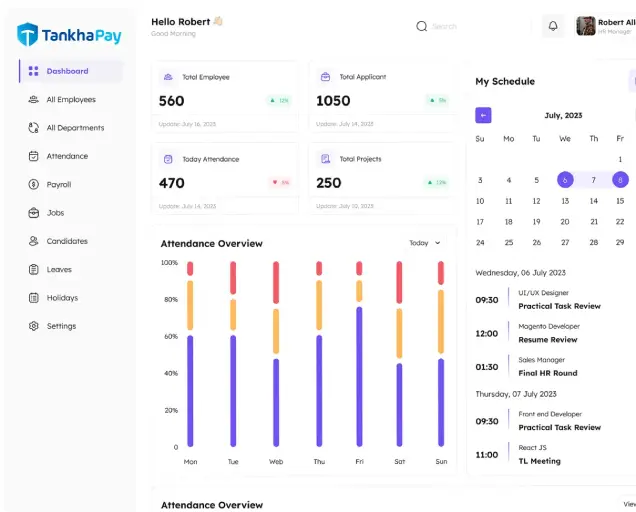
Table Of Content
- Hospitality Workforce Is Becoming More Complex
- Why Hotels Need Specialized HR Technology
- Best Domestic Recruitment Is Becoming a Competitive Advantage
- AI and Automation Are Reshaping Hotel HR Operations
- Employee Experience Is Now Part of Guest Experience
- Compliance Management Is Becoming More Important
- Cloud-Based HR Systems Are Driving Hospitality Innovation
- Future of HR Software for Hotels
- Final Thoughts
India’s hospitality industry is experiencing a powerful digital transformation. Hotels are no longer competing only through luxury rooms, fine dining, or premium guest experiences. Increasingly, operational efficiency and workforce management are becoming the invisible forces that define long-term success.
At the center of this shift is HR Software for Hotels.
Managing hotel staff has always been uniquely challenging. Unlike traditional office environments, hotels operate around the clock with rotating shifts, seasonal hiring demands, multiple departments, and high employee turnover. From housekeeping and front desk operations to kitchen teams and guest services, maintaining workforce coordination requires remarkable precision.
Traditional HR methods are struggling to handle this complexity effectively. Manual attendance systems, disconnected payroll processes, delayed approvals, and recruitment inefficiencies can disrupt daily operations and affect guest satisfaction directly.
Modern HR software is changing that reality.
Hospitality Workforce Is Becoming More Complex
Hotels function like living ecosystems where every department depends on synchronized teamwork. A delayed shift update or payroll error can create operational friction that guests immediately notice.
This is why hotel businesses are increasingly investing in intelligent HR platforms capable of automating workforce operations across multiple functions.
Today’s HR Software for Hotels goes far beyond basic payroll management. These systems integrate attendance tracking, shift scheduling, employee onboarding, compliance monitoring, leave management, performance analytics, and recruitment workflows into one centralized digital platform.
By automating repetitive administrative tasks, hotel management teams gain more time to focus on service quality and customer experience.
Companies such as Darwinbox, Zoho, Keka, and TankhaPay are helping hospitality businesses modernize HR operations with cloud-based automation tools designed for India’s rapidly evolving workforce environment.
Why Hotels Need Specialized HR Technology
Hospitality businesses face workforce challenges that differ significantly from other industries.
Hotels often operate with large employee volumes, rotating schedules, temporary staff, contract workers, and seasonal hiring spikes. Managing these moving parts manually increases the risk of scheduling conflicts, payroll discrepancies, compliance issues, and employee dissatisfaction.
HR software simplifies these operations by centralizing workforce management under one intelligent system.
Managers can monitor shift schedules in real time. Employees can access attendance records, salary slips, and leave requests through mobile apps. HR teams can automate payroll processing while maintaining compliance with labor regulations.
This operational visibility becomes especially valuable for hotel chains operating across multiple cities or properties.
Best Domestic Recruitment Is Becoming a Competitive Advantage
One of the most critical challenges facing the hospitality industry today is talent acquisition.
Hotels constantly require trained professionals for housekeeping, guest relations, culinary operations, administration, and customer service roles. Finding reliable candidates quickly has become increasingly difficult in a highly competitive labor market.
This is where Best Domestic Recruitment strategies are gaining importance.
Modern HR Software for Hotels now integrates recruitment tools directly into workforce management systems. Businesses can post job openings, track applicants, schedule interviews, manage onboarding, and process employee documentation within a single platform.
By streamlining recruitment operations, hotels reduce hiring delays while improving candidate experiences.
For rapidly expanding hospitality brands, this integration creates a remarkably effective hiring pipeline capable of supporting continuous workforce growth.
AI and Automation Are Reshaping Hotel HR Operations
Artificial intelligence is gradually transforming hotel workforce management.
AI-powered HR systems can forecast staffing requirements during peak travel seasons, identify scheduling gaps, automate attendance tracking, and even predict employee turnover risks. Instead of reacting to staffing shortages after they occur, hotel managers can plan proactively using data-driven insights.
Automation is also improving payroll efficiency significantly.
Hotels often manage overtime calculations, holiday shifts, incentives, and varying compensation structures across departments. Manual processing increases the possibility of costly errors. Automated payroll systems reduce inaccuracies while accelerating salary processing.
For employees working in fast-paced hospitality environments, timely and transparent payroll experiences contribute directly to workplace satisfaction.
Employee Experience Is Now Part of Guest Experience
The hospitality industry depends heavily on employee performance.
A motivated front desk executive, an attentive housekeeping team, or a responsive restaurant manager can shape how guests perceive an entire property. Employee satisfaction and guest satisfaction are deeply interconnected.
Modern HR Software for Hotels helps improve workplace experiences through self-service portals, digital onboarding, transparent payroll systems, training modules, and performance tracking tools.
Employees increasingly expect the same convenience at work that they experience in consumer technology apps. Hotels that modernize workforce experiences often build stronger employee loyalty and lower attrition rates.
This operational stability eventually reflects in customer service quality.
Compliance Management Is Becoming More Important
Hotels operate within strict labor regulations and compliance frameworks.
Managing Provident Fund contributions, ESI deductions, overtime policies, attendance records, gratuity calculations, and state-level labor requirements manually can become extraordinarily complicated for large hospitality businesses.
HR software automates these compliance processes while maintaining accurate records and audit-ready documentation.
For hotel groups managing hundreds or thousands of employees, automation reduces administrative pressure while lowering regulatory risk significantly.
Cloud-Based HR Systems Are Driving Hospitality Innovation
Cloud technology has accelerated HR software adoption across the hospitality sector.
Earlier HR systems required expensive infrastructure and complex implementation processes. Today’s cloud-based platforms offer faster deployment, real-time accessibility, and scalable workforce management capabilities.
Hotel managers can now access employee data, payroll reports, and operational dashboards remotely from any location. Multi-property hotel chains benefit especially from centralized systems that improve visibility across different branches.
This flexibility is becoming essential in a hospitality market that increasingly values speed, responsiveness, and operational agility.
Future of HR Software for Hotels
The future of hotel HR management will likely move toward predictive workforce intelligence.
Advanced systems may soon forecast seasonal hiring needs, optimize workforce scheduling automatically, personalize employee training programs, and recommend recruitment strategies based on operational trends.
AI-driven analytics could help hotels identify high-performing employees, improve retention strategies, and reduce operational inefficiencies proactively.
As India’s hospitality industry expands alongside tourism, business travel, and luxury accommodation demand, workforce technology will become an even more critical competitive differentiator.
Final Thoughts
HR Software for Hotels is no longer just an administrative convenience. It has become a strategic business tool that influences staffing efficiency, payroll accuracy, employee satisfaction, compliance management, and overall guest experience.
Hotels embracing intelligent HR platforms are building faster, smarter, and more resilient operations. By integrating automation, workforce analytics, payroll systems, and Best Domestic Recruitment strategies, hospitality businesses are preparing themselves for a more competitive and digitally driven future.
In an industry where service quality defines reputation, modern HR technology is quietly becoming one of the most important foundations of long-term success.



No Comment! Be the first one.