





Motorcycle Vests with Full Back Panel: What to Know
You might have seen riders with patches, club colors, and artwork displayed across their backs. That canvas they’re using? It’s called a full back panel, and it’s one of the most...

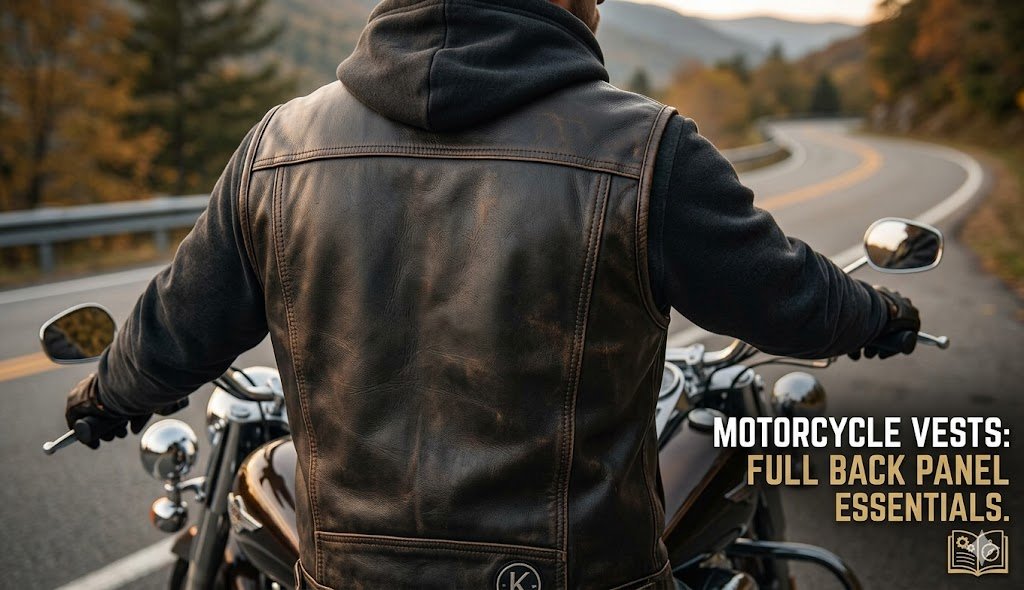
Table Of Content
- What Defines a Full Back Panel
- Why Full Back Panels Matter for Club Culture
- Construction Methods That Preserve Back Panels
- Full Panel Benefits Beyond Patch Display
- Men’s Motorcycle Vest Back Panel Considerations
- Ladies’ Motorcycle Vest Back Panel Features
- Identifying Quality Full Back Panels
- Back Panel Materials and Durability
- Common Back Panel Mistakes to Avoid
- Making the Right Choice
You might have seen riders with patches, club colors, and artwork displayed across their backs. That canvas they’re using? It’s called a full back panel, and it’s one of the most important features to understand when buying motorcycle vests.
Remember that not all vests have proper full back panels. Some include center seams, divided panels, or decorative stitching that ruins the space you need for patches. Knowing the difference before buying saves you from ordering a vest that won’t work for displaying what matters to you.
Here’s everything riders need to know about full back panels on motorcycle vests, why they matter, and how to choose vests with panels that actually work.
What Defines a Full Back Panel
A full back panel is exactly what it sounds like, one continuous, uninterrupted piece of leather or fabric covering the entire back of the vest.
- Single-Piece Construction: No center seam running vertically down the spine. No horizontal seams cutting across the back. Just one solid panel from shoulder to shoulder and collar to hem.
- Why This Matters: Seams create lines that interfere with patch placement. A three-piece club patch set needs a clean, flat surface. Center seams force you to position patches awkwardly straddling the seam or choose which side gets covered.
- Sizing Standards: Quality full back panels measure 12-14 inches wide and 14-16 inches tall typically. This accommodates standard motorcycle club patch layouts, including top rocker, center patch, and bottom rocker.
- Material Consistency: The entire panel uses the same leather thickness and finish. No mixing smooth and textured leather or different colors that would disrupt the patch display.
When examining any luxury biker motorcycle vest for men, flip it around and look at the back. If you see a vertical seam down the middle, it doesn’t have a true full back panel regardless of what marketing claims.
Why Full Back Panels Matter for Club Culture
Motorcycle club culture created the demand for full back panels. Understanding this context explains why the feature matters.
- Club Colors Display: Motorcycle clubs display their identity through three-piece patch sets on vest backs. Top rocker shows club name. The center patch displays the club logo. A bottom rocker indicates territory or chapter.
- Patch Placement Requirements: These patches need to sit centered on your back, visible from distance, with clean borders not interrupted by seams. A center seam makes professional patch placement nearly impossible.
- Respect and Protocol: In club culture, how you display colors matters. Patches sitting crookedly or straddling seams look sloppy and disrespectful. Full back panels let you position patches correctly.
- Non-Club Use: Even riders not in clubs use full back panels for rally patches, personal artwork, memorial patches, or cause-related displays. The clean canvas works for any large-scale back decoration.
Men’s motorcycle vests and ladies’ motorcycle vests both require proper full back panels if you’re displaying any significant patches or artwork.
Construction Methods That Preserve Back Panels
Quality vest construction works around the back panel to keep it uninterrupted.
- Side Panel Integration: Seams run along the sides rather than down the center. This allows single-piece back construction while still providing shape and fit.
- Shoulder Construction: Shoulder seams sit at the top edge where they don’t interfere with patch space below.
- Waist Shaping: Any tailoring for waist fit happens at side seams, not through vertical back seams that would cut through the panel.
- Lining Attachment: Interior linings attach at edges and through small tack points rather than seams running across the back exterior.
- The Test: Hold a vest up and look straight at the back. Your eye should see one continuous leather or denim surface with no interruptions from collar to hem across the entire width.
Full Panel Benefits Beyond Patch Display
Even if you never add patches, full back panels offer advantages.
- Structural Integrity: One-piece backs are stronger than multi-panel construction. No seams mean no weak points where leather might separate over time.
- Abrasion Protection: In a slide, continuous leather across your back protects more effectively than panels with seams that could separate on impact.
- Weather Resistance: Seams are potential leak points where water can penetrate. Full panels eliminate these vulnerabilities.
- Clean Aesthetic: Some riders prefer the minimal, clean look of unadorned backs. Full panels look sleeker than multi-panel construction even without patches.
- Future Flexibility: You might not want patches today but change your mind in five years. Full panels keep that option open.
Men’s Motorcycle Vest Back Panel Considerations
Men’s motorcycle vests with full back panels account for male body proportions.
- Panel Sizing: Broader shoulders mean wider panels, typically 13-15 inches across. This provides adequate patch space for standard club layouts.
- Length Options: Men’s vests come in regular and tall lengths. Longer torsos need extended back panels to maintain proportion and provide adequate patch display area.
- Straight Cut: Most men’s vests use relatively straight back panels without significant waist shaping. This simplifies construction while maintaining full panel integrity.
- Standard Layouts: Men’s club vests follow established patch placement traditions. Full back panels are sized and positioned to accommodate these standard layouts.
Ladies’ Motorcycle Vest Back Panel Features
Ladies motorcycle vests need full back panels tailored differently than men’s versions.
- Proportional Sizing: Women typically have narrower shoulders and shorter torsos. Back panels adjust to these proportions, often 11-13 inches wide rather than 13-15.
- Shaped Panels: Some women’s vests include slight waist shaping even in the back panel. Quality construction achieves this through side seams rather than vertical center seams.
- Patch Space Preservation: Despite smaller overall dimensions, women’s full back panels still provide adequate space for three-piece patch sets. The patches might be slightly smaller but the clean canvas remains intact.
- Fit Without Compromise: Women shouldn’t have to choose between proper fit and full back panels. Quality manufacturers offer both through smart pattern cutting.
Identifying Quality Full Back Panels
Not all “full back panel” claims are honest. Here’s how to verify quality.
- Examine in Person: If possible, see the vest before buying. Look at the back for any seams, decorative stitching, or panel divisions.
- Check Product Photos: Quality sellers show clear back photos. If back panel photos are missing or unclear, ask for them before ordering.
- Read Specifications: Product descriptions should explicitly state a single-piece full back panel or no center seam. Vague language like patch-ready back might hide seams.
- Material Consistency: The entire back should be the same leather type and finish. Mixing materials often indicates multi-panel construction.
- Question Decorative Elements: Embossing, tooling, or stitched designs across the back can interfere with patch placement. Make sure decorative elements won’t conflict with your patch plans.
Back Panel Materials and Durability
What the back panel is made from affects how patches attach and hold.
- Leather Backs: Premium choice for motorcycle vests. Leather holds stitching securely, looks traditional, and lasts decades. Full-grain cowhide or buffalo hide work best.
- Denim Backs: Popular for biker vests. Easier to sew patches through than leather. Less expensive than leather. Breathes better in hot weather.
- Textile Backs: Some modern vests use Cordura or nylon. These hold patches adequately but lack the traditional biker aesthetic most clubs prefer.
- Thickness Consideration: Back panels should be thick enough to support patches without sagging but not so thick that seing becomes difficult. 1.2-1.4mm leather hits the sweet spot.
Common Back Panel Mistakes to Avoid
Riders make these errors when choosing vests:
- Assuming All Vests Have Full Panels: Many fashion vests or budget motorcycle vests use multi-panel backs to save money. Always verify before buying.
- Ignoring Panel Size: A vest might have a full back panel but if it’s only 10×12 inches, your patches won’t fit properly. Check actual dimensions.
- Buying Before Measuring Patches: Purchase or design your patches first. Then buy a vest with a back panel sized to accommodate them properly.
- Overlooking Material: Leather looks traditional but textile might work better if you’ll be sewing and removing patches frequently.
- Fashion Over Function: A vest with decorative stitching across the back might look cool but ruins the patch canvas. Choose based on intended use.
Making the Right Choice
Choosing durable leather motorcycle vests for men with proper full back panels starts with knowing how you’ll use the vest.
- Club Members: Absolutely need full panels. No compromise. Verify panel size accommodates your club’s patch layout before ordering.
- Solo Riders: If you plan any back patches, rally pins, personal artwork, memorial patches, get full panels. You’ll appreciate the clean canvas.
- Casual Riders: Even if patches aren’t your current plan, full panels add structural integrity and keep options open for the future.
- Budget Shoppers: Full back panels cost slightly more due to construction complexity, but the difference is minimal, usually $20-40. Worth it for the versatility.
Whether choosing a men’s motorcycle vest or a ladies’ motorcycle vest, the full back panel should be a priority feature if you value the option to display anything on your back, now or later.
The panel isn’t just about patches; it’s about having a vest built right from the start, with construction that respects both form and function. That single piece of uninterrupted leather or denim represents quality manufacturing that doesn’t take shortcuts.



No Comment! Be the first one.