


Termite Control Cambridge: The Complete Homeowner’s Guide
If you own a home in Cambridge, termites may not be the first pest that comes to mind but ignoring them could be one of the costliest mistakes you ever make. While these wood-destroying insects are...

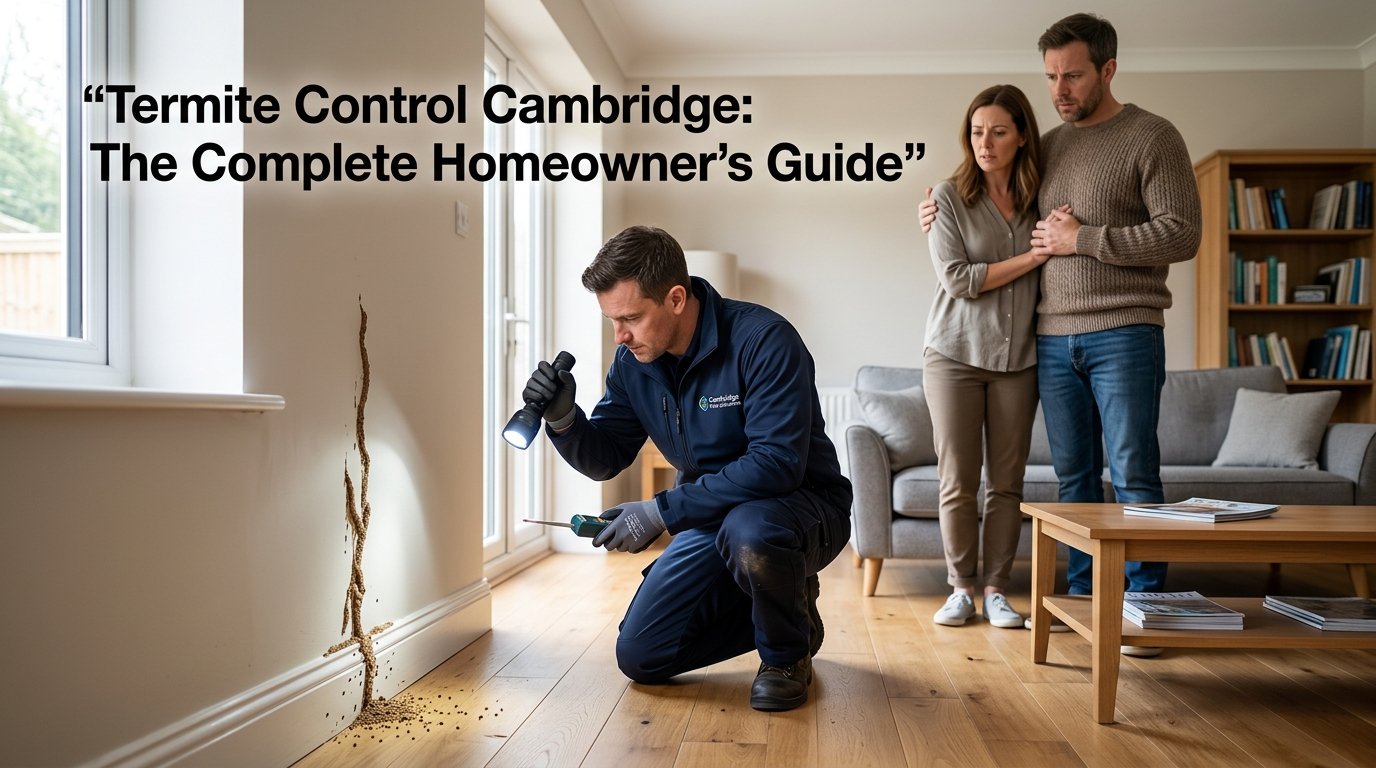
Table Of Content
- Are Termites Actually a Problem in Cambridge?
- Why Cambridge Properties Are Vulnerable
- Warning Signs: How to Know If You Have Termites
- Structural and Visual Warning Signs
- Behavioural Signs: Swarmers and Discarded Wings
- What a Professional Termite Inspection Involves
- The Inspection Process Step by Step
- Should You Get an Inspection Before Buying a Cambridge Property?
- Termite Treatment Options Available in Cambridge
- Chemical Soil Barrier Treatment
- Termite Bait Stations
- Eco-Friendly and Low-Toxicity Treatments
- How Much Does Termite Treatment Cost in Cambridge?
- Typical Price Ranges
- Annual Monitoring Contracts and Warranties
- How to Prevent Termites in Your Cambridge Home
- Five Prevention Tips Every Cambridge Homeowner Should Know
- Frequently Asked Questions
- 1. Are termites common in Cambridge, UK?
- 2. How do I know if I have termites and not woodworm?
- 3. How long does termite treatment take?
- 4. Can I treat termites myself?
- 5. Does home insurance cover termite damage in the UK?
- 6. How much does a termite inspection cost in Cambridge?
- 7. Do pest control companies offer guarantees on termite treatment?
- Conclusion
If you own a home in Cambridge, termites may not be the first pest that comes to mind but ignoring them could be one of the costliest mistakes you ever make. While these wood-destroying insects are more commonly associated with tropical climates, termite infestations have been documented across the United Kingdom, including right here in Cambridgeshire. Older timber-framed homes, damp basements, and lush gardens create conditions that certain termite species find surprisingly hospitable.
This guide is designed to walk Cambridge homeowners through everything they need to know: how to spot an infestation early, what professional termite control Cambridge services involve, how much treatment costs, and how to protect your property long-term. Whether you have a suspicion right now or simply want to be prepared, this is the information you need.
Are Termites Actually a Problem in Cambridge?
Many people are surprised to learn that termites exist in the UK at all. The most commonly encountered species is Reticulitermes flavipes, a subterranean termite first detected in England in the 1990s. Colonies have since been found in several English towns and cities, and Cambridgeshire’s mix of older housing stock, moist soil, and substantial garden timber makes it a plausible target.
Drywood termites, though less prevalent, have also been found in imported wooden furniture and structural timber. The risk may be lower than in warmer countries, but it is not zero, and the damage they cause is just as serious. A single mature colony can consume several kilograms of wood per year, often attacking structural beams, floor joists, and door frames from the inside out before any visible sign appears on the surface.
Why Cambridge Properties Are Vulnerable
Victorian-era timber frames, cellar conversions, garden sheds, and wooden outbuildings are all common throughout Cambridge. These structures, combined with the region’s moist soil and older drainage systems, create the kind of damp, wood-rich environment that subterranean termites seek out. The bottom line: termite control in Cambridge is not a hypothetical concern. It is a real and growing responsibility for property owners.
Warning Signs: How to Know If You Have Termites
Catching a termite infestation early dramatically reduces the cost and complexity of treatment. The trouble is that these insects work silently and out of sight. Knowing what to look for is your best early-warning system.
Structural and Visual Warning Signs
Mud tubes along foundations or walls are one of the clearest signs of subterranean termite activity. These pencil-thin tunnels are built from soil, wood particles, and saliva, and they protect termites as they travel between their underground colony and a food source. Hollow-sounding timber is another red flag if you tap a wooden beam, skirting board, or door frame and it sounds papery rather than solid; termites may have already eaten through the interior. Bubbling or blistering paint that resembles water damage, even when there has been no water exposure, can also indicate termites feeding just beneath the surface.
Behavioural Signs: Swarmers and Discarded Wings
Frass, or termite droppings, looks like tiny pellets of sawdust and often accumulates near infested wood. Discarded wings near windowsills, doors, or light fixtures are a strong indicator that a termite swarm has occurred in or near your home. Termites swarm in spring and early summer to establish new colonies and shed their wings shortly after landing. If you notice any of these signs, do not reach for a DIY product; call a professional pest control service for a proper termite inspection in Cambridge right away.
What a Professional Termite Inspection Involves
A proper termite inspection in Cambridge goes well beyond a visual walkthrough. Certified pest controllers use moisture metres, thermal imaging cameras, and borescopes to detect activity behind walls, under floors, and inside structural timber where the naked eye simply cannot reach.
The Inspection Process Step by Step
A technician will assess your entire property, including the foundation, subfloor, roof cavity, interior walls, and any timber outbuildings or garden structures. At the end, you receive a written report detailing the findings, the extent of any infestation, and recommended treatment options.
Should You Get an Inspection Before Buying a Cambridge Property?
If you are purchasing a home in Cambridge, a pre-purchase timber pest inspection is strongly recommended. Many standard surveyors’ reports do not specifically test for termites, meaning you could inherit a serious structural problem without knowing it. A specialist inspection before you sign can save you thousands in repair costs. Always look for a BPCA-certified (British Pest Control Association) inspector to ensure the assessment meets industry standards.
Termite Treatment Options Available in Cambridge
Once an infestation is confirmed, professional termite treatment in Cambridge can take several forms depending on the species involved, the severity of the problem, and the layout of your property.
Chemical Soil Barrier Treatment
A liquid termiticide is applied to the soil around the home’s foundation, creating a continuous chemical barrier that termites cannot cross without exposure. This treatment provides long-lasting protection and is typically completed in a single visit, making it one of the most time-efficient options available.
Termite Bait Stations
Bait stations are placed in the ground around the perimeter of the property. Termites find the bait, consume it, and carry it back to the colony, where it gradually spreads and eliminates the population. This method takes longer (typically two to four weeks) but is highly thorough and well-suited for large or well-established colonies.
Eco-Friendly and Low-Toxicity Treatments
Heat treatment, botanical-based termiticides, and microwave technology are increasingly available for homeowners concerned about chemical exposure. These methods work well in specific situations, though they are not always appropriate for large-scale infestations. Your pest control specialist will advise which approach suits your property best.
How Much Does Termite Treatment Cost in Cambridge?
Termite treatment cost in Cambridge varies based on several factors: the size of your property, the extent of the infestation, the species involved, and the treatment method chosen.
Typical Price Ranges
A basic inspection typically starts at around £100 to £150. A full treatment programme can range from £300 for a minor, localised infestation to over £1,000 for a severe or widespread problem requiring multiple visits. Most standard UK home insurance policies do not cover termite damage; pest infestations are classified as a maintenance issue, which makes early detection all the more financially important.
Annual Monitoring Contracts and Warranties
Many pest control companies in Cambridge offer annual monitoring contracts that include scheduled inspections and guaranteed re-treatment if activity returns within the coverage period. For older properties or those with a known pest history, these programmes offer genuine long-term value and peace of mind.
How to Prevent Termites in Your Cambridge Home
Prevention is far less expensive than treatment, and there are practical steps every homeowner can take to reduce the risk significantly.
Five Prevention Tips Every Cambridge Homeowner Should Know
- Fix moisture problems promptly, repair leaking pipes, improve drainage, and keep gutters clear, as termites are drawn to damp wood and wet soil.
- Eliminate wood-to-soil contact: timber posts or garden sleepers sitting directly on soil are easy entry points; use concrete footings or metal barriers instead.
- Clear organic debris, dead stumps, wood piles, and fallen branches near the house provide prime nesting conditions.
- Ventilate your subfloor. Poor airflow beneath suspended timber floors creates the cool, damp environment subterranean termites prefer.
- Schedule annual termite inspections even without visible signs; a yearly check by a licensed pest controller in Cambridge gives you early detection and documented assurance.
Frequently Asked Questions
1. Are termites common in Cambridge, UK?
Termites are less common in Cambridge than in tropical regions, but they have been confirmed in properties across England. The subterranean species Reticulitermes flavipes is the most likely to be encountered in the UK.
2. How do I know if I have termites and not woodworm?
Woodworm leaves small, round exit holes and fine powder. Termites typically produce mud tubes, hollow-sounding timber, frass resembling coarse sawdust, and discarded wings near windows. A professional inspection will confirm the species accurately.
3. How long does termite treatment take?
A liquid soil barrier treatment is usually completed in a single visit of three to six hours. Baiting systems require ongoing monitoring over two to four weeks before the colony is fully eliminated.
4. Can I treat termites myself?
Over-the-counter products can temporarily suppress surface activity, but they rarely eliminate an established colony. Professional-grade termiticides and bait systems require certified application. DIY attempts often delay proper treatment and allow the colony to spread further.
5. Does home insurance cover termite damage in the UK?
Standard UK home insurance policies typically exclude pest damage, including termites. Homeowners are responsible for prevention and treatment costs, which makes early detection critically important.
6. How much does a termite inspection cost in Cambridge?
A professional termite inspection in Cambridge generally starts at £100 to £150, depending on property size and the scope of the assessment.
7. Do pest control companies offer guarantees on termite treatment?
Many BPCA-certified pest control companies offer re-treatment guarantees and annual monitoring contracts. Always confirm what is included in your service agreement before committing.
Conclusion
Termite control in Cambridge is not something any homeowner can afford to overlook. These insects work slowly, quietly, and entirely out of sight, and by the time structural damage becomes visible, the repair costs can be severe. With professional inspection, timely treatment, and consistent prevention, your property can be effectively protected for years to come. If you are concerned about termite activity in your Cambridge home or you simply want the assurance of a thorough professional assessment, Pesticon is here to help. As a trusted name in termite control Cambridge, Pesticon delivers certified inspections, targeted treatments, and long-term prevention programmes tailored to Cambridge properties. Do not wait for the damage to show itself. Contact Pesticon today and give your home the protection it deserves.



No Comment! Be the first one.