





The Complete Guide to Import Export Consulting for First-Time Exporters
International trade offers exciting opportunities for businesses of all sizes. Thanks to digital communication, global logistics networks, and growing consumer demand, companies can now reach...

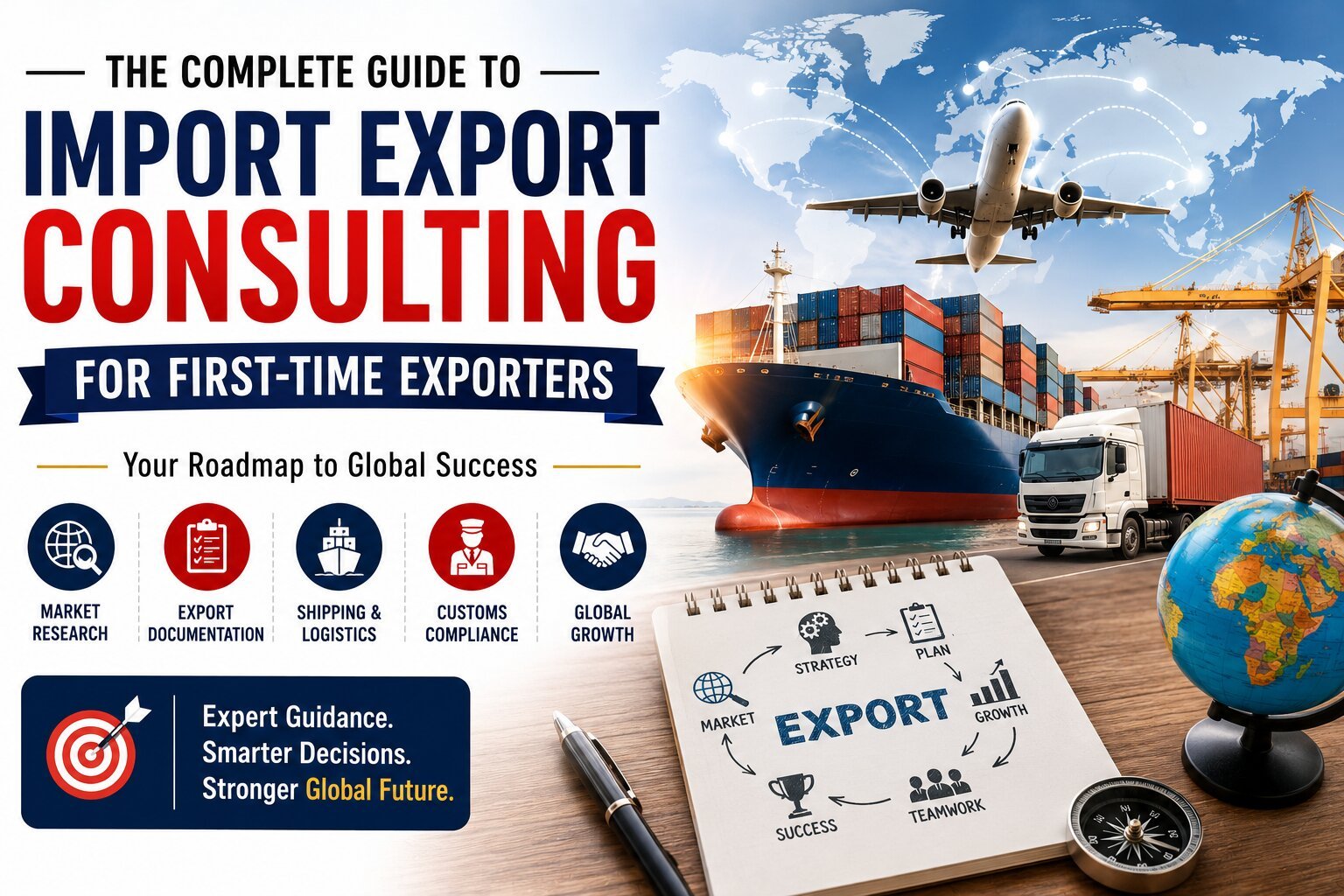
Table Of Content
- Understanding Import Export Consulting
- Why First-Time Exporters Need Guidance
- The Growing Importance of Global Trade
- What Does an Export Consultant Do?
- Market Research
- Regulatory Guidance
- Documentation Support
- Logistics Planning
- Customs Assistance
- Risk Assessment
- Market Entry Planning
- Understanding International Market Research
- Choosing the Right Export Market
- Understanding Export Documentation
- Navigating Customs Procedures
- Product Classification and Harmonized Codes
- Understanding Tariffs and Duties
- International Shipping Fundamentals
- Air Freight
- Ocean Freight
- Rail Transport
- Trucking
- Understanding Incoterms
- International Payment Methods
- Managing International Trade Risks
- Currency Exchange Considerations
- Understanding Trade Compliance
- Developing an Export Strategy
- Building International Partnerships
- Understanding Cultural Differences
- Digital Marketing for Exporters
- E-Commerce and International Expansion
- Common Mistakes First-Time Exporters Make
- Insufficient Market Research
- Ignoring Compliance Requirements
- Poor Pricing Strategies
- Inadequate Logistics Planning
- Lack of Risk Management
- How Import Export Consulting Saves Time
- Improving Decision-Making Through Expertise
- Long-Term Benefits of Export Consulting
- Preparing for Future Global Growth
- The Future of Import Export Consulting
- Final Thoughts
International trade offers exciting opportunities for businesses of all sizes. Thanks to digital communication, global logistics networks, and growing consumer demand, companies can now reach customers far beyond their domestic markets. However, entering international trade for the first time can feel overwhelming. New exporters often face unfamiliar regulations, shipping requirements, documentation rules, customs procedures, and market entry challenges.
This is where import export consulting becomes valuable. Businesses that are new to exporting often benefit from expert guidance that helps them understand international trade processes and avoid costly mistakes. Export consulting provides practical knowledge that allows companies to navigate global markets more confidently and efficiently.
For first-time exporters, understanding how consulting services support international growth can make the difference between a smooth expansion and a frustrating experience. This guide explains everything new exporters need to know about import export consulting, including its benefits, responsibilities, challenges, and role in successful international trade.
Understanding Import Export Consulting
Import export consulting refers to professional guidance that helps businesses manage international trade activities. Consultants assist companies in understanding the rules, procedures, and strategies involved in moving goods across borders.
International trade involves many moving parts. Businesses must understand regulations, tariffs, documentation requirements, shipping methods, customs procedures, payment terms, and market entry strategies. First-time exporters often lack experience in these areas.
Import export consulting helps bridge this knowledge gap by providing expertise and practical solutions.
Rather than learning through expensive mistakes, businesses can gain valuable insights from professionals who understand global trade operations.
Why First-Time Exporters Need Guidance
Many new exporters assume that selling internationally works the same way as selling domestically. In reality, international trade introduces additional complexities.
Exporters must consider:
- Customs regulations
- Product restrictions
- Import requirements
- Export documentation
- International shipping
- Trade agreements
- Currency exchange
- Foreign market research
- International payment methods
Without proper preparation, businesses may face delays, compliance issues, unexpected costs, or shipment problems.
Export consulting helps companies understand these challenges before they become serious obstacles.
The Growing Importance of Global Trade
Global commerce continues expanding every year. Consumers increasingly purchase products from international sellers, and businesses seek new markets to support growth.
Several factors drive international trade growth:
- E-commerce expansion
- Improved logistics networks
- Digital marketing opportunities
- Global supply chains
- Growing international demand
As opportunities increase, more businesses explore exporting for the first time.
Import export consulting helps these companies build strong foundations before entering foreign markets.
What Does an Export Consultant Do?
An export consultant performs many different functions depending on a company’s needs.
Common responsibilities include:
Market Research
Consultants identify markets where products have strong demand.
Regulatory Guidance
They explain export laws, trade requirements, and compliance obligations.
Documentation Support
They help prepare export paperwork accurately.
Logistics Planning
They advise on transportation methods and shipping strategies.
Customs Assistance
They help businesses understand customs procedures and requirements.
Risk Assessment
They identify potential challenges and suggest solutions.
Market Entry Planning
They assist businesses in developing strategies for entering new countries.
Export consulting provides practical guidance throughout the export process.
Understanding International Market Research
Research is one of the most important steps in exporting.
Not every product succeeds in every market. Cultural preferences, economic conditions, competition levels, and regulations vary significantly from one country to another.
Effective market research helps businesses determine:
- Product demand
- Competitive landscape
- Consumer preferences
- Pricing expectations
- Distribution opportunities
- Regulatory requirements
Import export consulting often begins with detailed market analysis to identify the most promising opportunities.
Choosing the Right Export Market
Many first-time exporters make the mistake of targeting too many countries at once.
A focused approach often produces better results.
Factors to evaluate include:
- Market size
- Economic stability
- Trade regulations
- Cultural compatibility
- Shipping costs
- Existing competition
Export consulting helps businesses prioritize markets based on realistic growth potential.
Understanding Export Documentation
Documentation plays a critical role in international trade.
Incorrect paperwork can lead to shipment delays, customs penalties, or rejected goods.
Common export documents include:
- Commercial invoices
- Packing lists
- Bills of lading
- Certificates of origin
- Export licenses
- Insurance certificates
First-time exporters often underestimate the importance of documentation accuracy.
Import export consulting helps ensure compliance with documentation requirements.
Navigating Customs Procedures
Customs regulations vary by country.
Every shipment entering a foreign market must comply with local import requirements.
Common customs considerations include:
- Product classification
- Duties and taxes
- Inspection requirements
- Product labeling
- Import permits
Export consulting helps businesses understand customs procedures and avoid unnecessary delays.
Product Classification and Harmonized Codes
Every internationally traded product receives a classification code.
These codes help customs authorities determine:
- Applicable tariffs
- Regulatory requirements
- Trade statistics
- Import restrictions
Incorrect classifications can create serious problems.
Import export consulting often includes guidance on proper product classification to ensure compliance.
Understanding Tariffs and Duties
Tariffs affect product pricing and profitability.
Different countries apply different duty rates depending on:
- Product type
- Country of origin
- Trade agreements
- Product classification
Businesses must understand these costs before entering a market.
Export consulting helps calculate potential duty obligations and evaluate market viability.
International Shipping Fundamentals
Shipping represents one of the most visible aspects of exporting.
Businesses must choose transportation methods that balance:
- Cost
- Speed
- Reliability
- Product requirements
Common transportation options include:
Air Freight
Fast but typically more expensive.
Ocean Freight
Cost-effective for large shipments.
Rail Transport
Useful for certain international trade corridors.
Trucking
Common for regional trade and final delivery.
Import export consulting helps businesses select appropriate shipping solutions.
Understanding Incoterms
Incoterms define responsibilities between buyers and sellers during international transactions.
They clarify who handles:
- Shipping costs
- Insurance
- Customs clearance
- Delivery obligations
Misunderstanding Incoterms can create confusion and disputes.
Export consulting helps businesses select terms that align with their goals and risk tolerance.
International Payment Methods
Getting paid is a major concern for first-time exporters.
International transactions involve additional financial risks compared to domestic sales.
Common payment methods include:
- Wire transfers
- Letters of credit
- Documentary collections
- Open account transactions
Each method offers different levels of security.
Import export consulting helps businesses choose payment structures that protect their interests.
Managing International Trade Risks
Every export transaction carries some level of risk.
Potential challenges include:
- Currency fluctuations
- Payment defaults
- Political instability
- Shipping delays
- Regulatory changes
Export consulting helps businesses identify and manage these risks effectively.
Currency Exchange Considerations
International transactions often involve foreign currencies.
Exchange rate fluctuations can affect profitability significantly.
Businesses must evaluate:
- Currency risks
- Pricing strategies
- Payment timing
- Hedging options
Import export consulting helps companies understand financial considerations associated with global trade.
Understanding Trade Compliance
Compliance is one of the most important aspects of exporting.
Governments regulate international trade to ensure safety, security, and legal compliance.
Businesses must comply with:
- Export controls
- Product regulations
- Sanctions requirements
- Trade restrictions
- Licensing rules
Failure to comply can result in penalties and reputational damage.
Export consulting helps businesses stay informed about regulatory obligations.
Developing an Export Strategy
Successful exporting requires planning.
A strong export strategy outlines:
- Target markets
- Sales goals
- Pricing approaches
- Distribution channels
- Marketing plans
- Compliance requirements
Import export consulting helps businesses create structured strategies that support long-term growth.
Building International Partnerships
Strong partnerships often contribute to export success.
Potential partners include:
- Distributors
- Importers
- Agents
- Logistics providers
- Warehousing companies
Selecting reliable partners requires careful evaluation.
Export consulting helps businesses identify and assess potential international partners.
Understanding Cultural Differences
Cultural awareness influences international business success.
Consumer behavior varies across markets.
Factors that may differ include:
- Buying preferences
- Communication styles
- Business etiquette
- Marketing expectations
- Product perceptions
Import export consulting often includes cultural insights that help businesses communicate more effectively with international customers.
Digital Marketing for Exporters
Modern exporters increasingly use digital marketing to reach global audiences.
Popular channels include:
- Search engines
- Social media
- Email marketing
- Online marketplaces
- Content marketing
Marketing strategies must often adapt to local preferences.
Export consulting helps businesses develop market-specific promotional approaches.
E-Commerce and International Expansion
E-commerce has transformed global trade.
Even small businesses can now reach customers worldwide through online platforms.
Benefits include:
- Lower entry barriers
- Expanded market access
- Direct customer relationships
- Increased visibility
Import export consulting helps businesses understand e-commerce regulations and international fulfillment requirements.
Common Mistakes First-Time Exporters Make
New exporters often encounter avoidable challenges.
Common mistakes include:
Insufficient Market Research
Entering markets without understanding demand.
Ignoring Compliance Requirements
Overlooking regulations and documentation.
Poor Pricing Strategies
Failing to account for international costs.
Inadequate Logistics Planning
Choosing inefficient shipping solutions.
Lack of Risk Management
Ignoring potential financial and operational risks.
Export consulting helps businesses avoid these common pitfalls.
How Import Export Consulting Saves Time
International trade involves extensive learning.
Without guidance, businesses may spend months researching regulations, logistics, and documentation requirements.
Import export consulting accelerates the learning process by providing:
- Expert advice
- Industry knowledge
- Proven strategies
- Practical solutions
This allows companies to focus on growth rather than troubleshooting.
Improving Decision-Making Through Expertise
Experience matters in international trade.
Consultants often work with businesses across multiple industries and markets.
Their knowledge helps companies make informed decisions regarding:
- Market selection
- Compliance planning
- Shipping methods
- Partner relationships
- Growth strategies
Export consulting supports better decision-making at every stage.
Long-Term Benefits of Export Consulting
The benefits of professional guidance extend beyond initial market entry.
Long-term advantages may include:
- Reduced operational risks
- Improved compliance
- Better market positioning
- Increased efficiency
- Sustainable international growth
Import export consulting helps businesses build scalable trade operations that support future expansion.
Preparing for Future Global Growth
Many successful exporters begin with one international market before expanding further.
A strong foundation makes future growth easier.
Businesses that invest in proper planning often develop:
- Stronger processes
- Better compliance systems
- More effective partnerships
- Greater market knowledge
Export consulting supports sustainable international development over time.
The Future of Import Export Consulting
International trade continues evolving rapidly.
Several trends are shaping the future of global commerce:
- Digital trade platforms
- Supply chain technology
- Data-driven market research
- E-commerce growth
- Increased regulatory complexity
As international business becomes more sophisticated, demand for import export consulting will likely continue growing.
Businesses increasingly recognize the value of expert guidance when navigating global markets.
Final Thoughts
Exporting offers tremendous opportunities for businesses seeking growth beyond domestic markets. However, international trade introduces complexities that many first-time exporters underestimate. Regulations, documentation, logistics, customs procedures, payment methods, and market selection all require careful planning.
Import export consulting provides valuable expertise that helps businesses navigate these challenges more confidently. Through market research, compliance guidance, logistics planning, risk management, and strategic support, consultants help exporters avoid costly mistakes and build stronger international operations.
Export consulting is particularly valuable for first-time exporters because it transforms a complicated process into a structured and manageable journey. Instead of relying on trial and error, businesses gain access to practical knowledge that supports informed decision-making.
As global trade opportunities continue expanding, companies that invest in education, preparation, and expert guidance position themselves for long-term success. For first-time exporters, understanding the role of import export consulting is one of the smartest steps toward building a successful international business.



No Comment! Be the first one.