




Tokenized Private Equity Markets: A Smarter Way to Invest in High-Growth Startups
Private equity has traditionally been one of the most exclusive investment classes, reserved for institutional investors, venture capital firms, and high-net-worth individuals. Access barriers are...

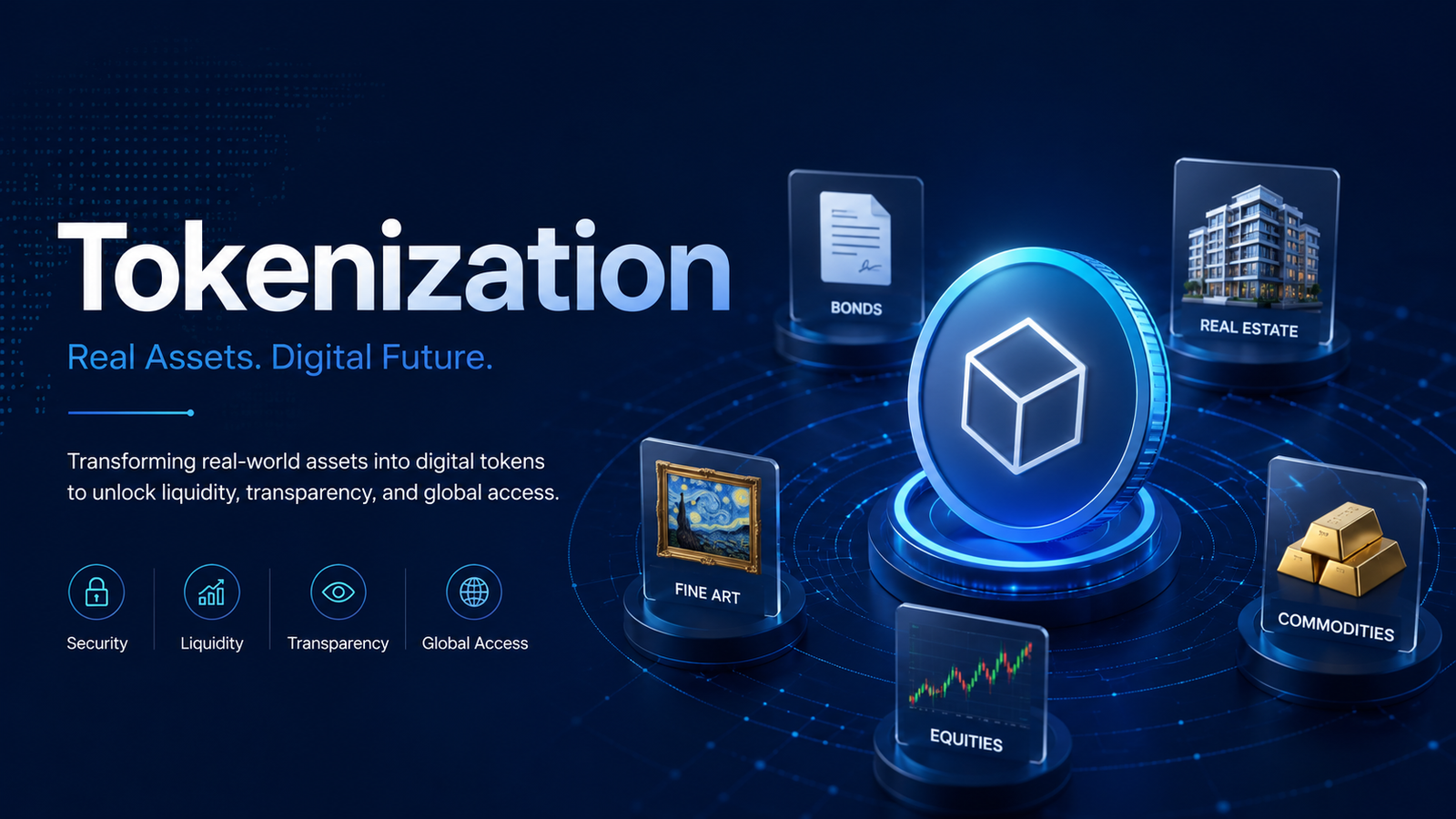
Table Of Content
- What Is Tokenized Private Equity?
- How Tokenized Private Equity Markets Work
- 1. Democratizing Access to High-Growth Startup Investments
- 2. Improving Liquidity in Private Markets
- 3. Transparent Ownership and Real-Time Cap Tables
- 4. Automated Profit Distribution and Governance
- 5. Global Investor Participation Without Geographic Barriers
- 6. Enhanced Transparency and Reduced Information Asymmetry
- 7. Lower Administrative and Intermediary Costs
- 8. Faster Capital Formation for Startups
- Challenges in Tokenized Private Equity Markets
- Future Outlook of Tokenized Startup Investments
- Conclusion
Private equity has traditionally been one of the most exclusive investment classes, reserved for institutional investors, venture capital firms, and high-net-worth individuals. Access barriers are high, liquidity is limited, and investment cycles are long. While returns can be significant, participation has historically been restricted to a small segment of the global investor base.
Tokenization is changing this structure. By converting private equity stakes into blockchain-based digital tokens, investment in high-growth startups and private companies is becoming more accessible, transparent, and efficient. Tokenized private equity markets are emerging as a new financial layer that bridges traditional venture capital with decentralized financial infrastructure.
What Is Tokenized Private Equity?
Tokenized private equity refers to the digitization of ownership stakes in private companies or venture funds using blockchain technology. Each token represents a defined share of equity, revenue rights, or profit participation in an underlying startup or private asset.
These tokens are issued and managed through smart contracts, which define ownership rights, transfer rules, compliance conditions, and distribution mechanisms. Instead of relying on paper-based agreements and manual cap table updates, ownership is recorded on-chain in real time. This transforms private equity from a static, illiquid asset class into a programmable and tradable digital asset system.
How Tokenized Private Equity Markets Work
In a tokenized private equity ecosystem, startups or funds issue digital tokens representing equity ownership. These tokens are then distributed to investors through regulated platforms or private offerings.
The lifecycle typically includes:
- Asset structuring and legal framework setup
- Token issuance through smart contracts
- Investor onboarding and compliance verification
- Primary fundraising through token sales
- Secondary trading of equity tokens on approved markets
- Automated dividend or profit distribution
This structure introduces liquidity and transparency into an asset class that has traditionally been difficult to access or trade.
1. Democratizing Access to High-Growth Startup Investments
One of the most significant advantages of tokenized private equity markets is the reduction of entry barriers. Traditional venture capital investments often require large minimum commitments, limiting participation to institutional investors. Tokenization allows startup equity to be divided into smaller digital units, enabling fractional ownership. This means retail investors can participate in funding high-growth startups with significantly lower capital requirements. This democratization expands the investor base and allows startups to access a broader pool of global capital.
2. Improving Liquidity in Private Markets
Private equity investments are typically illiquid, with capital locked in for years until an exit event such as an IPO or acquisition occurs. Tokenized markets introduce secondary trading opportunities, where equity tokens can be bought and sold on regulated digital platforms. This creates partial liquidity, allowing investors to exit positions without waiting for traditional liquidity events. Improved liquidity makes private equity more attractive and dynamic, encouraging broader participation.
3. Transparent Ownership and Real-Time Cap Tables
Managing ownership in startups is often complex due to multiple funding rounds, dilution events, and investor classes. Tokenized equity systems maintain a real-time, blockchain-based cap table where ownership changes are automatically recorded. Every token transfer updates ownership structure instantly and transparently. This reduces administrative complexity, minimizes errors, and provides all stakeholders with a clear and verifiable ownership view.
4. Automated Profit Distribution and Governance
Smart contracts enable automated distribution of profits, dividends, or revenue shares based on predefined conditions. Instead of manual calculations and delayed payouts, tokenized systems can distribute returns instantly and proportionally to token holders. Additionally, governance rights can also be embedded into tokens, allowing investors to participate in voting processes for strategic company decisions.
5. Global Investor Participation Without Geographic Barriers
Traditional private equity investments are often restricted by jurisdictional regulations, investor accreditation rules, and banking limitations. Tokenized markets allow startups to access a global investor base, subject to compliance frameworks. Investors from different regions can participate in funding rounds using standardized digital infrastructure. This global reach increases capital availability for startups while giving investors access to diversified opportunities worldwide.
6. Enhanced Transparency and Reduced Information Asymmetry
Private equity markets often suffer from limited transparency, where investors have restricted access to financial performance data and operational updates. Blockchain-based tokenization improves transparency by providing verifiable records of ownership, transactions, and, in some cases, financial distributions. This reduces information asymmetry between startups and investors, improving trust and decision-making efficiency.
7. Lower Administrative and Intermediary Costs
Traditional private equity transactions involve multiple intermediaries, including legal firms, fund administrators, brokers, and custodians. Tokenized systems reduce reliance on intermediaries by automating processes through smart contracts. This lowers administrative overhead and reduces transaction costs for both startups and investors. The result is a more efficient capital formation process with fewer operational inefficiencies.
8. Faster Capital Formation for Startups
Startups often face long fundraising cycles involving multiple rounds of negotiation, due diligence, and documentation. Tokenized private equity platforms streamline this process by enabling faster issuance and distribution of digital equity tokens. Investors can participate in funding rounds more quickly, reducing time-to-capital for startups. This speed advantage can be critical for high-growth companies operating in competitive markets.
Challenges in Tokenized Private Equity Markets
Despite strong advantages, several challenges remain: Regulatory frameworks for tokenized securities vary widely across jurisdictions, and compliance remains a key requirement. Legal structuring of tokenized equity must align with securities laws and investor protection rules. Market adoption is still developing, and many institutional investors remain cautious about blockchain-based equity systems. Additionally, cybersecurity, valuation consistency, and secondary market liquidity still require further maturation.
Future Outlook of Tokenized Startup Investments
The future of private equity is likely to become increasingly digital and programmable. Tokenized markets are expected to integrate with decentralized finance ecosystems, allowing equity tokens to be used in lending, staking, and investment strategies.
Institutional adoption is also expected to grow as regulatory clarity improves and infrastructure matures. Over time, tokenized private equity could become a standard mechanism for startup fundraising and venture capital participation. This evolution may significantly reshape how capital flows into innovation-driven companies worldwide.
Conclusion
Tokenized private equity markets represent a major transformation in how investors access and participate in high-growth startup investments. By enabling fractional ownership, improving liquidity, increasing transparency, and automating financial processes, tokenization addresses many limitations of traditional private equity systems. For startups, this model offers faster access to global capital. For investors, it opens the door to previously inaccessible opportunities. As blockchain adoption continues to expand, tokenized private equity is positioned to become a core pillar of next-generation financial ecosystems.



No Comment! Be the first one.