





Why Carbon Tracking Is Becoming Essential in Modern Forest Management
The global forestry industry is entering a new phase of digital transformation as organizations increasingly focus on sustainability, environmental accountability, and climate resilience. While...

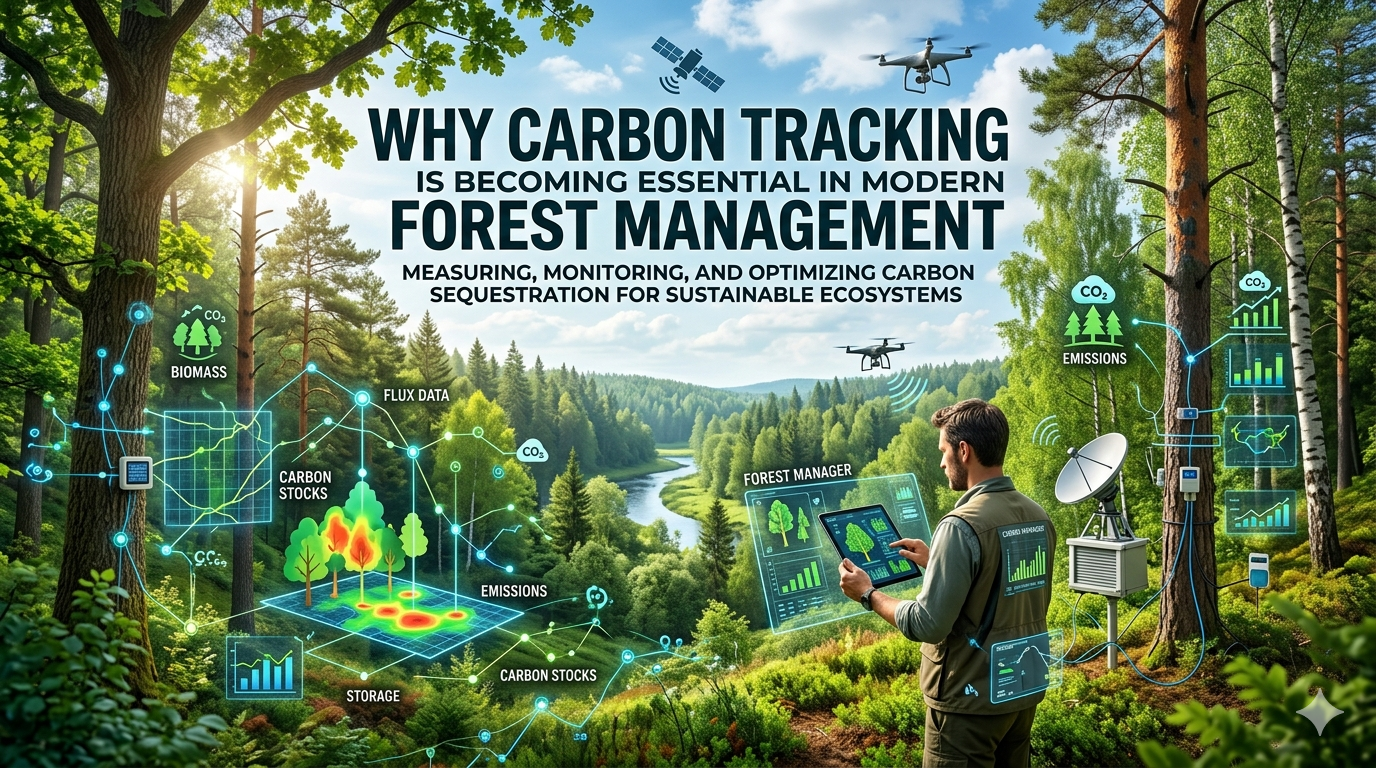
Table Of Content
- Why Carbon Tracking Matters in Forestry
- The Challenges of Traditional Carbon Monitoring
- Digital Forestry Platforms Are Transforming Carbon Intelligence
- GIS Technology Is Strengthening Carbon Monitoring
- AI Is Bringing Predictive Carbon Intelligence to Forestry
- Forest Inventory Management Supports Carbon Reporting
- Cloud Infrastructure Improves Environmental Data Management
- Sustainability Regulations Are Driving Technology Investments
- AI Development Agencies Are Accelerating Carbon Intelligence Innovation
- The Future of Carbon-Centric Forestry Management
- Conclusion
The global forestry industry is entering a new phase of digital transformation as organizations increasingly focus on sustainability, environmental accountability, and climate resilience. While traditional forestry management primarily focused on timber production and land utilization, modern forestry operations are now expected to support broader environmental goals such as carbon reduction, biodiversity protection, and ecosystem preservation.
As governments and industries worldwide intensify their climate commitments, carbon tracking has become one of the most important priorities within modern forestry management.
Forests play a critical role in absorbing and storing atmospheric carbon dioxide, making them essential components of global climate strategies. Because of this, forestry organizations are under growing pressure to accurately measure, monitor, and report carbon-related activities across their operations.
Today, digital forestry technologies powered by AI, GIS, cloud infrastructure, and predictive analytics are helping organizations build more accurate and scalable carbon tracking systems.
Modern forestry enterprises are no longer managing forests solely as natural resources. They are increasingly managing them as critical environmental assets within the global carbon economy.
Why Carbon Tracking Matters in Forestry
Forests act as natural carbon sinks by absorbing carbon dioxide from the atmosphere and storing it in trees, soil, and vegetation.
This process, known as carbon sequestration, plays a major role in reducing greenhouse gas concentrations and mitigating climate change.
As climate regulations and ESG frameworks continue evolving globally, forestry organizations are increasingly expected to provide transparent carbon reporting related to:
- Carbon sequestration levels
- Deforestation impacts
- Reforestation activities
- Land-use changes
- Biodiversity conservation
- Sustainability initiatives
Accurate carbon monitoring is becoming essential for organizations participating in:
- Carbon credit programs
- ESG reporting initiatives
- Sustainable forestry certification
- Climate adaptation programs
- Environmental compliance frameworks
Without intelligent digital systems, tracking these environmental metrics at scale becomes extremely difficult.
This growing complexity is accelerating investment in connected forestry technologies capable of supporting real-time carbon intelligence.
The Challenges of Traditional Carbon Monitoring
Traditional forestry monitoring methods often rely on manual field surveys, fragmented datasets, paper-based documentation, and delayed reporting processes.
These methods create several operational limitations, including:
- Inaccurate carbon estimates
- Delayed reporting cycles
- Limited operational visibility
- Poor scalability
- Difficulty integrating environmental datasets
- Inconsistent sustainability reporting
Carbon monitoring becomes even more challenging for enterprises managing large forest regions across multiple geographic locations.
Environmental data often changes continuously due to:
- Weather conditions
- Wildfires
- Deforestation
- Disease outbreaks
- Reforestation activities
- Soil variations
- Biodiversity changes
Manual systems struggle to keep pace with these rapidly evolving environmental conditions.
As a result, forestry organizations are increasingly adopting intelligent digital ecosystems capable of automating carbon monitoring and environmental analytics.
Digital Forestry Platforms Are Transforming Carbon Intelligence
Modern digital forestry platforms combine multiple technologies into centralized systems capable of managing operational and environmental data at scale.
These platforms often include:
- GIS mapping tools
- AI-powered analytics
- Real-time environmental monitoring
- Drone and satellite integration
- Cloud-based reporting systems
- Automated sustainability dashboards
- Predictive analytics engines
Many organizations are investing in white label forest management software to build customized forestry ecosystems capable of supporting carbon monitoring alongside operational management.
Unlike generic enterprise software, forestry-focused digital platforms are specifically designed to handle environmental analytics, land management, and sustainability reporting requirements.
These systems allow organizations to centralize carbon intelligence while improving operational efficiency and regulatory compliance.
GIS Technology Is Strengthening Carbon Monitoring
Geographic Information Systems (GIS) play a foundational role in modern carbon tracking systems.
Advanced GIS forest management systems allow organizations to collect, visualize, and analyze spatial environmental data associated with forest assets and ecological conditions.
GIS technologies support carbon monitoring through:
- Forest mapping
- Land-use analysis
- Vegetation monitoring
- Deforestation tracking
- Biodiversity analysis
- Soil condition monitoring
- Environmental risk assessment
By integrating satellite imagery, drone surveys, and GPS systems, GIS platforms provide highly detailed environmental visibility across large forest regions.
These systems help organizations estimate carbon storage more accurately while identifying environmental risks that could impact long-term sustainability objectives.
GIS-enabled carbon intelligence also supports:
- Reforestation planning
- Climate adaptation strategies
- Habitat conservation
- Sustainable land management
As carbon reporting requirements continue increasing, GIS-driven environmental analytics are becoming essential infrastructure within modern forestry operations.
AI Is Bringing Predictive Carbon Intelligence to Forestry
Artificial intelligence is transforming how forestry organizations analyze environmental data and forecast carbon-related trends.
Traditional carbon reporting systems often rely on historical analysis and manual estimation models.
AI-powered systems can process massive environmental datasets in real time to generate predictive insights and automated forecasting models.
Many forestry enterprises now work with an AI consultancy agency to develop intelligent environmental monitoring systems tailored to forestry-specific requirements.
AI-driven carbon tracking systems can support:
- Carbon sequestration forecasting
- Forest health analysis
- Wildfire impact prediction
- Deforestation risk analysis
- Climate modeling
- Biodiversity monitoring
- Environmental trend forecasting
Machine learning models can continuously analyze data from:
- Satellite imagery
- Weather systems
- Environmental sensors
- Drone surveys
- Inventory databases
This allows organizations to make more proactive environmental decisions while improving reporting accuracy.
Predictive environmental intelligence is becoming increasingly important as climate risks continue evolving globally.
Forest Inventory Management Supports Carbon Reporting
Accurate forest inventory data is critical for reliable carbon tracking.
Traditional inventory systems often depend on manual surveys and delayed data collection methods that can reduce reporting accuracy.
Modern forest inventory management software integrates AI, GIS systems, cloud infrastructure, and real-time monitoring technologies to improve environmental visibility.
Advanced inventory systems can track:
- Tree growth rates
- Timber volumes
- Carbon storage estimates
- Land utilization
- Species distribution
- Biodiversity indicators
- Regeneration progress
This level of intelligence allows forestry organizations to maintain more accurate carbon accounting systems while supporting sustainability initiatives and environmental compliance.
Automated inventory analytics also reduce administrative workload associated with carbon reporting.
Organizations exploring scalable environmental ecosystems are also increasingly investing in carbon credit marketplace development platforms to support carbon asset trading, sustainability transparency, and climate-focused digital marketplaces.
Cloud Infrastructure Improves Environmental Data Management
Cloud computing has become a major enabler of intelligent carbon monitoring systems.
Traditional on-premise infrastructure often creates limitations related to scalability, synchronization, and data accessibility.
Cloud-based forestry platforms provide organizations with:
- Centralized environmental data storage
- Real-time synchronization
- Faster analytics processing
- Improved collaboration
- Remote accessibility
- Scalable infrastructure
- Better reporting automation
Cloud-connected systems allow forestry enterprises to integrate operational and environmental intelligence into unified ecosystems.
This improves transparency while enabling more efficient sustainability reporting across distributed forestry operations.
Sustainability Regulations Are Driving Technology Investments
Governments, investors, and environmental organizations increasingly expect forestry enterprises to demonstrate measurable sustainability performance.
Modern ESG frameworks now require organizations to maintain transparent reporting related to:
- Carbon emissions
- Carbon sequestration
- Biodiversity protection
- Deforestation reduction
- Environmental impact mitigation
As sustainability expectations continue increasing, many organizations are investing in intelligent forestry infrastructure capable of automating compliance management and environmental reporting.
Digital forestry systems help organizations:
- Reduce reporting complexity
- Improve environmental transparency
- Support carbon credit participation
- Strengthen climate accountability
- Enhance operational sustainability
At Triple Minds, we are seeing strong growth in demand for digital forestry platforms focused specifically on environmental intelligence and sustainability automation.
AI Development Agencies Are Accelerating Carbon Intelligence Innovation
The growing complexity of environmental analytics has increased the importance of specialized technology partners within the forestry sector.
Many organizations now collaborate with an AI development agency to build intelligent carbon tracking systems tailored to operational and environmental goals.
Custom AI-powered forestry solutions can include:
- Predictive environmental analytics
- Automated carbon reporting systems
- Climate forecasting tools
- Intelligent sustainability dashboards
- Drone-based monitoring platforms
- GIS-integrated environmental intelligence
- Biodiversity tracking systems
Custom digital infrastructure allows forestry enterprises to build scalable environmental ecosystems capable of adapting to evolving climate regulations and sustainability frameworks.
The Future of Carbon-Centric Forestry Management
The future of forestry management will increasingly focus on intelligent environmental intelligence and connected sustainability ecosystems.
Emerging technologies expected to influence carbon-focused forestry operations include:
- Real-time carbon intelligence platforms
- AI-powered climate forecasting
- Automated biodiversity monitoring
- IoT-enabled environmental sensors
- Blockchain sustainability tracking
- Digital twin forest ecosystems
- Advanced drone analytics
- Predictive environmental modeling
Organizations investing early in intelligent carbon monitoring systems will likely gain major advantages in sustainability management, regulatory compliance, and long-term environmental resilience.
Carbon intelligence is rapidly becoming a strategic operational asset within modern forestry management.
Conclusion
Carbon tracking is becoming one of the most important components of modern forestry management as organizations face growing environmental accountability and climate-related responsibilities.
Digital forestry technologies powered by AI, GIS systems, cloud infrastructure, and predictive analytics are helping organizations improve carbon monitoring accuracy, sustainability reporting, and environmental decision-making.
As global climate initiatives continue expanding, intelligent carbon management systems will become increasingly essential for forestry enterprises seeking operational efficiency, sustainability leadership, and long-term resilience.
The future of forestry will not only depend on how forests are managed operationally, but also on how effectively organizations can monitor, protect, and optimize their environmental impact through intelligent digital ecosystems.



No Comment! Be the first one.