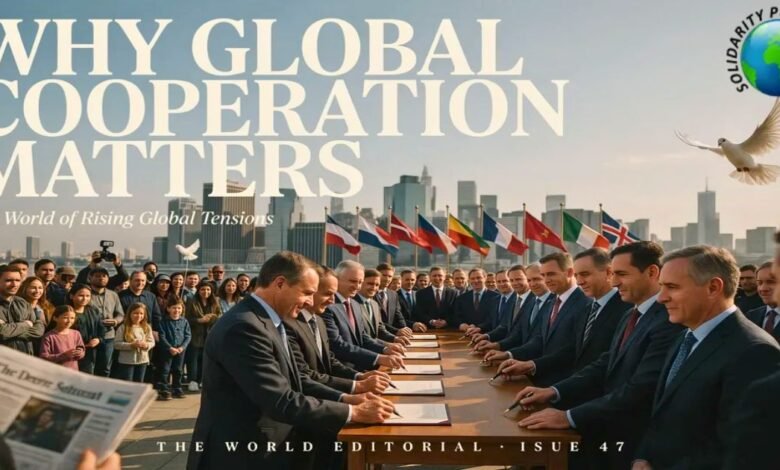
The world in 2026 feels more unstable than ever. Countries face rising pressure from politics, economy, and technology at the same time. This is why international global cooperation has become essential for survival. Without it, small disputes can quickly grow into larger global conflicts that affect everyone.
One major driver is fast-changing power competition. The rise of the Russia-Ukraine war, US-China relations stress, and regional conflicts show how quickly tensions spread. At the same time, geopolitical tensions are amplified by social media and misinformation. As a result, global stability is harder to maintain than in past decades.
Another key factor is shared global risk. Issues like climate change and energy shortages do not stay in one region. They spread across borders and create humanitarian crises that require joint action. Without cooperation, no country can fully control these modern risks alone.
How Cyber Warfare Is Changing Modern Conflict
Modern warfare is no longer limited to physical battlefields. Today, AI and Cyber Warfare have become central tools in global power struggles. Countries now face attacks on digital systems, banking networks, and communication infrastructure.
This shift makes conflict prevention more difficult. For example, a cyberattack can happen silently and spread instantly across borders. Moreover, unlike traditional war, there is often no clear warning. As a result, this increases the need for international peace and security frameworks that include digital defense.
In addition, cyber tools also blur the line between war and peace. Governments must now prepare for invisible threats that can disrupt entire economies. Therefore, this is why global security challenges require stronger coordination between nations and faster response systems.
The Connection Between Energy Resources and Global Instability
Energy remains one of the strongest drivers of global politics. Control over oil, gas, and supply chains directly affects energy security and national power. When resources become limited, tensions between countries rise quickly.
At the same time, climate pressure is changing global energy needs. Countries compete for cleaner technologies while still depending on traditional fuels. This creates a fragile balance that can lead to global conflicts if not managed carefully.
Below is a simple view of how energy impacts stability:
| Resource Factor | Global Impact |
| Oil shortages | Political tension |
| Gas supply issues | Economic instability |
| Clean energy transition | Strategic competition |
These patterns show why diplomacy and cooperation are necessary to avoid future crises.
Can Diplomacy Reduce International Tensions?
Diplomacy remains the strongest tool for preventing war. It allows countries to solve problems through conversation instead of violence. This is the foundation of international diplomacy and long-term stability.
Through negotiation, leaders can reduce misunderstandings before they grow. The United Nations plays a major role here by supporting talks and peace missions across conflict zones. These efforts strengthen global conflict resolution and help maintain balance between nations.
However, diplomacy only works when countries are willing to engage. Trust, patience, and communication are key. Without them, even small disagreements can turn into larger crises.
What Befriending China Teaches About Peaceful Cooperation
US-China relations are one of the most important examples of modern global politics. Competition exists, but communication channels remain essential. This is where peacebuilding and dialogue become critical tools for reducing misunderstanding.
The idea of engagement, often discussed as Befriending China, shows that cooperation does not mean agreement on everything. Instead, it means managing differences without conflict. Strong communication helps prevent escalation and supports future world peace.
When major powers maintain dialogue, global risks decrease. This lesson applies not only to China and the US but to all nations facing tension in today’s interconnected world.
Why Global Institutions Still Matter
Global institutions play a key role in maintaining order. They create platforms where countries can talk, share concerns, and solve disputes peacefully. This supports international peace and security on a global level.
Organizations like the United Nations and other international organizations help manage crises such as wars, disasters, and refugee movements. They coordinate responses and promote peacebuilding in unstable regions.
| Institution Role | Impact on World |
| Peacekeeping | Reduces violence |
| Humanitarian aid | Supports crisis zones |
| Mediation | Prevents escalation |
Without these systems, global cooperation would be much harder to achieve.
Building Trust in a Divided World
Trust is the foundation of every strong international relationship. However, without it, negotiations fail and tensions rise. That is why diplomacy and cooperation depend heavily on transparency and consistent communication.
In addition, building trust takes time. Countries must share information, respect agreements, and avoid sudden aggressive actions. As a result, this helps improve global stability and reduces uncertainty in international relations.
At the same time, modern challenges like cyber threats and misinformation make trust harder to maintain. Therefore, stronger systems of verification and communication are needed to support global security challenges and long-term cooperation.
A Realistic Path to Peace Through Cooperation
A stable world does not happen by chance. It is built through continuous effort and cooperation. This is where international cooperation becomes the foundation of a safer future.
Real peace requires action across many areas. Countries must work together on trade, security, climate issues, and diplomacy. Without this, geopolitical tensions will continue to rise and weaken global systems.
This idea connects closely with A Realistic Path to Peace, where practical steps matter more than ideal promises. Peace depends on consistent engagement, not short-term solutions. With strong cooperation, nations can reduce risks and move toward long-term stability.
Conclusion
The future of the world depends on how well countries work together. Challenges like cyber warfare, energy pressure, and climate change are too large for any one nation. That is why international cooperation is not optional anymore.
If countries strengthen international diplomacy, trust, and coordination, then global risks can be reduced. With strong international peace and security systems, the world can move closer to stability. In the end, cooperation is the only real path toward lasting peace and a safer global future.