Many solar panels that appear to be underperforming are not failing because of age; a thin layer of dust, pollen, bird droppings, and construction residue can block light from reaching the glass properly. Learning how to clean solar panels in DHA safely matters because a rough brush, a hot panel, or an impatient rinse can create scratches, stubborn water marks, or a roof-access problem that was never necessary.
The goal is not showroom shine. Solar panel cleaning is the controlled removal of surface dirt without harming the glass, aluminium frame, seals, wiring, roof finish, or the person doing the work. The method below is built for homeowners who want a practical routine rather than vague advice.
DHA Lahore adds a few local complications. Dry weather leaves fine dust on exposed rooftops, nearby renovation work can add cement-like residue, and summer heat can make a panel too hot for a casual afternoon wash. A safe clean starts with understanding those conditions instead of treating the array like ordinary window glass.
Why solar panels need a different cleaning approach
Solar panels should be cleaned gently with low pressure, soft contact, and minimal chemical use. Their top layer is tough tempered glass, but tough does not mean invincible; abrasive particles, concentrated cleaners, metal-edged tools, and hard scrubbing can mark the surface or leave a film that attracts more dust.
The biggest mistake is using a pressure washer close to the panel. High-pressure water can drive moisture into weak seals, disturb cable clips, and force grime toward panel edges. A garden hose used at a gentle setting is usually enough for a home array. Avoid aiming water at junction boxes, exposed connectors, or the underside of a panel.
Detergent is another place where people overdo it. Strong washing liquids can leave residue, while household glass sprays may contain additives that dry into streaks. Use clean water first. If a stubborn bird dropping refuses to lift, soften it with water, wait a few minutes, then wipe it with a damp microfiber cloth rather than scraping.
Many homeowners look at solar cleaning services after a few bad DIY attempts, especially where panels sit above a second-storey terrace or beside a narrow parapet. That is not overcautious. The cleaning task may be simple, but safe access can be the real technical issue.
Use the right tools before you touch the array
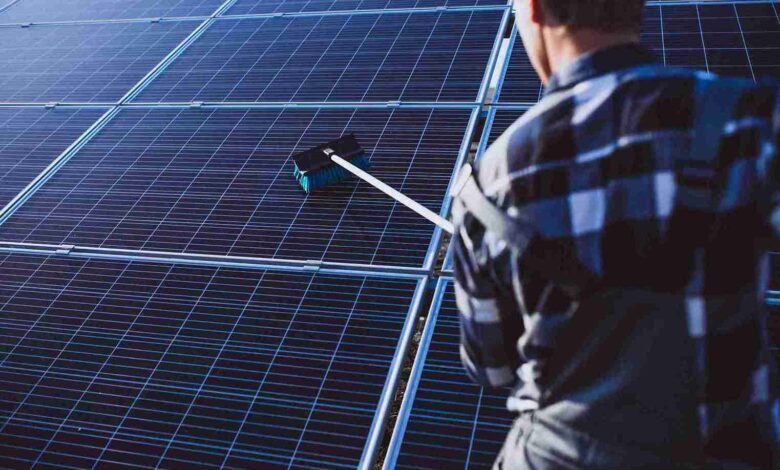
The safest way to clean solar panels in DHA is with soft, non-abrasive tools and enough reach to keep your body stable on the roof. Do not improvise with a kitchen scrubber, floor mop, blade, or stiff car-wash brush. Those tools are built for surfaces that can tolerate more friction than a solar panel.
A sensible basic kit includes:
- A soft-bristle brush designed for glass or solar panels
- A telescopic pole that lets you reach the far edge without stepping on the array
- Two clean microfiber cloths for spot cleaning and drying small areas
- A low-pressure hose attachment or a bucket for controlled rinsing
- Filtered, softened, or low-mineral water where practical
- Non-slip shoes, gloves, and a stable path across the roof
A solar panel cleaning machine can be useful on large commercial arrays, where long brush heads and controlled water flow reduce labour. For a typical DHA home installation, it is rarely necessary unless the system is extensive or access is difficult. A machine does not fix bad technique; an overpowered brush or poor footing can still cause damage.
Check the roof before unpacking anything. Loose tiles, wet marble, damp paint, exposed conduits, and low parapet walls change the risk level fast. Do not step on a panel to gain reach, and do not lean a ladder against the glass or frame. If you cannot reach an area with stable footing, leave that section alone.
Follow a calm, seven-step cleaning sequence
A careful process removes dirt while keeping the glass cool and the rooftop controlled. For homeowners planning to clean solar panels in DHA themselves, this sequence is more important than buying expensive equipment.
- Pick a cool, dry period. Early morning is usually the easiest window because the panels are cooler and the roof has not absorbed midday heat. Skip the job during rain, high winds, or when the roof surface is slippery.
- Look before you wash. Check for cracked glass, loose clamps, exposed cable insulation, bird nests, or a panel that looks physically shifted. Cleaning does not repair hardware. Stop if you notice damage that could involve wiring or mounting.
- Clear loose debris around the array. Remove leaves and dry litter from roof drains and the spaces between panels, but do not sweep aggressively across the glass. This prevents loose grit from turning into an abrasive slurry once water hits it.
- Rinse lightly from the top down. Let clean water loosen dust before any brushing. A gentle flow carries dirt downward and reduces the pressure needed later. Keep the water away from electrical connections and do not flood the roof.
- Brush in straight, light passes. Use the soft brush with almost no downward force. Work from the upper edge toward the lower edge, rinsing the brush when it picks up grit. Circular scrubbing tends to drag particles across the same patch repeatedly.
- Treat marks individually. Bird droppings, tree sap, or dried mud need patience, not aggression. Hold a damp microfiber cloth on the spot for a short time, then lift it away. Repeat if needed instead of scraping with a nail, scraper, or blade.
- Give the array a final rinse and visual check. Look for streaks, residue, missed patches, and pooled water near the frame. Let the panels air-dry unless mineral-heavy water is leaving visible spots; then use a clean microfiber cloth only where you can reach safely.
If your first search is cleaning services near me, use that impulse to compare the actual work involved rather than choosing based on a quick price promise. The useful questions are whether the worker uses low pressure, protects connectors, has proper roof-access equipment, and inspects the array before starting.
Know when cleaning is needed in DHA Lahore
Solar panels should be cleaned when visible soiling is blocking light or after a local event that leaves residue, not merely because a calendar says so. In DHA Lahore, a sensible pattern is to inspect the array every few weeks and clean after long dry spells, nearby construction activity, heavy bird activity, or a dust-laden wind event.
Do the inspection from ground level or a safe terrace first. Look for a dull, uneven coating rather than chasing every small speck. A little dust is normal; a patchy layer, dried droppings, or residue concentrated along lower panel edges deserves attention because it can shade part of the active surface.
If you clean solar panels in DHA during the hot months, timing matters more than speed. Water on very hot glass can dry before you finish a section, leaving mineral marks and making the job harder. Morning shade or the last cooler part of the day usually gives you more control, provided there is still enough daylight to see your footing clearly.
A solar cleaning company in DHA becomes sensible when the array sits on a steep roof, covers multiple levels, is beside a low parapet, or needs a reach that forces you onto unstable ground. AfinitySolar treats safe roof access as a separate decision from washing the panels, because the fall risk can outweigh the value of a DIY clean.
Final thoughts
The best cleaning routine is quiet and boring: cool panels, soft tools, gentle water, light passes, and a clear stop point when access becomes unsafe. Most panel damage comes from rushing, using the wrong brush, or assuming more pressure means better cleaning.
Keep an eye on real rooftop conditions in DHA Lahore, especially dust after dry weather and residue from nearby building work. Clean only when the surface needs it, and let safe access decide whether the job belongs on your own weekend list.
Frequently Asked Questions
Can I wash solar panels with ordinary tap water in DHA?
Yes, ordinary tap water is usually fine for rinsing, particularly if you dry reachable spots before mineral deposits set. If your water leaves white marks on glass or vehicles, use filtered or softened water for the final rinse. Never compensate by adding harsh detergent.
Is it safe to wash solar panels at noon in Lahore?
No, noon is usually the worst time because panels and roof surfaces can be extremely hot. Water dries too fast, streaks become more likely, and working on a heat-soaked roof raises the chance of slips, fatigue, and poor decisions. Choose a cooler early-morning period whenever possible.
How often should a DHA homeowner inspect solar panels?
A visual check every two to four weeks is practical for most homes. Clean only after visible dust buildup, bird droppings, nearby construction residue, or a prolonged dry period. Roofs near trees, open plots, or active construction may need closer attention.
Can dish soap, glass cleaner, or a pressure washer be used?
Avoid all three for routine solar panel cleaning. Dish soap and glass cleaner can leave films, while a pressure washer can push water where it should not go. Clean water, a soft brush, and a microfiber cloth handle most domestic buildup without creating extra problems.
Should I handle cleaning myself on a high or steep roof?
No. A high, steep, wet, or poorly protected roof changes the job from cleaning to working at height. If stable footing and full reach are not possible without stepping on panels or stretching past a parapet, the sensible choice is a trained rooftop cleaner with proper access equipment.