The data center industry is experiencing a massive shift. As high-density computing clusters, enterprise cloud architectures, and intense artificial intelligence applications become standard, facility managers are facing unprecedented electrical demands. Managing power at this scale requires more than just running cables to a server rack; it requires sophisticated engineering that can safely step down high-voltage utility power into stable, usable electricity right at the server floor.
This is where the Power Distribution Unit with an integrated isolation transformer—commonly known as a Transformer PDU—becomes indispensable. These robust systems act as critical localized substations, protecting your delicate microcircuitry from electrical noise, balancing phase loads, and safely dropping voltages (such as 480V down to 208V or 415V).
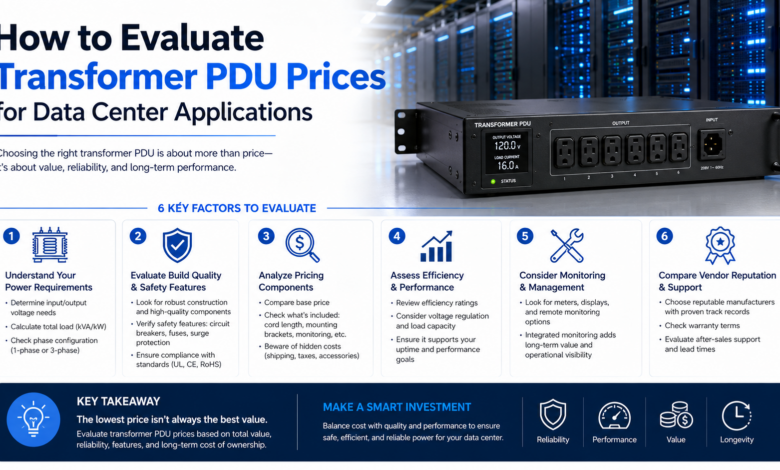
However, procurement managers, infrastructure architects, and financial executives face a major hurdle during facility expansions: evaluating Transformer PDU Prices. In an industry where capital expenditure budgets are heavily scrutinized, it is incredibly tempting to jump at the lowest upfront equipment quote. Yet, in critical power infrastructure, a rock-bottom sticker price often conceals severe hidden hazards, including low-grade internal metals, inefficient thermal designs, and stripped-down monitoring metrics.
The true challenge is to evaluate your infrastructure investments systematically, identifying competitive, cost-effective Transformer PDU Prices while ensuring your hardware meets rigorous standards for industrial build quality, electrical safety, and long-term operational resilience.
At Voltz, we engineer next-generation power solutions designed to bridge this procurement gap. We believe that optimizing your infrastructure expenses should never require you to accept a vulnerable baseline build. This practical guide outlines the core engineering variables, hidden procurement pitfalls, and long-term financial calculations that allow you to secure an optimized hardware price while protecting your mission-critical runtime environment.
1. Navigating Core Conductors: The True Cost of Copper vs. Aluminum
The internal conductive metal used within the isolation transformer forms the absolute heart of the unit’s overall build quality and acts as a primary component driver for the final equipment costs. When looking at structural design proposals, you will frequently find choices between copper-wound and aluminum-wound transformers.
The Problem: The Hidden Vulnerabilities of Low-Cost Metals
Aluminum features a significantly lower initial raw material cost compared to copper. Because of this, lower-tier suppliers frequently utilize aluminum windings to present an artificially low equipment quote. However, aluminum features a much higher level of electrical resistance and a higher coefficient of thermal expansion. Under the continuous, 24/7 cyclical power loads of a high-density data center, aluminum windings expand and contract drastically. Over time, this thermal cycling leads to loose internal connections, localized “hot spots,” accelerated insulation degradation, and an increased risk of catastrophic transformer failure.
The Solution: Insisting on Pure Electrical-Grade Copper Windings
To protect system uptime and ensure long-term operational integrity, always demand certified copper-wound isolation transformers within your engineering specifications.
- Superior Efficiency: Copper is a highly efficient electrical conductor, meaning it experiences significantly lower energy losses through heat dissipation.
- Mechanical Stability: Copper changes shape very little under extreme heat, maintaining tight, secure terminal connections across decades of continuous operation.
- While copper internals represent a higher upfront component cost, they eliminate the expensive maintenance schedules, routine thermal checks, and unexpected downtime associated with aluminum alternatives, yielding a much lower total cost across the lifespan of your facility.
2. Factoring in K-Factor Ratings for Non-Linear Server Loads
Modern data center equipment does not draw electrical current in a smooth, continuous wave. Instead, the switched-mode power supplies found in high-density servers draw electricity in short, jagged pulses. This creates a phenomenon known as harmonic distortion.
The Problem: Overheating Transformers from Unrated Hardware
Harmonic distortion introduces non-linear electrical currents back into your distribution system. When these distorted, high-frequency currents hit a standard, unrated isolation transformer, they generate excessive heat within the core and windings. If you purchase a low-priced Transformer PDU that lacks an adequate “K-Factor” rating, the unit will quickly overheat under a normal server load. To prevent a thermal breakdown, you will be forced to artificially limit or “de-rate” your equipment, leaving up to 50% of your purchased power capacity completely unused.
The Solution: Selecting Precisely Engineered K-Rated Units
True procurement efficiency recognizes that buying an appropriately rated system prevents operational waste.
- Harmonic Tolerance: Transformer PDUs must be engineered with specific K-Factor ratings (such as K-13 or K-20) to safely handle the thermal stresses of non-linear server loads.
- Optimized Design: At Voltz, our systems incorporate advanced neutral conductors sized at double the standard capacity and specialized core geometries designed to neutralize harmonic currents safely. Investing in a K-rated PDU ensures you can utilize 100% of your distribution capacity without risking thermal failure, ensuring your upfront investment delivers its full operational value.
3. Calculating the Real-World Return of High Efficiency (TP-1 vs. DOE 2016)
Because Transformer PDUs run continuously, 24 hours a day, 365 days a year, even a fractional difference in internal energy efficiency can have a massive impact on your corporate utility bills.
The Problem: The Perpetual Expense of Low-Efficiency Cores
When comparing Transformer PDU Prices, budget-focused buyers often overlook the unit’s core efficiency standard. Older or lower-tier units often utilize legacy design metrics (like TP-1). These less efficient cores waste a larger percentage of incoming electricity as raw heat. Not only do you pay the utility company for this wasted “lost” energy, but your data center’s precision cooling systems must work twice as hard to remove that extra heat from the room, creating a double-penalty on your operational budget.
The Solution: Demanding Compliance with Up-to-Date Efficiency Standards
To maximize long-term savings, ensure your procurement choices strictly meet or exceed modern efficiency regulations, such as the Department of Energy (DOE) 2016 standards.
- Reduced Core Losses: High-efficiency transformers utilize premium, grain-oriented silicon steel cores that drastically lower magnetic core losses.
- Compounding Financial Payback: By minimizing energy waste, a high-efficiency unit significantly reduces your facility’s ongoing Power Usage Effectiveness (PUE) metrics. The ongoing energy savings directly offset a higher initial purchase price, often paying for the premium hardware upgrade within the first few years of deployment.
Summary: Low upfront Cost vs. High-Quality Value
| Evaluation Metric | Low-Cost Baseline Option | Premium Optimized Solution (Voltz) |
| Upfront Purchase Cost | Low initial sticker price (Appealing short-term margin) | Balanced, market-competitive initial investment |
| Internal Windings | Aluminum windings (High thermal expansion risk) | 100% pure electrical-grade copper windings |
| Harmonic Management | Unrated or low K-factor (Requires system de-rating) | Fully certified K-13 or K-20 harmonic tolerance |
| Core Efficiency Standard | Legacy TP-1 or unrated configurations | Complies strictly with premium DOE efficiency standards |
| Monitoring Capabilities | Basic local LED display or unmonitored panels | Integrated, network-connected revenue-grade BCM |
| Physical Access Design | Rear-access doors required (Wastes floor space) | Space-saving, front-access only configurations |
4. Reclaiming Space with Front-Access Mechanical Engineering
The physical design and dimensions of your distribution enclosure have a direct, measurable impact on the long-term profitability of your server floor real estate.
The Problem: The Footprint Penalty of Legacy Enclosures
Many legacy, low-cost equipment manufacturers assemble basic, deep enclosures that require both front and rear physical access doors for routine maintenance and breaker adjustments. National electrical safety codes dictate that live electrical panels must maintain wide, clear working clearance zones on all service sides. If an enclosure requires rear access, you are legally forced to leave a wide 36-inch to 42-inch empty aisle completely behind the cabinet. This empty “dead zone” wastes immense amounts of expensive real estate that could otherwise hold revenue-generating IT server racks.
The Solution: Compact, Front-Access Only Enclosures
A premium, intelligently designed power panel optimizes physical space through strategic mechanical engineering. Look for slim enclosures that utilize front-access only terminal configurations.
- Zero Rear Clearance: Front-access designs allow the unit to be pushed completely flush against a concrete wall or placed back-to-back with other distribution hardware, cutting the legal space clearance requirement in half.
- Maximizing Compute Real Estate: Reclaiming this floor space allows you to fit additional server racks into your existing layout, driving up your total compute density and real estate efficiency without requiring an expensive building expansion.
5. Integrating Intelligence: Branch Circuit Monitoring vs. Blind Panels
Another common way procurement teams mistakenly try to reduce upfront capital costs is by stripping advanced network and monitoring options out of their initial equipment orders, opting for simple, unmonitored hardware panels instead.
The Problem: Managing Blind and Stranding Capacity
Choosing a simple, unmonitored breaker panel might lower your upfront equipment purchase cost by a small percentage, but it immediately introduces severe long-term operational liabilities. Without real-time, granular circuit data, facility managers cannot see the exact electrical draw of individual server rows. To prevent catastrophic overloads, teams are forced to leave massive, defensive “safety cushions,” leaving up to 30% of their actual power capacity completely unused. Furthermore, a basic panel leaves you completely blind to creeping phase imbalances and harmonic distortions until a breaker physically trips, taking your critical applications offline.
The Solution: Integrated Revenue-Grade Branch Circuit Monitoring
True procurement efficiency recognizes that integrated visibility is an active cost-saving mechanism. Advanced power units that feature factory-integrated Branch Circuit Monitoring (BCM) systems deliver real-time, high-accuracy metrics directly to your local network.
- Reclaiming Stranded Capacity: By continually measuring real-world electrical trends, infrastructure managers can safely utilize their full power allocation, populating empty rack spaces with active servers without buying additional distribution hardware.
- Predictive Failure Protection: Granular data tracking allows you to identify unbalanced electrical lines and failing server power supplies early, shifting your facility from emergency crisis management to controlled, scheduled preventative maintenance.
Conclusion: Sourcing Smarter for the Digital Future
Sourcing competitive Transformer PDU Prices without compromising operational reliability requires moving past basic upfront margins and focusing deeply on internal winding metals, harmonic tolerance ratings, core efficiencies, and integrated monitoring intelligence. Choosing substandard conductive materials, unmonitored options, or inefficient mechanical layouts will inevitably burden your business with high maintenance costs, stranded power capacity, and unexpected system downtime.
When you invest in a precision-engineered power platform from Voltz, you secure a highly balanced, robust infrastructure asset built for continuous long-term efficiency. By insisting on certified copper internals, space-saving front-access enclosures, and high-accuracy circuit intelligence, you protect your critical hardware environment and establish a scalable, highly reliable foundation ready to handle the technical computing demands of tomorrow.
Frequently Asked Questions (FAQs)
1. Why do isolation transformers introduce a premium to standard PDU pricing?
Standard rack PDUs are basic distribution strips that pass electricity directly through internal copper busbars to the outlets without altering the voltage level. A Transformer PDU incorporates a heavy-duty copper-wound magnetic core that physically isolates the incoming utility power from the outgoing branch circuits. This mechanical isolation protects delicate server hardware from external voltage surges, establishes a clean local ground, and provides necessary stepping down of high voltages, which requires more complex materials and manufacturing steps.
2. What are the operational risks of choosing aluminum windings over copper windings?
Aluminum expands and contracts significantly more than copper when exposed to temperature changes. Under a continuous data center load, this continuous physical movement causes internal bolted electrical connections to loosen over time. Loose connections increase electrical resistance, creating localized thermal hotspots that degrade the transformer’s insulation layer and significantly increase the risk of internal short circuits and electrical fires.
3. How does an integrated Infrared (IR) Inspection Window reduce operational maintenance costs?
Integrated IR Windows are specialized, highly durable crystal viewing ports built directly into the solid steel exterior doors of the panel enclosure. These ports allow maintenance technicians to perform routine thermal scans of the internal busbars and terminal connections using a handheld thermal camera without opening the panel doors. This configuration allows you to complete necessary safety audits safely in a fraction of the time, eliminating the expensive administrative overhead and specialized PPE requirements of traditional open-panel electrical inspections.
4. Can a modular Transformer PDU handle mixed voltages for legacy and modern server hardware?
Yes, absolutely. Premium Transformer PDUs can be built with flexible, multi-voltage secondary panelboards. This allows a single enclosure to accept a 480V input and distribute a combination of 208V power for legacy enterprise servers alongside 415V power paths for high-density, modern AI computing clusters, eliminating the need to buy separate, dedicated distribution systems for different server generations.
5. What is “Class-1” accuracy, and why does it matter for colocation facilities?
Class-1 accuracy ensures that the integrated monitoring sensors within the PDU capture power usage metrics (such as Amps, Volts, and kilowatt-hours) within an extremely precise ±1% margin of error. In multi-tenant colocation environments or modern corporate layouts utilizing internal departmental cost-allocation models, this high level of precision is required to provide fully verified, legally defensible consumption logs for fair billing and resource tracking.
6. Why is a standard building transformer insufficient for high-density rack rows?
Centralized building transformers are typically located far away from the actual server floor. As electricity travels through long distances of building conduit, it can pick up electromagnetic interference, harmonic noise, and voltage drops along the way. Placing a dedicated isolation transformer right inside a PDU at the end of the server row provides localized, clean, and precisely regulated power right at the point of consumption, minimizing line losses and maximizing overall hardware safety.