

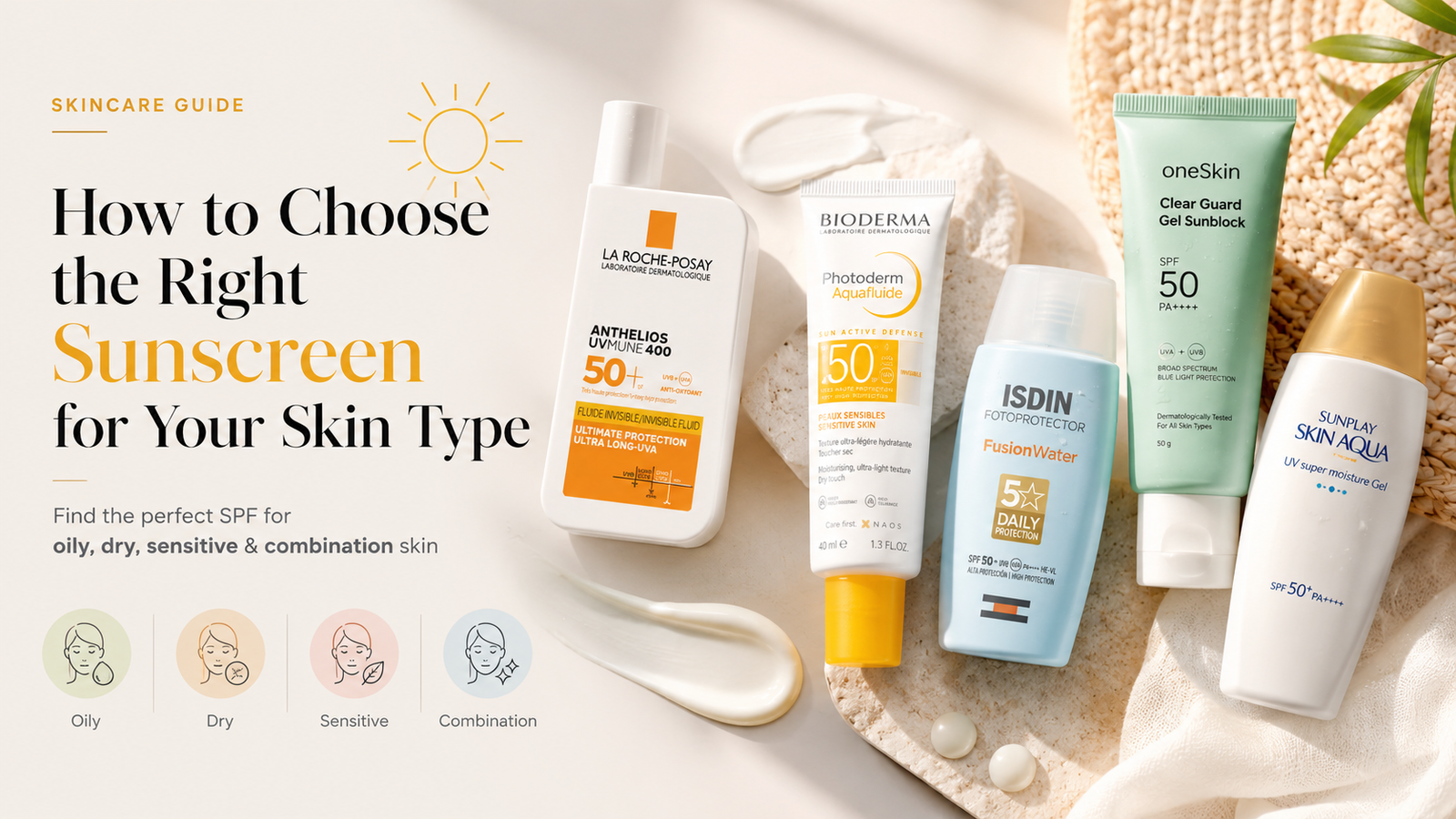
One formula can make oily skin greasy by midday, another can cling to dry patches, while some may even sting sensitive skin on application. That’s why choosing sunscreen based on your skin type matters more than following trends. A good sunscreen should protect your skin without disrupting your routine. It should feel comfortable, sit well under makeup, and work with your skin throughout the day. When the texture feels right, daily sunscreen use becomes effortless.
Why Your Skin Type Matters
Sunscreen only works when you actually use it consistently. If a formula feels heavy, sticky, drying, or irritating, it usually gets abandoned after a few tries. That’s where skin type becomes essential.
- Oily skin needs lightweight, non-greasy formulas
- Dry skin needs hydration and comfort
- Acne-prone skin needs non-clogging textures
- Sensitive skin needs gentle, fragrance-free protection
SPF matters, but texture determines daily use. If it doesn’t feel right, it won’t stay in your routine.
Sunscreen for Different Skin Types
Choosing sunscreen without understanding your skin type often leads to disappointment.
The right formula makes daily application effortless instead of forced.
Sunscreen for Oily Skin
Oily skin reacts quickly to heavy formulas. If your face becomes shiny soon after washing, rich creams may feel uncomfortable. Look for gel or fluid textures, water-based formulas, oil-free sunscreens, matte finish options, and non-comedogenic labels. These formulas absorb quickly and sit better under makeup without adding extra shine. However, not all oily skin needs ultra-dry formulas. Some skin types are also dehydrated. In that case, a lightweight hydrating sunscreen may work better than a strictly matte one.
Sunscreen for Dry Skin
Dry skin struggles with matte or stripping formulas. If your sunscreen makes your skin feel tight or flaky, it’s likely not hydrating enough. Cream or lotion textures usually work best, especially those with hydrating ingredients like hyaluronic acid, glycerin, ceramides, squalane, and panthenol. A dewy or satin finish helps prevent sunscreen from emphasizing dryness. A helpful tip is to apply moisturizer first, then sunscreen as the final skincare step.
Sunscreen for Acne-Prone Skin
Acne-prone skin needs protection without congestion. Heavy formulas can feel suffocating and may worsen breakouts. Lightweight gel sunscreens, fluid textures, oil-free formulas, and non-comedogenic products are usually the safest choices. It’s better to avoid thick, greasy creams, strong fragrances, and heavy occlusive textures. If you’re using actives like retinol or salicylic acid, sunscreen becomes even more important since these increase sun sensitivity. Always cleanse properly at night to avoid buildup.
Sunscreen for Sensitive Skin
Sensitive skin needs calm, minimal irritation formulas. Mineral sunscreens containing zinc oxide or titanium dioxide are often better tolerated. Fragrance-free formulas are also a safer option for reactive skin. It’s important to always patch test before full application, ideally on the jawline or behind the ear. Some mineral sunscreens may leave a white cast, in which case tinted or hybrid formulas can be a better alternative.
Sunscreen for Combination Skin
Combination skin needs balance rather than extremes. The T-zone may be oily while the cheeks feel dry. Gel-cream textures, lightweight lotions, and fluid sunscreens usually work best. You can apply moisturizer only where needed and then apply sunscreen evenly. If oiliness appears later, blotting papers are better than switching to overly drying formulas.
Sunscreen for Normal Skin
Normal skin has more flexibility, but that doesn’t mean every formula will work equally well. You can choose based on preference, whether cream for hydration, gel for freshness, fluid for makeup layering, or water-resistant formulas for outdoor use. Even normal skin can react to fragrance or heavy textures, so it’s still important to test performance over a few hours.
Common Sunscreen Mistakes
- Choosing sunscreen based only on trends: Many people pick products just because they are viral or popular. This often ignores whether the formula actually suits their skin type and daily needs.
- Applying too little product: A thin layer of sunscreen does not provide the SPF protection mentioned on the label. Under-application is one of the biggest reasons sunscreen fails.
- Skipping neck, ears, and other exposed areas: UV damage doesn’t stop at the face, but these areas are often forgotten. Over time, this leads to uneven aging and pigmentation.
- Relying only on SPF in makeup: Makeup with SPF is not applied in enough quantity to fully protect skin. It should never replace a dedicated sunscreen step.
- Using expired sunscreen: Expired products lose their effectiveness in blocking UV rays. This leaves your skin underprotected even if you apply it correctly.
- Storing sunscreen in heat: High temperatures can break down active ingredients inside the formula. This reduces stability and weakens overall protection.
Is Sunscreen Worth It in Pakistan?
Pakistan’s weather makes sunscreen less of an optional skincare step and more of a daily need. Because the sun is strong for most of the year, using sunscreen regularly helps protect your skin from tanning, dark spots, early aging, and acne marks getting worse. Sunscreen is especially important for students who travel daily, office workers who are exposed to sunlight during commute or near windows, outdoor workers who stay in the sun for long hours, and anyone dealing with acne or pigmentation.
In all these cases, sunscreen helps protect the progress you make with your skincare routine and prevents further damage. At its core, sunscreen is not just about protecting your skin today, but also about keeping it healthy in the long run. It is always easier to prevent skin damage than to fix it later. If you want to explore good sunscreen options from both local and international brands, platforms like TheSkinFit can make it easier to find products that match different skin types and needs. In the end, sunscreen is not complicated; it is simply a long-term investment in your skin that only works if you use it consistently.
FAQs
Q. Can I use sunscreen every day, even indoors?
A. Yes. UVA rays can pass through windows, so daily use is recommended even indoors.
Q. How much sunscreen should I apply?
A. About two finger-lengths is recommended for full face coverage.
Q. Do oily skin types need moisturizer before sunscreen?
A. Not always. If your sunscreen is hydrating enough, you can skip moisturizer.
Q. What SPF is best for daily use?
A. SPF 30 or higher with broad-spectrum protection is ideal.
Q. How often should sunscreen be reapplied?
A. Every 2 hours during outdoor exposure or sweating.
Final Thoughts
The right sunscreen depends on your skin type, texture preference, and daily routine. Oily skin benefits from lightweight control, dry skin from hydration and comfort, acne-prone skin from non-comedogenic formulas, and sensitive skin from gentle mineral options. When sunscreen feels good on your skin, it stops being a step in your routine and becomes a habit.


