SAP Implementation Services: What Businesses Should Know Before Starting an ERP Project

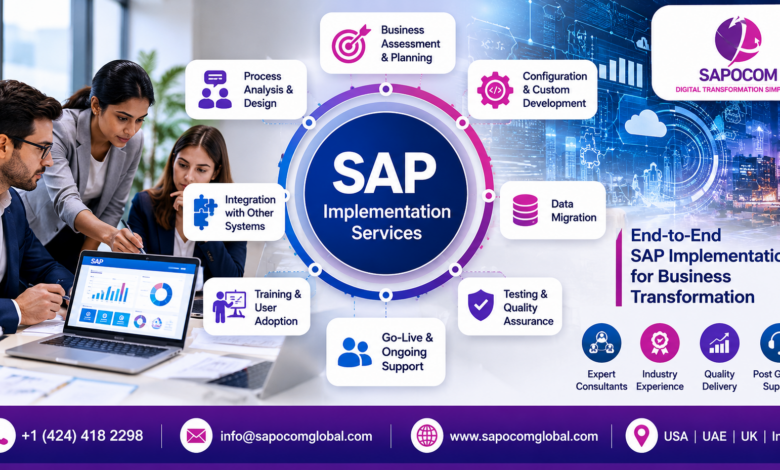
Enterprise software projects often fail because companies treat implementation as a software installation rather than a business transformation process. SAP implementation services are designed to help organizations move from disconnected systems and manual operations to a structured ERP environment that supports finance, supply chain, procurement, manufacturing, sales, and analytics in one platform.
For companies planning digital transformation initiatives, SAP implementation is usually a long-term operational decision rather than a short IT upgrade.
What Are SAP Implementation Services?
SAP ERP implementation services refer to the planning, configuration, deployment, integration, migration, and support activities involved in setting up SAP systems inside an organization.
The implementation process may include:
- Business process analysis
- ERP architecture planning
- SAP module configuration
- Data migration
- Custom development
- Third-party system integration
- Testing and quality assurance
- User training
- Go-live support
Implementation projects can range from small deployments for a single business unit to global ERP rollouts across multiple countries.
Why Companies Invest in SAP Implementation
Many organizations move to SAP after facing operational issues caused by fragmented software environments.
Common business challenges include:
- Duplicate data across departments
- Delayed reporting
- Inventory mismatches
- Manual procurement processes
- Limited financial visibility
- Compliance reporting issues
- Poor supply chain coordination
SAP implementation services help organizations centralize business operations through integrated ERP workflows.
Industries commonly using SAP include:
- Oil & Gas
- Manufacturing
- Retail
- Chemicals
- Metals & Mining
- Agriculture
- Automotive
- Logistics
- Consumer Goods
Main Phases of an SAP Implementation Project
1. Business Assessment and Planning
The first phase focuses on understanding business requirements, operational gaps, and long-term objectives.
Implementation teams usually analyze:
- Existing software systems
- Operational workflows
- Reporting requirements
- Compliance needs
- Supply chain processes
- Department-level dependencies
This stage also defines implementation timelines, project governance, and deployment strategy.
2. System Design
After assessment, consultants prepare the SAP implementation services and design based on business processes.
This includes:
- Organizational structure mapping
- Module selection
- Process configuration
- Approval workflows
- Master data structures
- Reporting requirements
At this stage, companies decide whether they require standard SAP support partners or custom development.
3. SAP Configuration and Development
The implementation team configures SAP modules according to business needs.
Common SAP modules include:
- SAP S/4HANA
- SAP Finance
- SAP Materials Management
- SAP Sales and Distribution
- SAP Production Planning
- SAP Extended Warehouse Management
Organizations operating in specialized industries may also implement industry solutions such as:
- SAP IS-OIL
- SAP Commodity Management
- SAP Trader and Scheduler Workbench
4. Data Migration
Data migration is one of the most sensitive parts of SAP implementation.
Businesses migrate:
- Customer records
- Vendor data
- Financial records
- Material master data
- Inventory details
- Procurement history
- Sales transactions
Poor data quality often causes implementation delays, which is why cleansing and validation are critical before migration.
5. Testing and Validation
Before go-live, implementation teams conduct multiple rounds of testing.
Typical testing activities include:
- Functional testing
- Integration testing
- User acceptance testing
- Security validation
- Workflow testing
- Reporting checks
This phase helps identify process gaps before the live deployment.
6. Go-Live and Support
Once testing is completed, the organization transitions to the live SAP environment.
Post-go-live activities include:
- User support
- System monitoring
- Issue resolution
- Performance optimization
- Additional training
- Process adjustments
Many organizations continue working with SAP support teams after implementation to maintain operational stability.
SAP S/4HANA Migration Services
A growing number of companies are moving from legacy ERP environments to SAP S/4HANA.
Migration projects often involve:
- Legacy SAP ECC upgrades
- Cloud migration
- Database conversion
- Process redesign
- Real-time reporting enablement
Businesses typically pursue SAP S/4HANA migration to improve reporting speed, analytics visibility, and operational efficiency of SAP implementation services.

Industry-Specific SAP Implementation
Different industries require different SAP configurations.
Oil and Gas
Oil and gas companies often implement:
- SAP IS-OIL
- SAP TSW
- Hydrocarbon accounting
- Secondary distribution management
These systems support fuel distribution, refinery logistics, and commodity transportation.
Metals and Mining
Mining companies use SAP commodity management systems for:
- Commodity pricing
- Trading operations
- Inventory reconciliation
- Risk management
Agriculture
Agriculture businesses implement SAP for:
- Crop procurement
- Commodity trading
- Logistics planning
- Supply chain coordination
Industry-specific implementation experience becomes important when business operations involve regulatory or commodity-based workflows.
Common Challenges in SAP Implementation
SAP implementation projects can become difficult when planning is incomplete or business processes are unclear.
Common challenges include:
- Inconsistent master data
- Resistance to operational change
- Poor requirement gathering
- Complex legacy systems
- Budget overruns
- Integration failures
- Inadequate user training
Large enterprises often reduce these risks by using phased rollouts and experienced implementation teams.
How Businesses Choose SAP Implementation Partners
Organizations usually evaluate implementation SAP consulting based on:
- Industry experience
- SAP certification
- Previous implementation projects
- Technical capabilities
- Migration expertise
- Support services
- Global delivery capabilities
Businesses operating in sectors such as oil & gas, commodity trading, or manufacturing often look for consultants with industry-specific ERP experience.
Future of SAP Implementation Services
SAP implementation strategies continue to change as companies adopt:
- Cloud ERP systems
- AI-assisted analytics
- Automation tools
- Predictive maintenance systems
- Real-time supply chain visibility
- Sustainability reporting frameworks
Modern SAP projects increasingly focus on operational visibility, analytics integration, and scalable cloud infrastructure.
Final Thoughts
SAP ERP implementation services play an important role in helping businesses modernize operations, standardize processes, and improve enterprise-wide visibility.
Successful implementations depend on several factors:
- Clear business objectives
- Accurate process mapping
- Clean master data
- User adoption
- Experienced implementation teams
For industries managing large operational networks, supply chains, or commodity-based workflows, SAP systems continue to serve as a central platform for finance, logistics, procurement, and operational management.